Table of Contents
ToggleRikku stands as one of Final Fantasy’s most iconic and beloved characters, a thief with vibrant personality who captured hearts across two generations of gaming. First appearing in Final Fantasy X, she’s defined by her quick wit, Al Bhed heritage, and combat versatility that makes her essential in any party composition. Whether you’re revisiting Spira on PS4, emulating the classics on PC, or discovering Final Fantasy for the first time, understanding Rikku’s mechanics, story role, and cultural impact gives you a deeper appreciation for why she remains relevant in 2026. This guide covers everything about Rikku: from her combat abilities and optimal builds to her character arc and lasting influence on gaming culture.
Key Takeaways
- Rikku Final Fantasy stands out as a versatile thief character whose Mix ability combines items to create strategic buffs and attacks, making her essential for both casual playthroughs and optimized boss encounters.
- Her personality balances genuine humor with meaningful character depth, serving as an emotional anchor in FFX while addressing themes of family loyalty, cultural identity, and self-determination that resonate across gaming generations.
- Rikku’s character development spans two games, evolving from a reluctant pilgrim breaking free from her father’s expectations to an independent leader of the Gullwings, demonstrating substantial emotional growth while maintaining her distinctive charm.
- Her mechanical flexibility enables role adaptability in FFX-2 through dressphere switching, allowing players to transition between Thief and Lady Luck job classes mid-combat based on enemy weaknesses and turn order.
- Rikku’s enduring cultural impact extends beyond gameplay through thousands of fan artworks, widespread cosplay representations, and merchandise appeal, proving her transcendence from design aesthetics to genuinely beloved character status.
- Her design philosophy integrating visual storytelling—including Al Bhed eyes symbolizing heritage and minimal armor reflecting her scavenger identity—demonstrates how character aesthetics aligned with narrative purpose create characters with sustained relevance across decades.
Who Is Rikku? Character Overview and Role
Rikku is an Al Bhed thief from Final Fantasy X, characterized by her spiky blonde hair, distinctive large eyes, and perpetually cheerful demeanor that contrasts sharply with the game’s darker narrative themes. She’s a scavenger by trade, someone who hunts for salvage in the ruins of the Old World, which perfectly mirrors her role as the party’s acquisition specialist and item curator during combat. Her age varies depending on the game: she’s 15 in FFX and 17 in FFX-2, making her one of the younger party members but no less competent in battle.
What makes Rikku special isn’t just her combat prowess. She serves as the party’s emotional anchor, often providing comic relief while simultaneously delivering some of the franchise’s most poignant moments. Her carefree nature masks genuine depth: she’s concerned about her family, her heritage, and her role in saving the world. Players consistently cite Rikku as a standout character because she balances levity with substance in a way few JRPG protagonists achieve. In combat, she functions as a hybrid thief-support character, capable of stealing items, using potions, and activating status effects that turn the tide of battle. Her versatility makes her indispensable against tough bosses where adaptability determines victory or defeat.
Rikku Across The Final Fantasy Series
Final Fantasy X: The Original Appearance
Rikku’s debut in Final Fantasy X (2001) established her as the game’s scavenger and thief archetype. She joins the party relatively early and becomes essential for progressing through story beats and combat encounters. In FFX, her combat role centers on the Thief class, which emphasizes stealing items from enemies, using Al Bhed tools, and activating Mix ability, a powerful mechanic unique to her character. When using Mix, she combines two items to create temporary buffs or devastating attacks, ranging from defensive shields to single-target nuke damage. This mechanic gives experienced players significant strategic depth: knowing which items to stock determines your effectiveness in harder encounters.
Her story arc in FFX is about breaking free from her father’s expectations and embracing her own agency. She’s pushed into the “pilgrimage” narrative alongside protagonist Tidus, and her character development reflects the journey from reluctant participant to committed ally. By the game’s end, she’s undergone substantial emotional growth, though her lighthearted personality remains intact.
Final Fantasy X-2: A Starring Role
FFX-2 (2003) elevates Rikku from supporting character to co-protagonist, a significant narrative choice that gave her expanded screentime and character development. She’s now 17 years old and serves as a member of the Gullwings, an airship-based treasure-hunting group, which aligns perfectly with her scavenging background. Her Thief and Lady Luck dresspheres (job classes) give her multiple combat personalities, making her one of the most versatile party members in the sequel.
The Thief dressphere in FFX-2 retains stealing mechanics but with refined animations and faster execution. Lady Luck introduces gambling-style abilities that randomize outcomes, high-risk, high-reward gameplay that rewards players who understand probability and timing. FFX-2’s job-switching system means Rikku can adapt mid-combat to whatever the situation demands, whether that’s crowd control, single-target burst damage, or support. Players who master Rikku’s dressphere combinations report significantly faster clear times on higher difficulties, making her optimization feel rewarding.
Other Appearances and Cameos
Rikku appears in several Final Fantasy spin-offs and remasters, though her presence varies in scope. She features in Final Fantasy X -Will- (the audio drama included with FFX/X-2 HD Remaster on PS3, PS4, and PS Vita), which expands her story. She also appears in Dissidia Final Fantasy and its sequel Dissidia 012, where she’s represented as a summonable unit rather than a playable character. Mobile games like Final Fantasy Record Keeper and Final Fantasy Brave Exvius include her as a recruitable character with mechanics that homage her original abilities. While these appearances don’t carry the narrative weight of her FFX appearances, they’ve kept her relevant to engaged Final Fantasy fans across different platforms and mediums.
Rikku’s Abilities and Combat Skills
Al Bhed Skills and Mechanics
Rikku’s signature ability set centers on Al Bhed-specific mechanics that set her apart from standard thief archetypes in RPGs. Her primary combat strength is Steal, which allows her to pilfer items from enemies during battle. This isn’t random: experienced players know exactly what each enemy drops, allowing strategic use of Steal to acquire rare equipment or consumables. In FFX, stealing High Potions from specific enemies becomes a resource-generation strategy that trivializes resource scarcity on higher difficulties.
Her Mix ability is where Rikku becomes genuinely powerful. Mixing combines two items from her inventory to create effects unavailable through normal means:
- Aeons Mixture + Mega-Potion: Massive HP recovery for the entire party
- Phoenix Down + Turbo Ether: Full-party resurrection with full MP restoration
- Lum Flower + Blessed Water: Permanent stat boosts that stack across fights
Mastering Mix combinations separates casual Rikku players from optimized parties. Tournament runners and speedrunners dedicate extensive planning to pre-stocking specific items for Mix sequences, demonstrating the mechanic’s mechanical depth. Her Al Bhed Potion ability in FFX-2 simplifies some of this through dressphere abilities, but understanding which combination yields the best result for your current situation remains crucial.
In FFX, her Intelligence stat is decent but not exceptional: she shines in Agility and Luck, making her reliable for turn order manipulation and status effect accuracy.
Limit Breaks and Special Techniques
Rikku’s Overdrive in FFX is called Trigger Command, which follows enemy actions. When enemies act, Rikku can activate context-sensitive commands: Steal becomes available against single targets, Mix allows combination creation, and Escape becomes an option in certain encounters. Her Overdrive effectively gives her three specialized moves per turn, which sounds generically useful but actually combines into devastating sequences.
FFX-2 introduces Dressphere Overdrives, where her Special ability changes based on her active job class. Lady Luck’s Overdrive Elemental Reels spins random slots that output element-based attacks, status cleanse, or party buffs. Thief’s Overdrive Trigger Command allows rapid status application through accelerated Steal sequences.
Beyond her standard Overdrive, Rikku’s Ultimate Weapon is the Onion Knight, which increases her MP and Ability Pool, enabling longer sequences of Mix combinations. Fans often debate whether Onion Knight builds are actually optimal since raw offensive stats sometimes outperform utility, but speedrunners consistently use it for no-reset runs where survival matters more than speed.
Optimal Builds and Strategy Tips
For FFX specifically, Rikku optimization depends on your difficulty and goal:
Standard Playthroughs: Keep her in Thief class, focus on Agility and Luck spheres, and stock consumables throughout the game. She doesn’t need massive offensive investment because her utility and support role define her value.
Harder Difficulty / Boss Rushes: Pre-farm specific items for Mix sequences. Ability Sphere her way to Use Item to access Aeons without equipment limitations. This transforms her into a dedicated utility specialist rather than a pseudo-DPS.
Speedrun Optimization: Minimize her level and Sphere use because her damage output will never match dedicated attackers like Tidus or Auron. Instead, use her Steal to acquire rare items, then gamble on perfect Mix sequences. A single Aeons Mixture into healing can save a run if executed at the right moment.
In FFX-2, the meta shifted entirely because dressphere switching enables rapid role transitions. Lady Luck provides superior damage consistency through element manipulation, while Thief remains best for resource generation. The actual optimal build involves ping-ponging between dresspheres based on turn order and enemy weaknesses, static job assignment severely limits her potential.
About Rikku Final Fantasy, different playstyles suit different builds, making her one of Final Fantasy’s most flexible characters for build experimentation. Whether you’re going for raw survival or maximum efficiency depends on your personal preference and challenge difficulty.
Rikku’s Personality and Character Development
Relationships With Other Party Members
Rikku’s relationships define her character arc more than her combat mechanics. Her dynamic with Tidus is playful but grounded: she teases him relentlessly throughout FFX but clearly respects him. Her relationship with Yuna forms the emotional core of both games, Yuna is a summoner destined for sacrifice, and Rikku becomes her protective anchor, often attempting (humorously) to prevent Yuna from sacrificing herself. By FFX-2, their bond deepens into a genuine sisterhood that motivates both characters’ story decisions.
Her interactions with Auron showcase her humor at its best: she constantly tries to provoke reactions from the stoic warrior, bouncing quips off his cold demeanor. Even though his aloofness, Auron develops genuine affection for the group, and Rikku senses this beneath his gruff exterior. With Lulu, she shares a mischievous mentor-mentee dynamic: Lulu tolerates Rikku’s antics while subtly guiding her toward maturity. Her bond with Wakka is straightforward, respect for a leader figure, though FFX-2 complicates this with romantic subtext as Wakka and Yuna’s relationship status becomes ambiguous.
These relationships aren’t superficial party dynamics: they drive major plot points and emotional beats. Rikku’s willingness to sacrifice her own goals for Yuna’s safety reveals her capacity for genuine love beneath the comedic exterior.
Character Arc and Story Impact
Rikku’s arc spans two games and involves shedding the burden of expectation. In FFX, her father Cid runs a radical Al Bhed group attempting to harvest forbidden technology, positioning Rikku as a daughter caught between loyalty and morality. She chooses to break from her family’s extremism and support Yuna’s pilgrimage, a choice that costs her dearly, her brothers treat her as a traitor for siding with humans over their heritage. This internal conflict elevates her beyond the typical cheerful thief archetype: she’s dealing with genuine cultural alienation and family trauma.
By FFX-2, two years have passed, and Rikku has matured significantly. She’s founded the Gullwings with her friends and operates independently from her family, suggesting growth beyond her struggles. But, the sequel complicates her arc further: she discovers her father’s plans might not have been entirely wrong, forcing her to reconcile her identity as an Al Bhed with her personal moral compass. This nuance reflects Final Fantasy Lore at its best, morality is complicated, characters evolve, and previous certainties crumble under scrutiny.
Within the larger FFX narrative structure, Rikku serves as the voice of pragmatism. When Yuna accepts her predetermined sacrifice, Rikku actively opposes it because she refuses to accept the system’s narrative that some people must be sacrificed for the greater good. Her defiance legitimizes player resistance to the game’s tragic themes: she’s not accepting a sad ending, and neither should we. This makes her thematically important beyond combat utility.
Rikku in Pop Culture and Fan Community
Fan Art, Cosplay, and Community Legacy
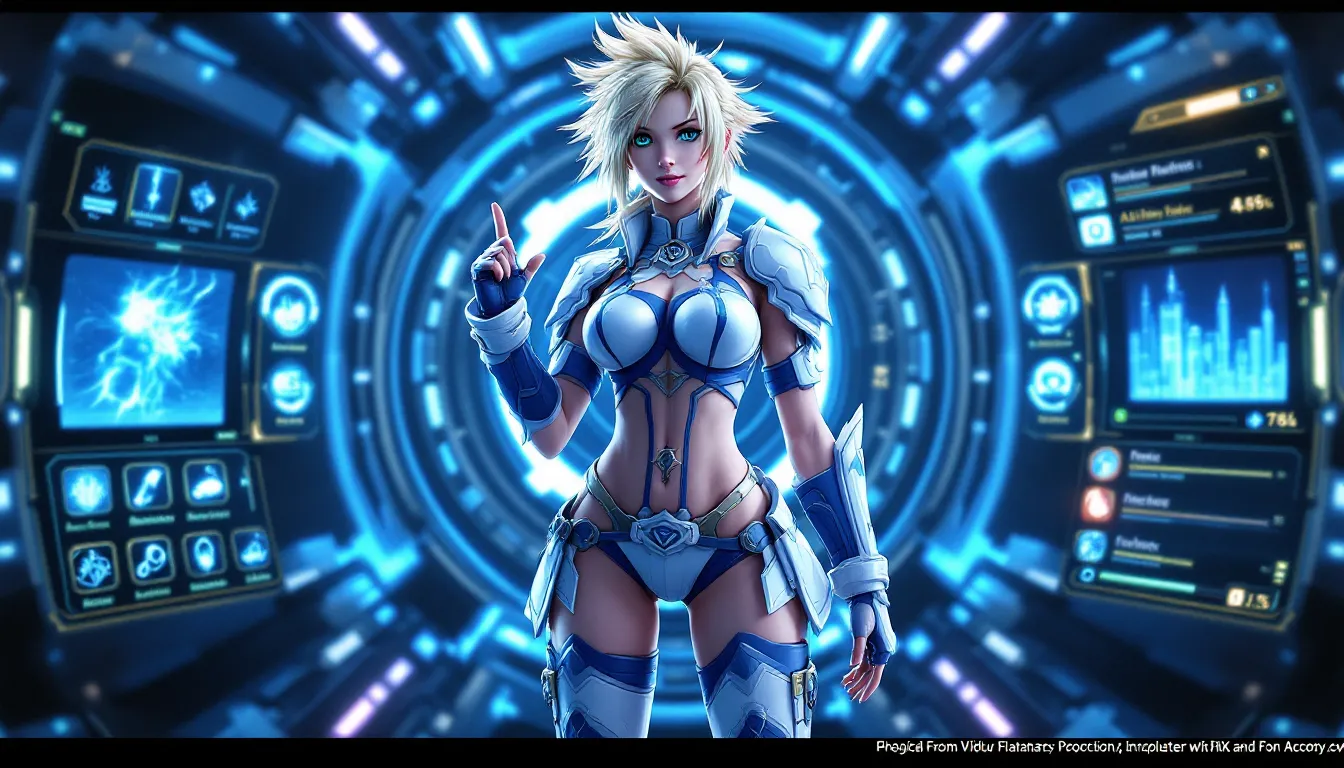
Rikku commands extraordinary attention in fan communities across platforms. DeviantArt, AO3, and dedicated Final Fantasy forums host thousands of artworks, fan fiction pieces, and creative interpretations spanning decades. Her character design, the thigh-high boots, minimal clothing, spiky blonde hair, and distinctive Al Bhed eyes, makes her instantly recognizable and visually distinctive, which naturally appeals to artists.
Cosplay representations of Rikku are among the most common Final Fantasy character costumes at conventions. Whether crafting her FFX default outfit, her FFX-2 Lady Luck dressphere, or variations created by fans, cosplayers consistently choose her as a character worth investing time and resources into. Major conventions like Anime Expo and PAX feature multiple Rikku costumes annually, demonstrating sustained cultural presence even though the original game releasing over 20 years ago.
What’s notable is the depth of community engagement. Fan communities don’t just celebrate Rikku superficially: they engage in genuine discussion about her character motivations, her relationships, and her significance within Final Fantasy’s larger narrative. Reddit communities like r/FinalFantasy and r/FFX maintain active discussions about Rikku’s role, her optimal builds, and her story importance. This sustained engagement proves she transcends typical waifu appeal, fans genuinely care about her as a character, not just as a design aesthetic.
Merchandise and Cultural Influence
Square Enix recognizes Rikku’s commercial appeal through extensive merchandise. Figurines, Nendoroids, play arts Kai statues, and Funko Pop representations ensure she’s available in multiple price points and collectibility tiers. The Gematsu news site regularly covers new Final Fantasy merchandise announcements, and Rikku consistently appears among the most-produced characters, indicating genuine demand rather than niche interest.
Beyond traditional figurines, Rikku appears on apparel, accessories, and in licensed products. Video game stores maintain her merchandise prominently, suggesting retailers recognize her drawing power. Her inclusion in mobile games like Final Fantasy Brave Exvius wasn’t random, her character recognition translates to user engagement, meaning developers understand her appeal extends beyond hardcore FFX fans into broader gaming audiences.
Her cultural footprint extends to academic discussions about character design in JRPGs. Game design courses occasionally reference Rikku as an example of effective character expression through visual design: her silhouette is immediately recognizable, and her color palette (blonde hair, white and blue outfit) contrasts sharply with most other Final Fantasy characters. This design philosophy influenced subsequent JRPG characters, establishing her as inadvertently influential in industry aesthetics.
Why Rikku Remains A Beloved Character
Rikku’s enduring popularity stems from multiple converging factors that gaming character design rarely achieves simultaneously. First, her mechanical depth ensures she remains relevant across different playstyles and difficulty levels. A casual player finds her useful for basic stealing and healing, while optimization-focused players can construct elaborate Mix sequences that trivialize late-game bosses. This flexibility means she appeals to audiences across the skill spectrum.
Second, her personality feels genuine rather than constructed. She’s genuinely funny, not through forced jokes but through character interactions that feel organic. Her humor comes from contrast: she’s upbeat in a game dealing with sacrifice, loss, and predetermined doom. This makes her presence meaningful rather than tonal whiplash. Her comedy serves a narrative function: she provides emotional relief while simultaneously highlighting the story’s tragic elements through contrast.
Third, her character arc addresses genuine themes of identity, family loyalty, and self-determination. Her story isn’t about winning wars or saving the world in generic terms: it’s about choosing her own path even though family pressure and cultural alienation. Contemporary audiences resonate with these themes, making her narrative relevant across different eras and player demographics.
Fourth, her relationships feel earned and meaningful. She doesn’t exist in isolation: her bonds with other characters create cascading narrative moments. Her protective instinct toward Yuna drives multiple plot developments. Her willingness to challenge authority figures like Cid demonstrates genuine conviction. These character relationships create emotional investment beyond gameplay mechanics.
Finally, her design represents intentional choices that reflect her character. The Al Bhed eyes symbolize her heritage and otherness within Spira’s society. Her minimal armor reflects her scavenger roots and agility-based combat style. Her outfit colors and silhouette ensure instant recognition. Unlike character designs that prioritize sexualization over functionality, Rikku’s aesthetic serves her narrative and mechanical identity. According to RPG Site, character design integrated with narrative purpose creates characters that endure, and Rikku exemplifies this principle perfectly.
Conclusion
Rikku stands as a testament to character design excellence within JRPGs and gaming broadly. Her mechanical depth through abilities like Mix and Steal provides genuine strategic value, especially on higher difficulties. Her personality balances humor with authenticity, avoiding both generic cheerfulness and forced quirkiness. Her narrative arc addresses themes of identity and self-determination that resonate across player demographics and gaming generations.
Whether you’re revisiting FFX on PlayStation’s HD Remaster, emulating the original on PC, or encountering the series for the first time, Rikku offers something valuable: a character whose story, mechanics, and personality reinforce each other rather than existing in tension. She’s not just a capable thief or comic relief, she’s a fully realized character whose choices matter within her world and whose journey matters to players.
In 2026, as remakes and reimaginings of classic Final Fantasy titles continue circulating through industry discourse, Rikku’s legacy remains secure. New players will discover her charm, returning players will appreciate her evolved role in FFX-2, and dedicated communities will continue celebrating her through art, cosplay, and discussion. Few characters achieve this kind of sustained relevance across decades of gaming culture, making Final Fantasy Tidus her peer in terms of narrative and mechanical importance. Her status as a beloved character isn’t nostalgia-driven, it’s earned through genuine excellence in character design, narrative integration, and mechanical execution that few games achieve.