Table of Contents
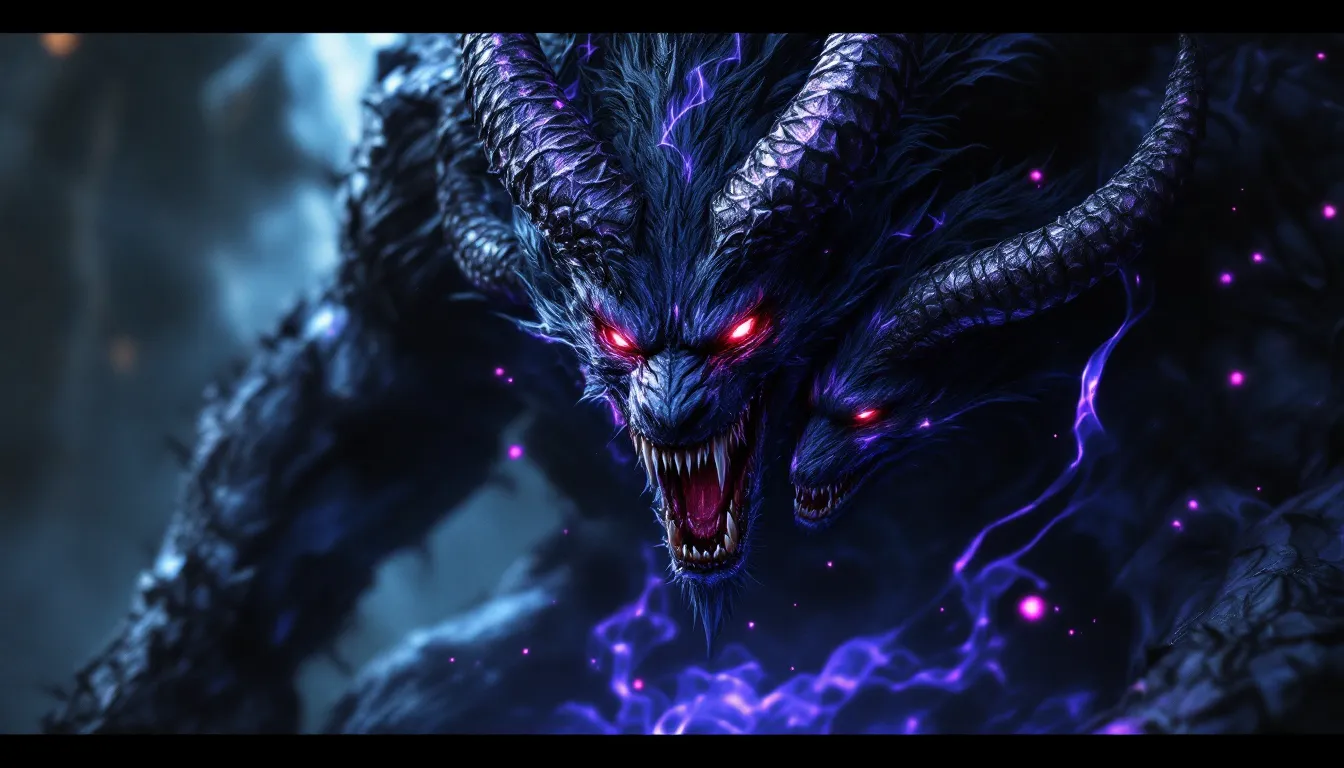
ToggleCerberus stands as one of Final Fantasy’s most iconic summons and antagonists, a three-headed beast drawn from Greek mythology and reimagined across multiple entries in the franchise. Whether you’re facing it as a devastating boss battle, wielding it as a powerful weapon, or studying its role in the series’ rich lore, understanding Cerberus is essential for any serious Final Fantasy player. This guide breaks down everything you need to know about this legendary creature, from its mythological origins to its mechanical applications in combat, strategies for defeating it, and how to harness its power for your party.
Key Takeaways
- Cerberus appears across multiple Final Fantasy entries as both a formidable boss encounter and obtainable weapon, with mechanics and strategies varying significantly by game version.
- Combat success against Cerberus depends on understanding version-specific mechanics, such as real-time dodging in FFVII Remake and FFXV, spell management in FFVIII, and dominance ability use in FFXVI.
- Optimal party composition for Cerberus fights prioritizes synergy over raw stats, combining physical damage dealers with defensive support, status immunity, and strategic ability rotations.
- Cerberus weapons provide dark-element scaling and unique effects like sleep procs, making them valuable for extended dungeons and farming, though availability requires completing hunts or boss encounters.
- Final Fantasy reimagines Cerberus from Greek mythology as a dynamic narrative element tied to themes of power, dominance, and character progression rather than a purely mythological obstacle.
What Is Cerberus in Final Fantasy?
Origins and Appearances Across the Series
Cerberus isn’t original to Final Fantasy, the three-headed hound of Hades has appeared in nearly every mainline entry and several spinoffs. Each game interprets the creature differently, but the core identity remains consistent: a powerful, mythologically-inspired boss or ally with command over dark magic and physical brutality.
The beast shows up in Final Fantasy VII, Final Fantasy VIII, Final Fantasy XV, and most recently Final Fantasy XVI. Some appearances are brief encounters, while others define entire boss sequences. The visual design evolves with each generation, from sprite-based representations to fully rendered 3D models that emphasize Cerberus’s three heads and imposing stature.
What makes Cerberus special in the Final Fantasy ecosystem is how the series treats it less as a simple monster and more as a character archetype, a recurring entity tied to mythology, summons, and player progression.
Role as Boss vs. Weapon
Cerberus occupies two distinct roles in Final Fantasy games. As a boss, it’s typically a mid-to-late game challenge that tests your party’s survivability and damage output. Boss versions hit hard, employ multi-target attacks, and often require specific strategies to defeat efficiently.
As a weapon or item, Cerberus grants players access to its power, whether through summon materia, weapon drops, or craftable gear. The weapon version maintains thematic connections to the boss but scales differently based on character stats and equipment slots. Some games feature Cerberus as a gunblade component, others as a staff or summon exclusive.
Understanding which role Cerberus plays in your specific game is crucial for preparation. A boss encounter demands defensive builds and crowd control: a weapon drop means farming strategies and equip optimization.
Cerberus as a Boss Enemy
Games Featuring Cerberus Battles
Cerberus appears as a notable boss encounter in several major Final Fantasy titles. Final Fantasy VII features it as part of the Midgar Zolom sequence and in extended lore. Final Fantasy VIII makes it a summon challenge tied to the story progression. Final Fantasy XV includes Cerberus as an optional hunt target with significant loot rewards. Final Fantasy XVI brings the encounter into the modern action-combat space with real-time mechanics.
Each game’s version operates under different rules, damage thresholds, and attack rotations. Knowing which title you’re playing is non-negotiable for strategy selection.
Boss Mechanics and Attack Patterns
Cerberus bosses generally share common behavioral traits even though mechanical differences across games.
Common attack patterns:
- Multi-head bite: A single-target or small AoE physical attack from one or more heads
- Dark aura: Applies status effects like poison, silence, or darkness across the party
- Howl: A devastating AoE ability that damages all party members and may apply paralysis or fear
- Phase transitions: Many versions shift tactics when health drops below 50% or 25%
In Final Fantasy VII Remake, Cerberus is fought in real-time using the active command battle system. The boss staggers between aggressive and defensive phases, with one head sometimes targeting a specific party member while the other two remain in guard positions. Managing positioning and switching between characters is essential.
Final Fantasy VIII’s Cerberus summon battle emphasizes status ailments and magic-based attacks. The creature frequently uses darkness-element magic that debuffs magic defense and reduces accuracy.
Final Fantasy XV’s Cerberus hunt plays differently, it’s an optional challenge that can be approached at various power levels. The three-headed design means the boss can multi-task, attacking while repositioning or applying buffs to itself.
Difficulty Tiers and Strategy Tips
Beginner-friendly strategies:
- Stock plenty of healing items and spells before engaging
- Use status-immunity materia or items to counter darkness and paralysis
- Focus damage on one head first to reduce the number of simultaneous attacks
- Keep your party’s average level 5-10 above the recommended threshold
Intermediate approaches:
- Exploit elemental weaknesses specific to each game version (fire is often effective)
- Use limit breaks and special abilities strategically rather than immediately
- Position characters to minimize AoE overlap, spread out your party when possible
- Apply debuffs like Reduce or Lower Magic Defense before burst phases
Advanced tactics:
- Learn attack telegraphs and dodge accordingly (especially in action-based games like XV and XVI)
- Synchronize party abilities for maximum damage windows
- Use ATB (Active Time Battle) characters to interrupt dangerous attacks in real-time systems
- In Final Fantasy VIII, use Draw commands to steal spells directly and reduce Cerberus’s damage output
- Farm for premium items or weapons that exploit Cerberus’s resistances before the encounter
Difficulty scaling varies: Cerberus in Final Fantasy VII is a relatively gentle encounter, while Final Fantasy XV’s optional hunt can punish underleveled parties severely. XVI’s version sits somewhere in the middle, demanding skillful dodging but not crushing mistakes instantly.
Cerberus as a Weapon and Item
Weapon Stats and Properties
When Cerberus appears as a weapon, its stats vary wildly depending on the game and the character equipping it. In Final Fantasy VIII, the Cerberus gunblade features high attack power (around 36 base ATK) with moderate accuracy. Its unique property applies sleep status to enemies on hit, a valuable crowd-control option for extended encounters.
Final Fantasy XV’s Cerberus element weapons (if obtained as rare drops) emphasize dark magic scaling and stamina efficiency. They typically grant bonuses to magic damage and reduce ability cooldown times.
Weapon rarity affects availability. Most Cerberus weapons are mid-to-late game unlocks or farming-dependent drops rather than story rewards. This encourages players to either revisit earlier areas or engage in grinding.
How to Obtain Cerberus Weapons
Final Fantasy VIII:
- Defeat Cerberus as an optional summon boss
- Use Squall’s Lion Heart weapon upgrade path, which incorporates Cerberus components
- Rare drops during endgame farming runs
Final Fantasy XV:
- Complete the Cerberus hunt (marked as an optional bounty)
- Loot drops from hunt completion reward chests
- Trade hunt points for weapon crafting materials at Cindy’s garage
- Some versions of Cerberus weapons are tied to DLC episodes
Final Fantasy VII Remake:
- Defeat Cerberus encounter to unlock weapon upgrade materials
- Transmute or craft using dropped components
- May require additional materia or gil investment
General farming tips:
- Stock elemental materia that exploits Cerberus’s weaknesses to speed up repeat fights
- Equip luck-boosting gear to increase drop rates
- Use EXP and gil bonuses if available to maximize rewards per encounter
- Party composition matters, consistent, reliable damage is better than risky high-burst strategies when farming
Best Character Classes and Uses
Cerberus weapons shine with specific character archetypes:
Physical DPS characters benefit most, as Cerberus weapons prioritize attack power. Cloud in FFVII, Squall in FFVIII, and Noctis in FFXV all make excellent users.
Magic-hybrid builds can leverage Cerberus’s elemental properties. Dark-element scaling on Cerberus weapons pairs well with characters who have magic attack bonuses or hybrid stat distributions.
Tanks and bruisers use Cerberus defensively when it grants status-immunity or damage-reduction properties. The sleep proc on FFVIII’s Cerberus gunblade is valuable for crowd control in dungeon runs.
Speedrunners and no-death challengers prefer Cerberus weapons for their consistent damage output and proc effects, which reduce RNG dependency compared to other high-variance weapons.
In shorter encounters, Cerberus weapons are good but not always optimal. In extended dungeons or gauntlet fights, their utility effects shine brighter than pure-damage alternatives.
Notable Cerberus Encounters by Game
Final Fantasy VII and Remake Series
In Final Fantasy VII (1997), Cerberus appears during the Midgar section as a relatively low-stakes encounter. It’s not a required boss, making it an interesting optional challenge for players seeking extra rewards or lore flavor.
Final Fantasy VII Remake (2020) elevates Cerberus into a proper mid-game boss fight. The encounter occurs during a story-critical sequence and forces you to engage rather than skip. The real-time combat system changes everything, Cerberus isn’t just about out-statting the opponent, it’s about dodging animations, managing party positioning, and timing ability windows.
The Remake version features an aggression mechanic where Cerberus’s heads can focus individual party members, creating dynamic pressure that shifts throughout the fight. One head might target Cloud while the other two press Aerith and Tifa. Managing that pressure by switching characters and using Taunt abilities is the mechanical heart of the encounter.
Post-game data miners and Final Fantasy Monsters guide enthusiasts have documented Cerberus’s exact stat distribution and move timings. The creature has approximately 8,500 HP on standard difficulty, with each head accounting for roughly 2,800 HP. Breaking individual heads extends fight duration but prevents the full-power three-headed howl attack.
Final Fantasy VIII
Final Fantasy VIII treats Cerberus differently, not as a story boss, but as a summon to be earned through challenge combat. You must defeat Cerberus in a summon battle sequence (one of several optional encounters) to add it to your Guardian Force arsenal.
The Cerberus summon battle emphasizes GF-based combat and spell management. The creature spams high-level darkness and shadow magic, making magic defense critical. Using Draw commands to steal its spells directly weakens its offense while strengthening your own magic pool.
Once obtained, the Cerberus GF becomes a solid mid-tier summon for dark-element coverage. Its ability set includes status effect applications (poison, sleep, paralysis), making it valuable for boss fights where controlling enemy turns matters more than pure damage.
Final Fantasy VIII’s combat depth means Cerberus integrates differently than in other entries. The junction system allows you to customize how the summon behaves, attaching it to specific character stats or spell lists. A summoner with Cerberus junctioned to their Strength stat, for example, gains bonus physical power when deploying the ability.
Final Fantasy XV
In Final Fantasy XV, Cerberus is an optional hunt target, a high-difficulty creature marked in the hunt board with a hefty bounty reward. It’s positioned as an optional challenge for experienced players, not a mandatory story beat.
This version of Cerberus is fast. The creature uses quick multi-hit combo attacks, applies DOT (damage-over-time) status effects like poison and bleed, and has brutal grab attacks that can one-shot unprepared party members. The fight demands defensive positioning and frequent healing rotation.
Combat unfolds in real-time using XV’s action-based system. Cerberus’s three heads attack in coordinated patterns, sometimes all three converge on Noctis, sometimes they split aggression across the party. Warp-striking (XV’s signature mobility mechanic) to create distance and reposition is essential.
Loot rewards include dark-element weapons, crafting materials, and hunting points convertible to better gear. The challenge is optional but the rewards are worth farming for endgame builds.
Final Fantasy XVI and Beyond
Final Fantasy XVI modernizes Cerberus once more, integrating the creature into an action-RPG framework with real-time combat and environmental interaction. The Cerberus encounter here is more cinematic and story-driven than previous entries, less of a pure stat check and more of an interactive sequence where mechanics unfold through narrative beats.
XVI’s version emphasizes Eikon (summon) integration rather than traditional boss mechanics. Clive (the protagonist) doesn’t fight Cerberus as a traditional enemy, instead, the creature becomes part of larger set-piece encounters where dominance powers and ability chains determine victory conditions.
Recent patches (through early 2026 updates) have rebalanced encounter difficulty based on player feedback. Earlier versions were criticized for extreme DPS checks during specific phases. Current patches allow more flexible party compositions and reward defensive playstyles alongside pure damage output.
Deep Final Fantasy lore documentation reveals XVI’s Cerberus carries more narrative weight than previous versions. It’s not just a random monster, it’s tied to Clive’s progression through dominance abilities and represents a specific tier of Eikon power.
Spinoff titles and mobile entries feature Cerberus as well, but these appearances are less mechanically significant and more for franchise recognition. Final Fantasy XV’s Justice Monsters Five arcade minigame, for instance, features a Cerberus card, but it’s purely collectible flavor rather than strategic depth.
Lore and Mythology Behind Cerberus
Greek Mythology Influence
Cerberus originates in Greek mythology as the three-headed guard dog of the Underworld, tasked with preventing souls from escaping Hades’ realm. The creature is an offspring of Typhon and Echidna, making it a primordial horror rather than a domesticated beast. In the mythological canon, Heracles subdued Cerberus as one of his Twelve Labors, a feat requiring overwhelming strength or cunning.
The three heads are often interpreted as representing the past (looking backward), present (looking forward), and future (looking inward). Some scholars suggest they symbolize birth, life, and death, a cyclical representation of mortality itself.
Final Fantasy’s designers drew heavily on this mythological foundation. The three-head motif appears consistently, and the dark-element association mirrors the Underworld connection. But, Final Fantasy reimagines Cerberus not as an obstacle to overcome through conquest, but as a summon or weapon to be earned, a partnership rather than a domination.
Final Fantasy’s Unique Take
Final Fantasy transforms Cerberus from purely mythological into something narrative-driven and game-mechanical. Rather than a static guardian, it becomes a dynamic entity that evolves across the series.
In FFVIII, Cerberus is a Guardian Force, a summon with personality and agency. It’s not mindlessly aggressive: it’s a potential ally whose power can be channeled by junctioning it to characters. This reflects a broader FFVIII theme: old powers (represented by summons and GFs) serve new purposes in modern times.
In FFVII Remake, Cerberus takes on symbolic weight tied to Midgar’s oppression and the themes of monsters created by human experimentation. It’s not just a creature: it represents corruption of natural order.
XV and XVI push further, linking Cerberus to Eikon dominance, godlike power, and the protagonist’s internal struggle for control. It’s less about facing an external enemy and more about unlocking hidden potential.
Across all iterations, Final Fantasy treats Cerberus with respect for its mythological roots while maximizing its mechanical and narrative potential. The creature isn’t just recycled nostalgia, each appearance deepens the mythology while adapting it to contemporary game design and storytelling techniques.
Speaker forums and lore-focused communities have extensively documented these thematic connections, arguing that Cerberus’s evolution mirrors Final Fantasy’s own journey from turn-based RPG to action-adventure hybrid.
Advanced Combat Strategies and Builds
Optimal Party Composition
Different Cerberus encounters demand different party configurations. No single setup works everywhere, but principles remain consistent.
Physical-heavy parties (two damage dealers, one tank, one healer) dominate FFVII Remake and FFXV encounters. Cloud and Tifa, or Noctis with Prompto and Gladiolus, output consistent damage while the support character manages aggression and healing. This composition works when Cerberus has predictable patterns and limited status effects.
Magic-defensive builds matter in FFVIII, where Cerberus spams spell attacks. Stocking full-party magic defense junction boosts, pairing strong mages with the Cerberus GF for dark-element coverage, and using physical attackers as secondary damage prevents the party from being overwhelmed. Magic absorption (via certain items or abilities) turns the boss’s spell barrage into your advantage.
Balanced parties (two mid-tier damage, one magic hybrid, one healer) handle XVI’s encounters best. Dominance flexibility matters, having characters who can switch between offensive and defensive Eikon abilities prevents hard-locks on single strategies.
Farming compositions prioritize speed over defense. High-DPS characters (Cloud with Cerberus gunblade, Noctis with elemental weapons) paired with minimal healing (single top-tier healer) complete hunts faster, reducing down-time and increasing clear rate. This only works if you’re confident in dodging, one mistake becomes a full-party wipe.
Party synergy often outweighs individual character strength. A well-timed Limit Break chain or coordinated ability rotation beats raw stats every time.
Materia and Ability Combinations
Materia loadouts can shift Cerberus fights dramatically, especially in FFVII Remake.
Defensive builds:
- Barrier/Wall materia on main healer and tank reduces incoming damage by 25-50%
- Status Immunity materia (linked to equipment) prevents paralysis and sleep
- Restorative materia (Healing, Regen, Revival) prioritizes survivability over damage
- Support materia (Unbridged/Dispel) removes enemy buffs and resets Cerberus’s offensive stacking
Offensive builds:
- Fire/Lightning materia exploits elemental weaknesses (varies per game)
- Physical augment materia (Boost damage, Ability haste) increases DPS windows
- Summoning materia allows calling additional allies for burst phases
- Limit Break materia (in applicable games) reduces cooldown timers on powerful finishers
Utility combinations:
- Bind/Silence materia reduces Cerberus’s casting capabilities
- Reduce/Undermine materia lowers enemy defense and magic defense
- Haste materia on damage dealers and Slow materia on Cerberus stacks favorably
Materia linking multiplies effects, a Healing materia paired with a Regen materia heals twice per turn, for example. Experienced builders reference tier lists for exact materia pairing combinations specific to your game version.
Ability rotation priority:
- Open with buffs (Haste, Barrier, Defense Up)
- Apply debuffs to Cerberus (Lower Magic Defense, Slow, Bind)
- Build damage with physical combos
- Deploy limit breaks/special abilities during stagger windows
- Manage healing reactively, never let the healer sit idle if the party has breathing room
- Re-apply buffs before they expire, prioritizing haste and barrier
Timing is everything. A well-executed ability rotation kills Cerberus 2-3 minutes faster than uncoordinated damage, and that speed difference means fewer dangerous attack cycles you have to survive.
Conclusion
Cerberus remains one of Final Fantasy’s most versatile and thematically consistent creatures across the series’ 30+ year history. Whether you’re engaging the three-headed beast as a boss encounter, farming it as a hunt target, or unlocking its power as a weapon, success hinges on understanding the specific mechanics of your game version and tailoring your approach accordingly.
The journey from mythological inspiration to game mechanics to thematic narrative weight demonstrates why Final Fantasy’s legendary monsters endure. Cerberus isn’t just a stat wall, it’s a narrative beat, a mechanical challenge, and a piece of the franchise’s identity.
As you prepare for your next Cerberus encounter, remember the fundamentals: know your game’s version mechanics, build party synergy over raw stats, exploit elemental weaknesses, and respect the creature’s design. Whether you’re playing through FFVII Remake’s real-time intensity, FFVIII’s summon system depth, or XVI’s modern action-adventure framing, these principles adapt and apply.
The three-headed hound of mythology isn’t just guarding Hades’ gate anymore, it’s one of gaming’s most compelling recurring boss designs, and mastering it marks you as a Final Fantasy veteran.