Table of Contents
ToggleThe Final Fantasy 9/11 shirt has become a fascinating artifact in gaming merchandise culture, a niche collector’s piece that blends the epic fantasy aesthetic of Square Enix’s beloved JRPG series with provocative cultural imagery. Whether you’re a hardcore FF fan hunting for rare drops or someone curious about gaming merch authentication and value, this guide covers everything: what makes these shirts tick, where to find authentic versions without getting scammed, how to style them without looking like you’re trying too hard, and whether they’re actually worth treating as collectibles. Gamers serious about their wardrobe know the difference between a genuine piece and a knockoff printed at some sketchy overseas factory, so we’ll break down the specifics you need to make informed purchases and keep your collection in pristine condition.
Key Takeaways
- The Final Fantasy 9/11 shirt blends JRPG nostalgia with historical commentary, making it a sought-after collector’s piece that signals membership in a specific gaming community.
- Authenticate purchases by examining screen-print texture, thread quality, tag details, and fabric composition—counterfeits use cheap transfer printing, loose seaming, and misspelled tags that reveal their origins.
- Buy from official Square Enix channels, licensed retailers, or trusted secondary markets like Grailed and specialized Reddit communities rather than random sellers offering suspiciously low prices.
- Treat the Final Fantasy 9/11 shirt as a statement piece by pairing it with neutral bottoms, minimal accessories, and understated footwear to keep the graphic as your focal point.
- Preserve collectible value through proper care: wash inside-out in cold water, air-dry completely, store in dark UV-protected spaces, and rotate wear across multiple pieces to extend lifespan.
- Limited-edition Final Fantasy merch appreciates 20–50% in secondary markets post-retirement, especially with authentic documentation like receipts, packaging, and certificates proving provenance.
What Is the Final Fantasy 9/11 Shirt?
The Design and Symbolism Behind the Iconic Tee
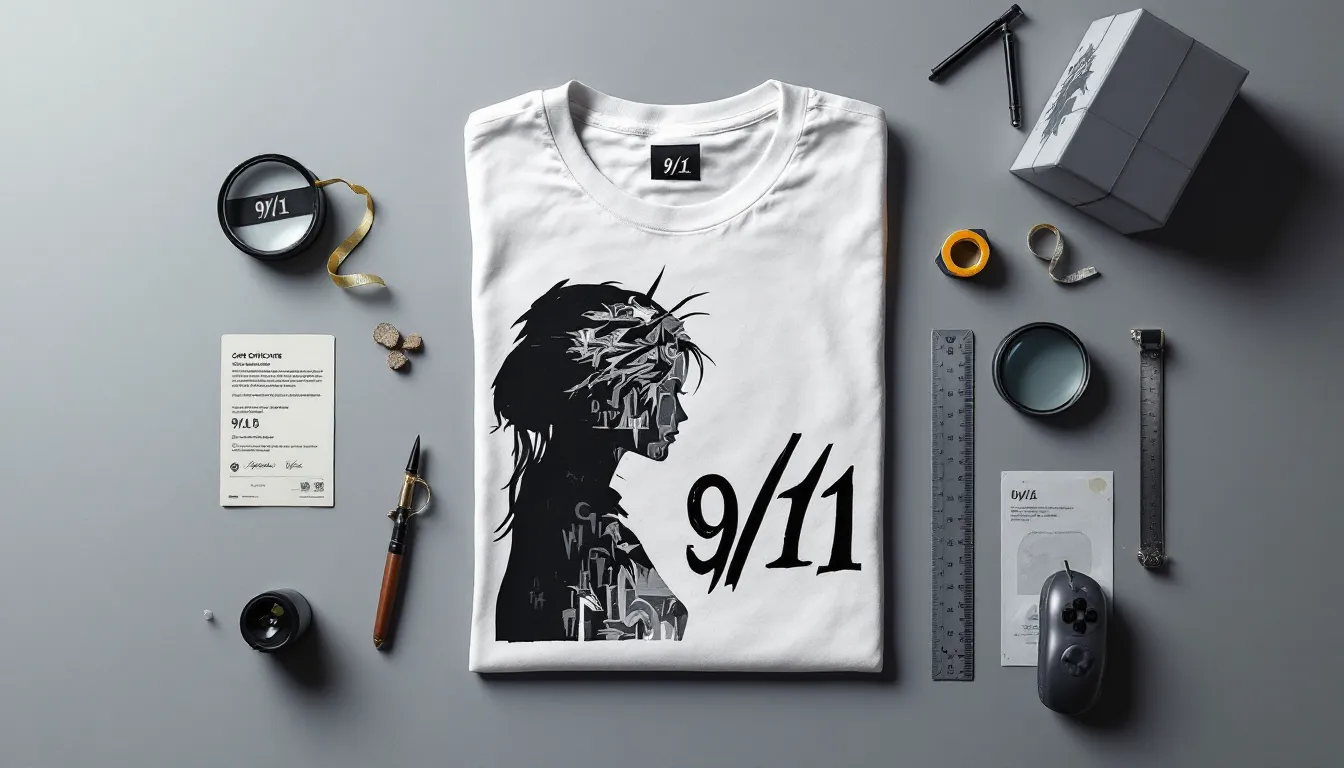
The Final Fantasy 9/11 shirt exists at the intersection of game culture and artistic commentary. Most iterations feature Final Fantasy IX’s iconic Mog character, Vivi’s black mage silhouette, or the series’ crystal motif alongside imagery or typography referencing the date September 11, often framed as a juxtaposition between escapism and historical reality, or as a provocative statement about how gamers process trauma through pop culture.
Design details vary significantly depending on the specific release or artist-created variant. Official Square Enix merchandise (if it exists in this form) typically uses high-quality screen printing with metallic inks or embroidery, while limited-run artist collaborations might feature hand-drawn elements, vintage wash effects, or specialty fabric blends. The color palette ranges from classic black or gray tees with bold graphic placement to full-color front-and-back designs that demand attention.
Production values and artistic intent differ wildly between official releases, licensed partner runs, and unofficial fan-made versions, a distinction that matters enormously when authenticating and valuing these shirts.
Why This Specific Mashup Resonates With Gamers
Final Fantasy IX (2000) remains a cultural touchstone for JRPG fans, especially those who grew up during gaming’s early PlayStation era. The game’s themes of hope, identity, and legacy resonate deeply, and its art style has aged beautifully, Vivi’s stark design and the character-driven narrative make FF9 instantly recognizable even in simplified shirt graphics.
The 9/11 element, meanwhile, reflects a generation of gamers who grew up during or just after that historical moment. For many, gaming was an escape mechanism: for others, it became a way to process complex emotions through narrative and community. Merch that bridges that gap, that doesn’t shy away from juxtaposing fantasy and reality, appeals to collectors who reject sanitized, purely feel-good designs.
This shirt also exists within gaming merch subculture, where niche or controversial designs carry more clout precisely because they’re not mass-produced or universally celebrated. Owning one signals membership in a specific community of fans who appreciate bold artistic choices.
Where to Buy Authentic Final Fantasy 9/11 Merchandise
Official Licensed Retailers and Release Channels
Square Enix occasionally partners with retailers like Hot Topic, GameStop, and official Square Enix merchandise stores (online and in select physical locations) to release limited-edition apparel. Check their official website and social media for announcements, these drops often sell out within hours, especially for region-specific or franchise anniversary releases.
If a Final Fantasy 9/11 shirt ever receives official licensing, it would typically appear through:
- Square Enix Direct Store (highest authenticity guarantee)
- Licensed apparel partners like Uniqlo, who’ve collaborated on Final Fantasy collections
- Retailer pre-orders announced months in advance through official channels
When purchasing through these channels, you’ll get authentication certificates, official packaging, and buyer protection guarantees. Pricing is higher but reflects legitimate production costs and designer compensation.
Trust official sources: verified Square Enix partnerships will always display licensing information prominently. If you’re unsure, contact the retailer’s customer service directly and ask for proof of their Final Fantasy licensing agreement.
Secondary Market Options and What to Watch For
Depot sites like eBay, Grailed, and Mercari host secondary-market gaming merch. These platforms work because they offer seller ratings, buyer protection policies, and return windows, but they also attract counterfeiters. Look for sellers with extensive transaction history (100+ sales minimum), clear communication, and willingness to answer detailed questions about print methods, fabric sourcing, and condition.
Specialized gaming merch communities on Reddit (r/gamecollecting, r/finalfantasy) and Discord servers often feature buying/selling channels where collectors verify authenticity before transactions. These peer-to-peer networks are slower than major marketplaces but significantly safer for expensive pieces.
Unofficial artist-made versions sold through platforms like Etsy or independent storefronts are legitimate if the creator is transparent about intellectual property. Many fan artists license designs or operate in grey-zone territory with tacit approval from rights holders. Prices should reflect artisan production (higher) rather than mass manufacturing. As you research Final Fantasy collectibles, platforms like RPG Site often cover merch releases and collector market trends that can help you identify legitimate drops before they hit secondary markets.
How to Spot Counterfeit Shirts and Protect Your Purchase
Quality Indicators of Genuine Gaming Merchandise
Authentic gaming merch has unmistakable tells. Genuine screen-printed shirts feel slightly textured, with ink that sits on fabric rather than sinking into it, you can run your finger over the design and feel dimensional variation. Counterfeits often use cheap transfer printing (feels plasticky, cracks easily) or direct-to-garment printing (feels flat, uniform, sometimes too vibrant).
Thread quality matters. Official products use reinforced seams with consistent stitching throughout: knockoffs skip corners with loose, uneven threading. Check collar seams, sleeve attachment points, and the bottom hem. A genuine tee will have clean, tight stitching: a fake often has gaps or puckering.
Tag inspection reveals a lot. Authentic merchandise has professionally printed or woven tags with crisp text, proper spacing, and accurate care instructions. Counterfeit tags often feature:
- Misspelled brand names or inconsistent font sizes
- Blurry printing or ink bleeding
- Incorrect fiber composition listings
- Missing licensing information (should reference Square Enix, artist names, or production companies)
Fabric composition should match the product description. Genuine gaming merch uses standard cotton blends (100% cotton, 90/10 cotton-poly, etc.) with consistent weight across the entire shirt. Knockoffs sometimes use cheaper synthetic blends that feel stiff, develop pilling immediately, or have an unpleasant chemical smell.
Color accuracy is critical. Official FF9 designs use specific Pantone colors that Square Enix maintains across all branded materials. Counterfeits often feature faded colors, inconsistent dye batches, or colors that don’t match promotional images. If the shirt arrived much darker or lighter than expected, that’s a red flag.
Common Red Flags in Knockoff Designs
Price unreasonably undercuts the legitimate market. A limited-edition official release priced at $45–$60 shouldn’t mysteriously appear at $12 from random sellers, that’s a counterfeit signal. Check recent sold listings on trusted platforms to establish baseline pricing.
Design details don’t match official references. Counterfeiters work from low-resolution images and make errors: Mog’s features are distorted, character proportions are off, text contains typos or incorrect font weights. Pull official artwork from Square Enix’s media gallery and compare pixel-for-pixel.
Printing placement shifts. Authentic production maintains consistent distance from seams and edges. If the graphic is wildly off-center, partially covers a shoulder seam, or leaves enormous margins, that’s amateur knockoff work. Official production standards are rigid.
Poor packaging and presentation signal counterfeits. Genuine merch arrives in branded packaging (boxes, tissue paper, branded bags) with care instructions, authenticity cards, or thank-you notes. Counterfeits arrive in plain poly mailers with zero presentation.
Seller communication red flags: If they avoid direct questions about authenticity, refuse detailed photos, or pressure you to buy immediately, walk away. Legitimate sellers welcome scrutiny. Recent gaming news sites like Siliconera regularly cover counterfeit merchandise issues in the JRPG community, so stay informed on current scams circulating through popular marketplaces.
Styling Tips: Incorporating Final Fantasy Merch Into Your Wardrobe
Casual Gaming Fits and Everyday Wear
A Final Fantasy 9/11 shirt works best when you treat it as the statement piece it is. Pair it with neutral bottoms, black jeans, grey chinos, olive cargo pants, that don’t compete for visual attention. The shirt graphic should be your focal point, so avoid busy patterns elsewhere in the outfit.
Layering extends versatility. Throw a denim jacket or lightweight overshirt over the tee for casual coffee shop vibes. In colder months, a hoodie worn unzipped creates depth while keeping the graphic visible. The key is ensuring the shirt itself remains the conversation starter.
Footwear should be understated. Clean white sneakers, minimalist black trainers, or vintage canvas shoes keep the vibe grounded. Avoid chunky statement shoes or loud colorways that distract from the graphic. Gaming merch worn well reads as confident fandom, not costume.
Accessories matter subtly. A simple watch, chain necklace, or wrist cuff ties the fit together without overwhelming it. Many gamers incorporate subtle fandom through secondary pieces, a Final Fantasy ring, a Chocobo enamel pin on a bag, a gaming-themed watch. This layered approach feels more intentional than oversaturation.
Convention and Event Styling Ideas
At gaming conventions, anime expos, or retro gaming events, you can lean harder into the aesthetic. Pair the Final Fantasy 9/11 shirt with statement pieces: studded belts, band-style chain wallets, platform boots, or vintage gaming-themed accessories. The environment supports bolder expressions of fandom.
Cosplay integration works if you’re building around the shirt. Vivi-inspired elements (black coat, wand prop, mage aesthetic) complement an FF9 shirt and create a cohesive look without requiring a full costume. Many gamers mix merch with partial cosplay elements for maximum impact at events.
Layering at conventions becomes functional and stylish. Wear the shirt over a black long-sleeve tee, add a tactical vest or denim jacket, and suddenly you’ve created depth and visual complexity. The multiple layers read as intentional and convention-appropriate.
The social aspect matters too. Wearing recognizable gaming merch at conventions starts conversations, fellow fans will ID the design, ask where you got it, potentially trade contact info. A rare or authentic Final Fantasy piece becomes a conversation catalyst, which is part of the convention experience beyond just the outfit itself. Your gaming merch collection ties directly to how other players experience Final Fantasy lore, which guides like the one on Final Fantasy Armor: Discover explore in mechanical depth.
Caring for Your Gaming Shirt: Maintenance and Longevity
Proper Washing and Storage Techniques
Screen-printed merch demands gentle handling. Turn the shirt inside out before washing, this protects the graphic from abrasion and fading. Use cold water (below 60°F) to prevent dye bleeding and synthetic ink degradation. Hot water accelerates fading, especially on darker inks.
Wash with like colors in a delicate cycle. Gaming merch often uses specialty dyes that bleed unpredictably: mixing with random clothing risks staining. If you’re overly cautious, hand-wash the shirt in a sink with cold water and mild detergent (avoid bleach and optical brighteners). A 5-10 minute soak followed by gentle agitation and cold rinse works perfectly.
Drying matters critically. Never throw gaming merch in a hot dryer, heat sets stains, shrinks fabric (especially if there’s shrinkage room), and degrades ink. Hang-dry flat or use a clothesline. If you use a dryer at all, keep it on the lowest heat setting for 10 minutes maximum, then hang-finish. Most collectors air-dry entirely.
Storage should be cool, dry, and out of direct sunlight. UV exposure fades even high-quality inks dramatically over years. Fold the shirt carefully (or roll it to minimize creases) and store in a dark closet or drawer. Avoid plastic storage bags, which trap moisture and encourage mildew, use breathable fabric bags or acid-free tissue if you’re treating this as a collectible.
For rare or valuable pieces, consider acid-free storage boxes designed for textiles. This is overkill for casual merch but appropriate for limited-edition releases or authentic vintage pieces you’re holding as investments.
Preserving Print Quality and Fabric Integrity
Ironing graphic-printed shirts requires caution. Never iron directly over the design, use low heat on the reverse side only. If wrinkles develop, hang the shirt in a steamy bathroom for 15 minutes to naturally relax fabric without heat damage.
Pilling (those annoying fabric balls that form on worn areas) is inevitable with lower-quality merch but can be minimized. Use a fabric shaver or lint roller gently on affected areas. Avoid excessive friction from backpacks or rough surfaces where the shirt rubs repeatedly.
Stain removal must be immediate. Fresh stains respond to cold water and mild detergent far better than set-in marks. For oily stains, sprinkle baking soda, let sit for 10 minutes, then rinse. For protein-based stains (blood, sweat), use cold water only, hot water sets them permanently.
Repair small holes or loose seams immediately. A single loose seam can unravel an entire sleeve if left unchecked. Basic sewing or a trip to a local tailor (often $10–$20) prevents catastrophic damage. For valuable pieces, professional textile repair is worth the investment.
Rotate your wearable merch regularly. Constant use on one shirt accelerates wear: spreading wear across multiple pieces extends individual lifespans. This is especially important if you own multiple Final Fantasy shirts or are building a rotation of gaming apparel.
Rarity, Value, and Collectibility in the Gaming Merch Market
Limited Edition Releases and Print Runs
Official limited-edition releases typically have documented print runs, sometimes listed publicly, sometimes known only to collectors. A 500-unit worldwide release carries more collectible weight than a 5,000-unit drop. Smaller print runs create scarcity, which drives secondary market value.
Release metadata matters: the specific year, retail price, any authentication details (numbered certificates, special packaging, artist signatures) all factor into future value. A Final Fantasy 9/11 shirt from a 2024 Square Enix partnership carries different investment potential than a 2019 fan-artist variant or a 2026 re-release.
Retired designs command premiums. If Square Enix discontinues a Final Fantasy line, remaining stock becomes scarcer over time. Prices on secondary markets often increase 20–50% within the first 2–3 years post-retirement, especially if the original run was small.
Authenticity documentation increases value significantly. Original receipts, packaging, hang tags, and authenticity certificates all preserve resale potential. Collectors pay premiums for provenance, they want to know the item’s history, previous ownership, and condition trajectory.
Limited-time collaborations (like exclusive retailer partnerships) create artificial scarcity that inflates prices. A shirt released only at Hot Topic during a specific month holds more collectible weight than an evergreen design available year-round.
Investment Potential and Future Market Trends
Gaming merch collecting has matured as an investment class, with dedicated online marketplaces tracking historical prices and trending items. Unlike traditional collectibles, gaming merch combines nostalgic value, cultural significance, and wearability, factors that sustain demand.
Final Fantasy continues gaining cultural relevance through new releases, remakes (Final Fantasy VII Remake, Final Fantasy XVI), and renewed mainstream interest in JRPGs. This sustains collector interest and drives up prices for retrospective merch from earlier games. FF9 specifically benefits from generational attachment, players who grew up with the original PS1 release now have disposable income and nostalgia-driven purchasing power.
The 9/11 cultural angle adds investment intrigue. Merch that bridges historical moments and pop culture often appreciates over time as cultural memory becomes more distant and complex. Collectors increasingly view such pieces as artifacts of specific eras and artistic conversations.
Market volatility remains real. Unexpected re-releases, official reruns, or celebrity endorsements can flood the market and devalue older pieces. Conversely, an artist gaining mainstream recognition or a streamer wearing the shirt on camera could spike demand overnight. As with any collectible, monitor trends through specialist gaming news outlets like Gematsu for announcements that might impact your collection’s value.
Condition consistency is your best investment hedge. Kept in near-mint condition, authenticated, and stored properly, a Final Fantasy 9/11 shirt will hold or appreciate in value. Worn, faded, or damaged pieces depreciate rapidly regardless of rarity. Serious collectors treat valuable merch like comic books or vinyl records, respectfully preserved assets rather than casual wardrobe items.
Build your collection with both wear-pieces (shirts you’ll actually rock) and investment pieces (rare drops you keep sealed or stored). This balanced approach lets you enjoy your fandom while potentially building financial value over time.
Conclusion
The Final Fantasy 9/11 shirt occupies a unique space in gaming merch culture, niche enough to appeal to hardcore collectors, bold enough to spark conversations, and rare enough to hold genuine investment potential. Whether you’re hunting for an authentic piece, learning to authenticate your own collection, or figuring out how to wear gaming merch confidently, the principles remain consistent: prioritize quality over price, verify authenticity rigorously, treat your collection with respect, and stay informed about market trends.
Gaming merch collecting has evolved from “just t-shirts” into a legitimate hobby with real financial stakes and cultural significance. A Final Fantasy 9/11 shirt, especially an original, authenticated piece, represents intersection of fandom, art, and historical memory. Approach your collection seriously: source carefully, preserve diligently, and engage with communities that share your passion. The gaming merch market rewards informed collectors who understand the difference between hype and actual value.
As you build your collection, remember that the best piece you own is one you actually connect with, whether that’s a rare investment piece or a worn-soft favorite you grab every convention season.