Table of Contents
ToggleFinal Fantasy sprites shaped how an entire generation experienced one of gaming’s greatest franchises. From the chunky 8-bit warriors of 1987 to the intricately animated characters of Pixel Remasters, these tiny pixel arrangements became instantly recognizable icons. They weren’t just limitations, they were art. When you see Cloud Strife’s distinctive blonde spikes or a Chocobo waddle across the screen, you’re looking at design work that had to communicate personality, combat ability, and emotion within extreme technical constraints. This is the story of how Final Fantasy sprites evolved, influenced gaming aesthetics, and created a legacy that refuses to fade.
Key Takeaways
- Final Fantasy sprites evolved from technical necessity into iconic art form, with designs like Cloud Strife’s instantly recognizable across generations of players and merchandise.
- Extreme pixel limitations (16×16 to 64×64 pixels) forced developers to innovate through silhouette, color coding, and animation economy, creating a timeless visual language that modern game design still respects today.
- The Pixel Remaster series (2021-2023) proved that Final Fantasy sprites could be meaningfully upgraded with expanded animation frames and refined details while preserving the original aesthetic intent and charm.
- Boss sprites like Kefka represented the pinnacle of 16-bit artistry, using layered animation, color palette shifts, and limited frames to balance visual impact with combat readability.
- The sprite community transformed Final Fantasy fandom through fan remasters, mods, and commissioned artwork, lowering technical barriers and proving sprites remain an artistically legitimate choice rather than outdated technology.
- Final Fantasy sprites established visual design principles—instant silhouette readability, personality through movement, and purposeful color use—that influenced the entire JRPG genre and continue guiding character design philosophy today.
What Are Final Fantasy Sprites?
Final Fantasy sprites are 2D pixel-based character and enemy graphics used throughout the series, especially in the early games. They’re composed of individual pixels arranged to form recognizable characters, monsters, and objects on screen. Unlike 3D models that exist in a virtual three-dimensional space, sprites are flat, pre-rendered images displayed from a fixed perspective.
Think of them as digital drawings broken down into the smallest possible units. A character sprite might be anywhere from 16×16 pixels in the earliest games to 64×64 pixels or larger in later 16-bit titles. The technical marvel wasn’t in size, it was in what developers could communicate with so few pixels.
Sprites served a practical purpose: they were computationally efficient, allowing games to run smoothly on hardware that had severe memory and processing limitations. But they also became an art form. The way a sprite walked, attacked, or reacted to spells created personality. Each frame of animation, sometimes numbering just four or five, had to count. This constraint bred creativity that’s still respected today.
The History Of Sprites In The Final Fantasy Series
The 8-Bit And 16-Bit Era (1987-1999)
The original Final Fantasy (1987) on the NES launched with sprites that were humble by any standard. Warriors, mages, thieves, and monks were represented by figures so small that distinguishing them from enemies required color and position. Red mage, white mage, black mage, their robes and staffs were identifiable through simple color coding and silhouette.
But this era taught Final Fantasy developers an essential lesson: constraints breed iconic design. Each pixel mattered. When the series moved to the SNES with Final Fantasy IV (1991) and the legendary Final Fantasy VI (1994), sprite quality exploded. Characters became larger, more detailed, and animation frames multiplied. Kefka’s maniacal grin could be read from his tiny face. Terra’s worried expression and magical aura came through in maybe 40 pixels of width.
Final Fantasy VII released on PlayStation in 1997, and while it shifted toward early 3D models for the main cast, the sprites remained iconic for enemies, NPCs, and environments. The blocky aesthetic of Cloud and party members in the field became as memorable as his Final Fantasy VII Remake appearance would be decades later. Fans weren’t bothered by the quality, they were captivated by the enormous scope the console suddenly allowed.
The 2D-To-3D Transition (2001-2010)
This period saw Final Fantasy wrestle with identity. Final Fantasy VIII (1999) and Final Fantasy IX (2000) still featured 2D sprites for characters on the world map and in menus, but the jump to full 3D had begun. The transition wasn’t clean, early 3D models looked stiff compared to the fluid, hand-drawn animation sprites could achieve.
Final Fantasy X (2001) went all-in on 3D. Sprite-based animation was relegated to optional backgrounds and throwback elements. Yet something was lost: the intimate, almost storybook quality that sprites provided. A sprite forced you to imagine Cloud’s wind-whipped hair: a 3D model showed it to you, and sometimes it looked awkward during that era’s technical limitations.
Developers didn’t forget sprites entirely. The transition period (2005-2010) saw sprite usage decrease but remain respected in spin-offs and remakes. Crisis Core: Final Fantasy VII kept character portraits inspired by the original sprite work. Dissidia Final Fantasy blended 3D combat with 2D portraits that echoed the classic designs.
Modern Sprite Revival And Pixel Art Renaissance
Something shifted around 2015. Indie games proved that pixel art wasn’t nostalgia, it was a legitimate artistic choice that players craved. Final Fantasy XV’s Pocket Edition proved the series could translate to pixel art and charm audiences with it. When the Pixel Remaster series launched for Final Fantasy I through VI (2021-2023), it was clear sprites weren’t just history, they were heritage.
These remasters didn’t simply upscale old sprites. Artists meticulously redrew every character, enemy, and animation frame with modern sensibilities and higher resolution displays in mind. The sprites looked cleaner, more detailed, but maintained the original spirit. Cloud’s overworld sprite in the Pixel Remaster doesn’t try to look like Remake Cloud, it looks like what the original designers would’ve created with 2024 tools.
Mobile games and indie Final Fantasy-inspired titles cemented sprite relevance. Octopath Traveler’s HD-2D aesthetic proved 2D pixel characters could carry AAA-level storytelling. Final Fantasy VII Ever Crisis uses meticulously detailed sprites for its gacha experience. The circle had come full circle: sprites were once the only option, then became outdated, and now they’re chosen because they’re artistically superior for certain games.
Iconic Final Fantasy Sprites You Need To Know
Cloud Strife And The Most Recognizable Designs
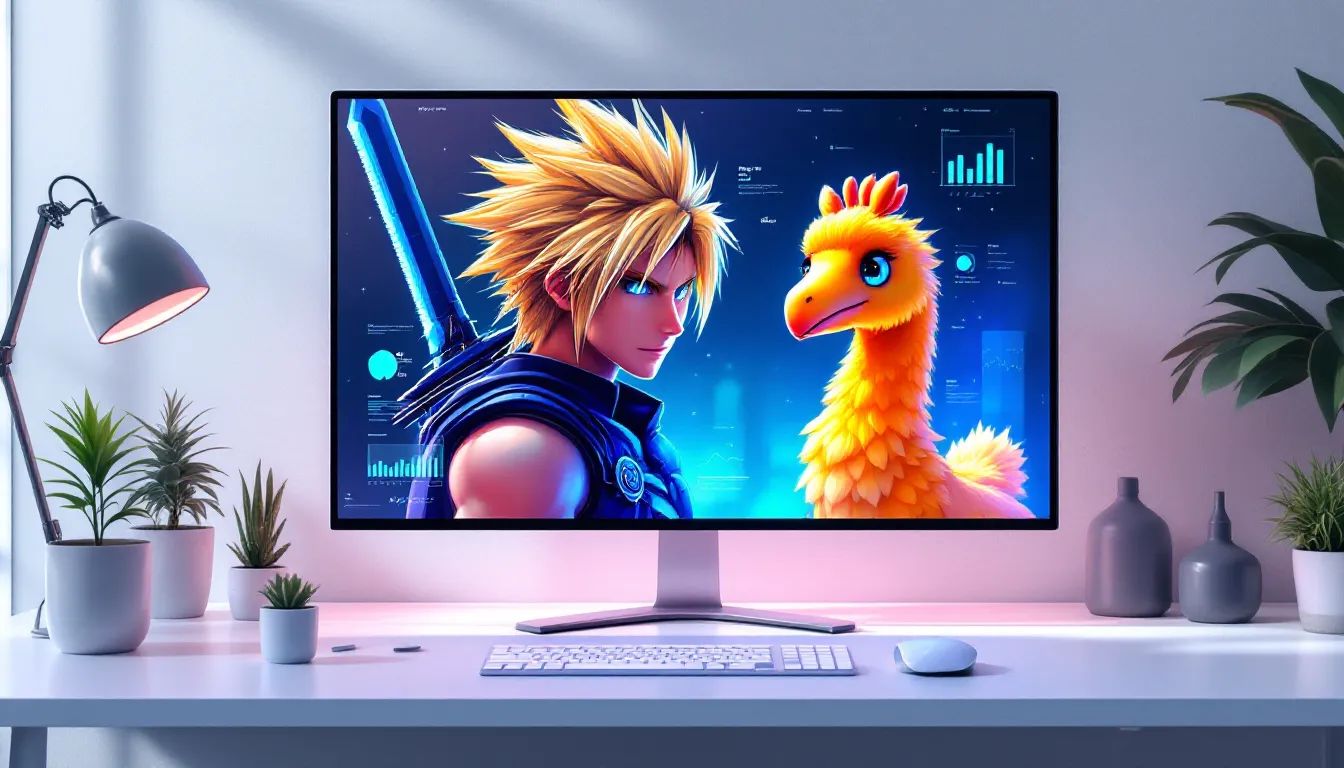
Cloud’s sprite across the different games tells a story of design evolution. His Final Fantasy VII sprite is objectively crude by modern standards, bulky proportions, limited animation frames, yet it’s instantly recognizable. The gravity-defying blonde spikes, the oversized Buster Sword, the determined stance. That sprite has been reproduced in merchandise, fan art, and official remakes more times than probably any video game character ever.
The remarkable thing is how well that sprite design scales. You can shrink Cloud’s 16-bit sprite to mobile phone size and players still identify him. His color palette (blonde, dark clothing) and silhouette (huge sword, distinctive hair) cut through visual noise. This is intentional design, when you have 40×50 pixels to work with, you make choices that communicate instantly.
When Square Enix created the Pixel Remaster version, they didn’t just scale up pixels. They redrew Cloud’s sprite with expanded animation frames, smoother walking cycles, and more detailed armor texture while preserving the essence that made the original iconic. The result proves that great sprite design is timeless.
Chocobo Sprites Across Generations
The Chocobo has one of the longest visual development tracks in gaming. In Final Fantasy I (1987), the Chocobo was a simple yellow quadruped, functional, forgettable. By Final Fantasy VI, Chocobos had personality. Their sprites showed distinct behaviors: running, flying, stumbling, even falling asleep if you rode them too long without moving.
Final Fantasy VII’s world map Chocobo sprite became iconic because of animation quality. You could actually see it walk with realistic pacing. The sprite’s idle animation, shifting weight, head movement, made standing still feel alive. Players spent more time watching their Chocobo run across grasslands than they should have because the animation was just that satisfying.
The Pixel Remaster Chocobo sprites elevated this further. Modern pixel artists added feather detail, more dynamic running cycles, and subtle color variations that make yellow on pixel art actually look three-dimensional. A Chocobo sprite from 1987 and 2023 serve the exact same purpose, transportation, but the difference in execution is night and day.
Boss Sprites That Defined Epic Battles
Boss sprites represented the pinnacle of sprite artistry. They were bigger, more detailed, and had animation budgets that regular enemies couldn’t match. Kefka from Final Fantasy VI is the prime example. His sprite, while relatively small, conveyed madness through animation. His stance was unnatural, his movements twitchy and wrong in ways that communicated psychological instability better than dialogue alone.
The One-Winged Angel composer Nobuo Uematsu’s themes paired with sprite animation to create unforgettable moments. Sephiroth’s One-Winged Angel boss sprite in Final Fantasy VII, while early 3D and somewhat dated, worked because of what it represented combined with the music. But his original sprite concept art and appearances as an NPC featured far more detail than a typical character, making him visually distinct from regular enemies.
Final Fantasy VI’s final boss, Kefka’s Clown form, was sprite animation pushed to its limits. Multiple frames of particle effects, color palette shifts to simulate light and shadow, and layered sprites creating depth through visual trickery. Defeating Kefka felt like conquering something fundamentally different from regular encounters because it looked different.
Boss sprites also served a mechanical function: they had to be visually readable during combat. You needed to understand where attacks were coming from, when buffs were applied, and when victory was near. Great boss sprites balanced aesthetic impact with clarity, intimidating yet informative.
Technical Details: How Final Fantasy Sprites Were Created
Pixel Limitations And Creative Solutions
The technical limitations that defined sprite creation were the entire reason they existed. A single character sprite for Final Fantasy VI required perhaps 1-2 kilobytes of memory. A modern character 3D model requires megabytes. This meant developers had to be ruthless about detail. What details communicate the most? Silhouette, color, and movement.
Square’s artists used visual shorthand constantly. A character’s profession was often indicated through color: black robes for mages, metal armor for knights, brown leather for thieves. These weren’t arbitrary, they were universal gaming language. A sprite’s stance mattered. A character’s posture told you whether they were a fighter or a spell-caster before animation even played.
Color palette limitations created unique challenges. An 8-bit system might allow only 256 colors on screen simultaneously. A character sprite consumed maybe 16 colors of that budget. Artists had to maximize contrast while staying within palette limitations. They used dithering, mixing colors at the pixel level to simulate hues they couldn’t display, to create texture and depth. A leather armor sprite might use just three colors of brown, but clever pixel placement made it look dimensional.
Another solution: tile-based construction. Some sprites were built from repeated tiles, the same small unit repeated to create larger characters. A knight’s armor might reuse the same pattern across the chest, legs, and shoulders. This saved memory and allowed artists to focus detail where it mattered most (the face and weapon).
Animation Techniques And Frame Rates
Sprite animation in the 16-bit era typically ran at 10-15 frames per second, sometimes less for world map characters. This is criminally low by modern standards, movies run at 24fps, modern games at 60fps. Yet sprite animation looked fluid because artists understood frame economy. Every frame had to advance movement meaningfully.
Walking cycles in Final Fantasy VI typically used 4-6 frames. Compare that to modern animation, which might use 12+ frames for a single walk cycle. Square’s animators couldn’t afford wasted frames. Frame 1 of a walk cycle moved the left leg forward, Frame 2 committed that movement, Frame 3 started the right leg transition. No cushioning, no in-between easing that modern tools automatically add.
Attack animations were even more economical. A sword swing might be 3 frames: wind-up, strike contact, recover. That’s it. The impact had to be felt through the single frame of contact and the sound effect. Music and sprite animation synchronized in ways that enhanced each other, a dramatic sword-strike sprite meant nothing without the matching sound and music beat.
Boss animations received more frames but operated under similar constraints. Kefka’s attack animation had perhaps 8 frames total. Each frame had to clearly show the magical buildup, the actual spell release, and the recovery. The sprite essentially had to tell the entire story of an ability in less than one second.
Color Palettes And Visual Identity
Color palette became Final Fantasy’s visual language. You could identify a character by silhouette and color scheme instantly. Cloud: blonde and dark clothing. Aerith: pink, white, and green. Barret: dark skin, orange and grey. These weren’t just aesthetic, they were functional design.
Final Fantasy VI pushed color sophistication further. The game used a technique called palette rotation, where the system would shift colors on screen to simulate animation without actually changing sprite pixels. A flame effect might appear to flicker by rotating between orange and yellow palettes. A water reflection might ripple by shifting the reflected terrain’s colors.
Palette limitations also created memorable aesthetic moments. The World of Ruin in Final Fantasy VI used a desaturated, sickly color palette to communicate devastation. Desaturating sprites didn’t require new art, it was a palette swap. This proves that brilliant sprite work wasn’t always about adding detail: it was about smart technical execution within constraints.
Nintendo’s Final Fantasy remakes on Switch (Final Fantasy Pixel Remaster series) demonstrated how modern artists handle color. They maintain the original palette restrictions’ spirit while working with higher resolution displays. Sprites that appeared slightly dithered at 320×240 resolution now appear as clean, intentional color gradients at 1080p. The artists preserved artistic intent while updating presentation.
Sprite coloring also had to consider readability during gameplay. Combat backgrounds had to contrast with character and enemy sprites. NPCs in towns used distinct colors to help players navigate. A Moogle NPC couldn’t use the same red palette as an enemy Moogle, they had to be visually distinct or gameplay suffered.
Comparing Sprites Across Different Final Fantasy Titles
Final Fantasy VII Versus Final Fantasy VI Sprite Quality
Comparing FF7 and FF6 sprites illustrates two different eras of sprite technology. Final Fantasy VI (1994) was the absolute peak of 16-bit sprite artistry. Characters were large, detailed, and animation-rich. Locke’s sprite clearly showed his brown hair and adventuring outfit. Sabin’s martial arts stances communicated his fighting style through body position alone.
Final Fantasy VII sprites (1997) faced a different challenge. The PlayStation’s hardware meant developers could use 3D for the main party but had to fill the world with 2D sprites for NPCs and environments. Interestingly, FF7’s world map sprites and NPC sprites looked cruder than FF6’s, less detailed, fewer animation frames. This was partly stylistic choice (the overall aesthetic shifted toward a more futuristic, slightly rougher look) and partly technical necessity.
But, FF7’s advantage was ambition. The game could display more sprites on screen simultaneously. Midgar’s streets had numerous NPCs visible at once, something FF6 couldn’t match. FF7’s sprite limitations were trade-offs: less detail per sprite meant more sprites total. Both approaches were valid responses to hardware capabilities.
When comparing attack animations, FF6’s sprites had more personality. A character using a healing spell featured a distinct animation for that character. In FF7, many abilities reused similar particle effects with different palettes. This wasn’t laziness, it was memory management. The party cast the same spells: identical animations for the same spell made sense from both technical and logical perspectives.
The Pixel Remaster FF7 (2021) essentially gave FF7 the FF6 treatment: expanded sprites, more animation frames, greater detail. Seeing Cloud’s Pixel Remaster sprite next to the original reveals how much texture, motion, and personality were added. Yet it doesn’t look foreign, it looks like what FF7’s sprites always wanted to be.
Pixel Remaster Sprites And Modern Remakes
The Pixel Remaster series (FF1-6 on PC and console, 2021-2023) represents the most thorough sprite revision in gaming history. These weren’t simple upscales or recolors. Artists hand-drew every single sprite, every animation frame, from scratch with modern sensibilities.
Compare a Pixel Remaster character sprite to its original: you’ll notice more frames of animation, smoother transitions between states, and texture detail that the original palette restrictions couldn’t convey. A character’s armor now has individual ridges and seams. Hair has individual strand texture. Eyes have more expression.
Yet the spirit remains intact. Pixel Remaster sprites aren’t trying to look like modern 3D models or photorealism. They’re pixel art, intentionally stylized, but at a much higher level of artistic execution than the 1994 originals. This is important: Pixel Remaster proves you can update sprite work without losing its essential character.
The external reference RPG Site covers sprite remasters extensively through detailed technical breakdowns and comparisons. Other studios have noticed the Pixel Remaster reception and success. Octopath Traveler, Triangle Strategy, and other modern games use this “upgraded retro” aesthetic because audiences appreciate the visual polish without sacrificing sprite charm.
Square Enix’s mobile game Final Fantasy VII Ever Crisis also uses high-resolution sprites. The technical approach differs, Ever Crisis sprites are rendered from 3D models, but the visual result echoes the manual sprite artistry of decades past. Even with modern tools, sprite quality depends on artistic direction and attention to detail.
Fan Art, Mods, And The Sprite Community
How Fans Remaster And Reimagine Classic Sprites
The Final Fantasy sprite community is remarkably active, and fan-created sprite remasters predate official ones by years. Artists have been redrawing FF6 and FF7 sprites at higher resolutions since the early 2000s, driven purely by passion and love for the games.
These fan projects typically take two approaches. Some artists meticulously recreate original sprites at 2x or 3x resolution, adding detail while preserving the original design. Others completely reimagine sprites, changing costume designs, adding accessories, or even shifting character appearances to reflect different eras or fanfiction scenarios.
A famous example is the “Better FF3 Sprites” project, which reimagined Final Fantasy III’s character sprites with more personality and detail. The community response was overwhelming, thousands of players downloaded it and integrated it into their own game copies. Square Enix eventually acknowledged these fan efforts when creating the official Pixel Remaster, incorporating some aesthetic philosophies from beloved fan projects.
Sprite animation has also seen community innovation. Fan animators have created entirely new animation frames for characters, adding actions that the original games never featured. A Chocobo that wasn’t animated sprinting in the original might get a fan-created sprinting animation. These additions feel organic because they respect the original sprite’s design language.
The technical barrier to sprite creation has lowered dramatically. Software like Aseprite became affordable and accessible, allowing hobbyist pixel artists to create professional-quality sprites. This democratized sprite art in ways that made the community incredibly collaborative. A beginner artist could post unfinished work and receive feedback from artists who’d been sprite-crafting for decades.
Popular Sprite Mods And Community Projects
Sprite mods for Final Fantasy games fall into several categories. Graphics enhancement mods replace sprites wholesale with higher-resolution versions. Gameplay mods might change enemy sprites to represent different creatures or add sprites for newly implemented mechanics.
The FF7 modding community deserves special mention. Since the original FF7’s sprite design was somewhat dated even on release, fans immediately began creating alternative character sprites. These range from anime-inspired redesigns to realistic approaches to completely original interpretations.
One notable project: enhanced sprite replacements that integrate character artwork from other official sources. Artists would take Cloud’s Final Fantasy VII Compilation artwork and adapt it into sprite form, creating versions that felt more contemporary while remaining authentic sprite work.
FFVI modding saw similar trends. The “Brave New World” ROM hack completely redesigned many sprite designs alongside broader gameplay changes. Mages got more distinctive robes. Warriors’ armor became more visually distinct. These changes served both aesthetic and gameplay purposes, visual clarity improved alongside mechanical changes.
Community projects like “The Terrasque” (a FF3 ROM hack) created entirely new sprite tilesets, adding environmental details and animated background elements that enriched the visual experience. Game8 documents popular mods and community preferences through its community guides, making it easier for players to find quality sprite modification projects.
Sprite commissioning became another community practice. Skilled pixel artists would accept commissions from fans wanting custom sprites, reimagined characters, entirely new characters, or edits to existing sprites. The quality of paid commissions often exceeded fan modifications simply because of focused, uncompromised artistic effort.
The modding community also created tools that simplified sprite editing. Programs like FF3usME (Final Fantasy III US Mega Editor) let players visually edit sprites without hexadecimal knowledge. This accessibility explosion meant that sprite artistry wasn’t gatekept to programmers, visual artists could participate directly.
The Cultural Legacy Of Final Fantasy Sprites
Final Fantasy sprites are more than nostalgic graphics, they’re a foundational element of how gaming learned to communicate visually. When developers had technical restrictions, they innovated. Those innovations created an entire language of visual design that’s still respected.
Consider how sprites influenced character design philosophy. The requirement that characters be instantly identifiable at small sizes created design principles that still guide modern character artists. A good character design reads clearly in silhouette. Colors should communicate personality and profession. These weren’t arbitrary restrictions, they were smart design lessons.
The Siliconera coverage of Final Fantasy anniversaries consistently notes how sprite-era games influenced the entire JRPG genre. Dragon Quest, Chrono Trigger, Suikoden, all borrowed heavily from Final Fantasy’s sprite aesthetic and animation language. Final Fantasy basically established the visual template that JRPGs followed for decades.
Sprites also created an intimacy that early 3D sometimes lacked. A sprite is a drawing, it has artistic intent baked in. You’re looking at an artist’s hand in every pixel. That directness creates connection. When modern indie games return to sprites, they’re not just being retro, they’re trying to recapture that intimacy that 3D proceduralism can sometimes miss.
The merch implications alone show sprite cultural penetration. Cloud’s sprite has been reproduced on every conceivable medium: t-shirts, posters, action figures, furniture, phone cases. His sprite is more recognizable globally than his full 3D model. That 40×50 pixel arrangement has become synonymous with Final Fantasy itself.
Most importantly, sprites proved that technical limitations breed artistic excellence. When you can’t do everything, you focus on doing something perfectly. That constraint forced Final Fantasy’s artists to make every pixel count, and their solution to that problem, elegant design, purposeful animation, smart color usage, became a masterclass in visual communication. Modern game development with unlimited resources sometimes forgot this lesson. The current pixel art renaissance suggests developers are remembering it.
Conclusion
Final Fantasy sprites represent one of gaming’s most successful evolutions: starting from necessity, becoming art, then becoming choice. What began as the only technical option became the gold standard for visual design, then faded as technology allowed new approaches, and has now returned because players and artists understand their irreplaceable value.
These sprites defined an entire generation’s understanding of what video game characters could be. They proved that restrictions don’t limit art, they focus it. The tiny pixel-based warriors, mages, and Chocobos of the 1980s and 1990s created visual language that influenced everything that came after.
The Pixel Remaster series confirms that Square Enix understands sprite legacy as heritage, not history. Updating these designs for modern displays while preserving their essence isn’t nostalgia pandering, it’s respecting foundational artistic achievement. Every new indie JRPG using pixel sprites, every fan artist creating sprite commissions, every modder enhancing classic games is participating in a tradition that Final Fantasy established and perfected.
Final Fantasy sprites weren’t just technical solutions to hardware limitations. They were artists solving impossible problems with brilliance. That legacy never actually left, it just waited for gaming to remember why those impossible problems produced such perfect solutions.