Table of Contents
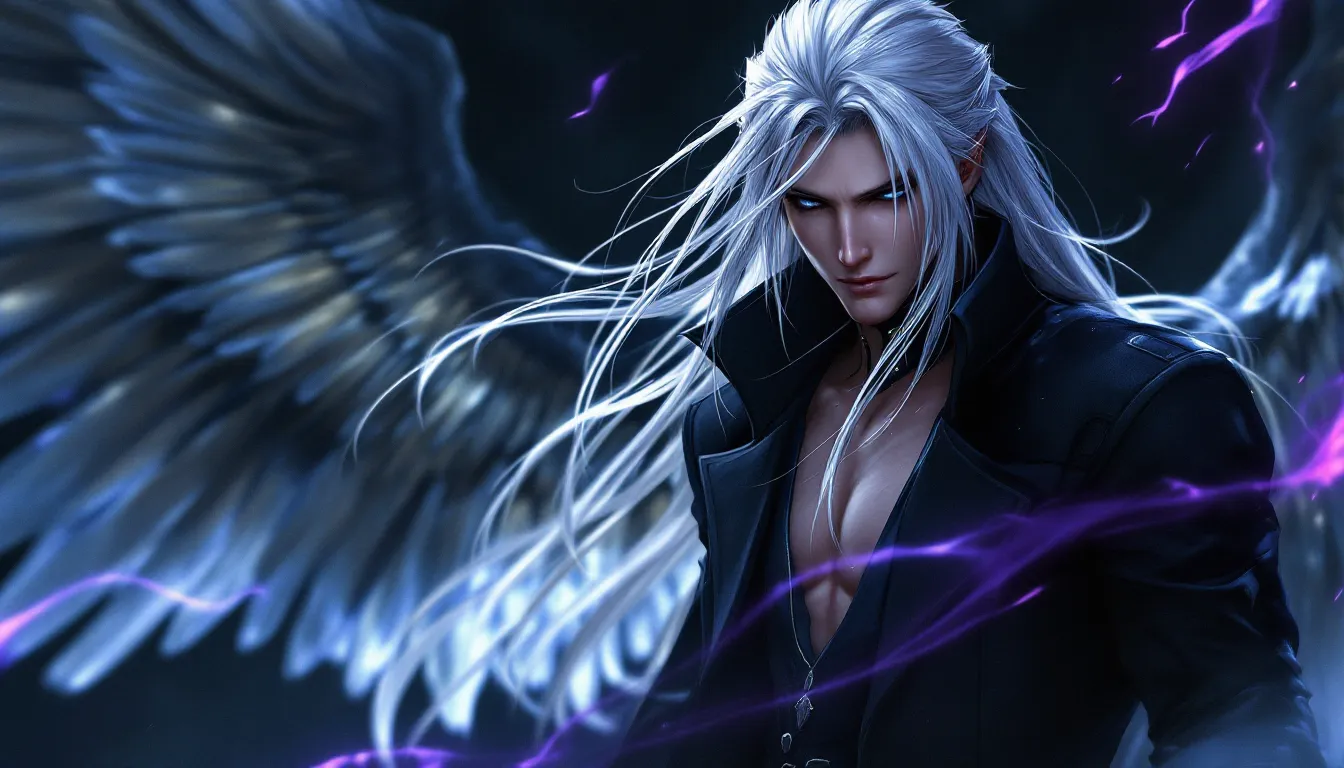
ToggleSephiroth isn’t just a villain, he’s the blueprint for what makes a final fantasy antagonist unforgettable. With silver hair, a masamune blade, and a god complex that spans dimensions, he’s defined the franchise for over three decades. Whether you’re revisiting the original Final Fantasy 7, diving into the Remake, or catching his appearances across Crisis Core, Dissidia, and Kingdom Hearts, understanding Sephiroth means understanding what made JRPG storytelling evolve. This guide covers everything: his lore, combat mechanics, character evolution across different games, and why he still commands the conversation in 2026. If you’re curious about one of gaming’s most iconic villains, you’re in the right place.
Key Takeaways
- Sephiroth redefined JRPG villain design by combining psychological depth, existential motivation, and iconic aesthetics that influenced character design across gaming and anime for three decades.
- The Nibelheim Incident serves as the emotional foundation of Sephiroth’s character arc, transforming him from a loyal Shinra soldier into a nihilistic god-aspirant after discovering the truth about his artificial origins.
- In the FF7 Remake trilogy, Sephiroth evolves from a distant antagonist into an active narrative presence haunting Cloud throughout the campaign, adding layers of complexity through timeline manipulation and philosophical ambiguity.
- Sephiroth’s combat mechanics reflect his godlike aspirations, with signature attacks like Heartless Angel and Supernova that demand strategic preparation and precise timing rather than simple stat-checking.
- His cultural impact extends beyond gaming into anime, manga, and mainstream franchises like Kingdom Hearts and Super Smash Bros., cementing him as gaming’s most enduring antagonist and proof that narrative-driven games can explore existential themes effectively.
Who Is Sephiroth and Why Does He Matter?
Sephiroth is the primary antagonist of Final Fantasy 7 and arguably the most recognizable villain in JRPG history. Created by Shinra Electric Power Company as their ultimate soldier through the JENOVA Project, he’s portrayed as the genetic offspring of the alien entity Jenova and human DNA, a hybrid designed to be the perfect weapon. This origin immediately sets him apart: unlike typical villains driven by greed or power hunger alone, Sephiroth operates from a place of existential identity crisis and god-like ambition.
His importance can’t be overstated. Sephiroth transcended Final Fantasy 7’s boundaries and became a recurring presence across the entire franchise. He appears in Crisis Core, Dirge of Cerberus, Kingdom Hearts, Dissidia Final Fantasy, and the recent Remake trilogy. This isn’t just nostalgia, the character’s design, philosophy, and narrative complexity have influenced how video games approach villain storytelling. When people think “final boss,” Sephiroth’s one-winged silhouette often comes to mind.
What makes Sephiroth resonate is his tragic dimension. He’s not evil by choice initially, he’s a victim of manipulation and genetic horror who discovers the truth about his creation and spiral into nihilism. That blurred line between victim and villain created depth that resonated with gamers worldwide, proving that final fantasy storytelling could be sophisticated enough to challenge players emotionally, not just mechanically.
Sephiroth’s Role in Final Fantasy 7’s Story
The Nibelheim Incident and Its Impact
The Nibelheim Incident is the catalyst that defines Sephiroth’s entire character arc. Set five years before the main game’s events, this tragedy occurs when young Sephiroth, still loyal to Shinra, travels to the village of Nibelheim with Cloud and Zack as part of a Shinra investigation. Here, Sephiroth discovers the truth: Jenova isn’t an ancient alien god to worship, she’s an eldritch parasite that nearly destroyed the planet thousands of years ago. The incident forces him to confront that his entire identity is built on a lie.
In a moment of psychological breakdown, Sephiroth burns Nibelheim to the ground and kidnaps Jenova’s preserved remains. This event traumatizes Cloud and Zack, with Cloud later losing his memories and developing false ones. The Incident isn’t just a plot point, it’s the emotional foundation for everything that follows. Final Fantasy 7 Part explores how Square Enix continues to expand on this pivotal moment in the Remake timeline, showing the developers’ commitment to deepening this origin story.
His Journey as the Main Antagonist
By the time Final Fantasy 7’s main campaign begins, Sephiroth has spent five years orchestrating events from the shadows. He’s not physically present for much of the game, yet his influence permeates every mission. Cloud’s party constantly pursues him across the world, from the slums of Midgar to the snowy peaks of the north. This absent presence creates tension: Sephiroth moves like a ghost haunting the narrative, always one step ahead.
Sephiroth’s plan centers on summoning Meteor, a massive celestial body, to crash into the planet. His reasoning? If the planet is dying, he’ll be reborn as a god through its collective consciousness, the Lifestream itself. This plan operates on a scale that Final Fantasy 7 hadn’t seen before: not conquest, but literal planetary annihilation as a path to godhood. Unlike typical tyrants seeking power for its own sake, Sephiroth believes his ascension is inevitable and righteous.
What complicates his villainy is that he’s partially right. The planet is being drained by Shinra’s Mako reactors. The environment is dying. Sephiroth exploits legitimate planetary suffering to justify his nihilistic vision, making him philosophically dangerous in ways generic villains aren’t. When Nomura Final Fantasy: Unveiling design philosophies are examined, this moral ambiguity becomes a hallmark of Nomura’s character work.
One-Winged Angel: The Philosophy Behind the Character
“One-Winged Angel” isn’t just the most iconic video game boss theme, it’s a manifesto. The composition mirrors Sephiroth’s fractured psyche: classical strings warping into industrial dissonance, perfection twisted into something alien and wrong. The song’s title itself, based on Sephiroth’s singular wing grown from Jenova cells, represents his incompleteness and his drive to transcend humanity.
Sephiroth’s philosophy boils down to a few core beliefs: individuality is supreme, humanity is inherently flawed, and transcendence through godhood is the only logical conclusion. He rejects Aerith’s concept of coexistence with the planet. He dismisses Cloud’s belief in human connection and choice. Instead, he promotes a vision where the strong, himself, remake reality according to will alone. This existentialist nihilism, wrapped in anime drama, proved incredibly compelling to gamers who’d never encountered such thematic depth in a game before.
The character reflects 1990s anxieties about identity and isolation. He’s a walking metaphor for not knowing who you really are, for discovering your entire sense of self is constructed. In that way, Sephiroth became a mirror for a generation of gamers questioning their own realities in the pre-internet era.
Sephiroth’s Abilities and Combat Mechanics
Signature Attacks and Limit Breaks
In combat, Sephiroth’s arsenal reflects his god-like aspirations. His signature abilities include:
- One-Winged Angel: His Limit Break in original Final Fantasy 7, delivering massive single-target damage while building his power for subsequent turns
- Heartless Angel: An iconic ability that reduces party members’ HP to 1 regardless of defenses, psychologically devastating and mechanically punishing
- Supernova: A reality-warping attack that damages all party members, reduces their stats, and inflicts multiple status conditions simultaneously
- Masamune: His legendary blade delivers physical damage and can trigger additional effects depending on the game version
- Safer Sephiroth transformation: In the original game, his final form gains access to Super Nova, which even damages the planet itself for 1,000+ HP per turn
In the FF7 Remake (2020), his combat has been significantly revamped. Sephiroth now uses Jenova’s Revenge, Sephiroth (One-Winged Angel) as a full-damage phase, and possesses enhanced mobility with instant teleportation attacks. His moveset demands positional awareness and perfect timing, not just stat-checking. The Remake’s interpretation makes him feel like an active threat rather than a scripted encounter.
Across different appearances, his movesets shift dramatically. In Crisis Core, Sephiroth’s abilities emphasize overwhelming power and speed. In Dissidia Final Fantasy, he gains teleportation-based combos and ranged magic attacks. This variation reflects how developers have kept him fresh across two decades of releases.
Boss Fights: How to Defeat Him
Defeating Sephiroth varies wildly depending on which game you’re playing. In the original Final Fantasy 7, the fight breaks into phases:
Phase 1 – Sephiroth (Human Form)
- HP: ~2,700
- Key attack: Masamune strikes for 200-300 damage
- Strategy: Heal consistently, use summons (Neo Bahamut, Alexander), and spam limit breaks. Sephiroth’s One-Winged Angel Limit Break deals 1,500+ damage, so manage turn order carefully.
Phase 2 – Safer Sephiroth (One-Winged Angel)
- HP: ~8,000+ depending on difficulty mods
- Key attack: Super Nova hits all party members for 1,000+ damage per turn
- Strategy: Haste your party, use Protect/Barrier spells, and focus on dealing damage quickly. Red XIII’s Cosmo Memory and Aerith’s healing become critical.
Phase 3 – Safer Sephiroth (Jenova)
- HP: ~15,000+
- Key attack: Heartless Angel reduces party HP to 1
- Strategy: This phase requires tank rotations and immediate healing after Heartless Angel triggers. One-shot potential is high if unprepared.
In the FF7 Remake (PS4/PS5), Sephiroth’s encounter at the end of Part One is designed for level 50+. His attacks deal 400-600 damage to single targets and inflict Silence, Stop, and Stagger simultaneously. Materia loadouts matter: Elemental damage (especially Lightning) and status immunity become non-negotiable. The fight emphasizes dodging windows and precise timing over raw stats.
In FF7 Rebirth (PS5, 2024), Sephiroth encounters have been further evolved with RPG reviews and character builds covering optimal strategies. His later encounters showcase the PS5’s graphical and mechanical capabilities with dynamic arena changes and multi-phase transformations.
For easier victory: equip the best armor available, stack HP materia, use Haste before the battle begins, and bring healing items and potions. Sephiroth rewards preparation and punishes improvisation.
Sephiroth Across Final Fantasy 7 Remakes and Spin-Offs
FF7 Remake and Rebirth: Character Evolution
Square Enix’s decision to remake Final Fantasy 7 starting in 2020 gave them the opportunity to reinterpret Sephiroth for modern audiences. In the Remake, Sephiroth is no longer a distant antagonist, he becomes an active presence haunting Cloud from the opening hours. He appears to Cloud throughout the game, sometimes helpful, sometimes menacing, creating ambiguity about whether Cloud is experiencing time manipulation, hallucination, or genuine alternate timeline knowledge.
This redesign serves a purpose: it acknowledges that the original game’s narrative has aged and that modern gamers expect villain presence and development throughout campaigns rather than in climactic moments. The Remake’s Sephiroth is simultaneously the loyal Shinra soldier, the mad god-aspirant, and a version from alternate timelines converging on this reality. It’s narratively complex in ways the original couldn’t explore with 1997 technology and storytelling conventions.
FF7 Rebirth (PS5, 2024) continues this evolution. Sephiroth appears less frequently but with heavier emotional weight. The game recontextualizes his motivations, showing him as genuinely concerned with planetary survival, even if his methods remain apocalyptic. His scenes with Cloud develop into something approaching philosophical debate rather than simple hero-versus-villain conflict. Nomura’s character design philosophy becomes even more evident here, Sephiroth isn’t simplified: he’s deepened.
The Remake trilogy has fundamentally changed how fans understand Sephiroth’s character. What was once a fixed antagonist has become a variable one, shaped by player interpretation and multiple timeline possibilities. This positions him as perhaps the most complex villain in the Final Fantasy franchise when the entire Remake saga is considered as a unified work.
Crisis Core and Other Appearances
Beyond the Remake, Sephiroth’s appearances across the franchise have cemented his legacy. In Crisis Core: Final Fantasy VII (PSP, 2007), players encounter Sephiroth as he transitions from loyal soldier to villain. The game’s final encounter shows him achieving his full power, a tragic final boss that reframes him as a fallen hero rather than a pure antagonist. This game did crucial character work that made his villainy in FF7 feel earned.
In Dirge of Cercerus: Final Fantasy VII (PS2, 2006), Sephiroth appears as the driving force behind the entire conflict, manipulating events from beyond death itself. His presence permeates the narrative even though his limited screentime, a testament to how effectively the original game established him.
Dissidia Final Fantasy (arcade, 2015: console ports on Switch, PS4) features Sephiroth as a playable character and antagonist within a fighting game framework. His playstyle emphasizes ranged magic and hit-and-run tactics, reflecting his strategic mind. The game’s story mode explores his relationship with other Final Fantasy villains and confirms his status as a multiverse constant.
Most memorably, Sephiroth appeared in Super Smash Bros. Ultimate (Nintendo Switch, 2020) as DLC. This brought him to a mainstream audience beyond JRPG circles, and his inclusion sparked renewed interest in Final Fantasy 7. His moveset borrows from all his appearances: One-Winged Angel as his final smash, Masamune as his weapon, and Jenova cells powering his most devastating attacks. PlayStation news and game reviews extensively covered how his Ultimate appearance reinvigorated FF7 discourse across console ecosystems.
Each appearance adds layers to his character without contradicting the core identity established in 1997. Whether as a tragic soldier, a cosmic horror, or a playable fighter, Sephiroth remains instantly recognizable and thematically consistent.
Sephiroth’s Cultural Impact and Legacy
Sephiroth fundamentally changed how video games approach villain design. Before Final Fantasy 7, most games featured straightforward antagonists: Bowser steals Peach, Ganon threatens Hyrule, Metal Gear’s enemies pursue military goals. Sephiroth introduced something different: a villain with psychological depth, existential motivation, and a design so striking that it became instantly iconic.
His silver hair, black coat, and singular wing defined anime villain aesthetics for the 1990s and beyond. Character designers across gaming and anime took note. The combination of beautiful and terrifying, pretty enough to be sympathetic, dangerous enough to be feared, became a template repeated countless times. Cloud’s own design, with his oversized sword and spiky hair, defined protagonist aesthetics through the 2000s partly as a reaction to fighting Sephiroth.
Culturally, Sephiroth represented anxieties specific to the 1990s. The internet was emerging, creating spaces for isolated individuals to explore alternate identities. Genetic engineering and cloning were hot topics. Environmental collapse felt imminent. Sephiroth embodied all of this: someone discovering his identity is constructed, whose body is engineered, who wants to force planetary transcendence. In retrospect, he was a millennial avatar, anxious, isolated, and radicalized by hidden truths.
His recurring appearances across franchises have kept him relevant. Unlike characters tied to single games, Sephiroth became a recurring threat spanning dimensions and timelines. Kingdom Hearts integrated him into a multiverse narrative. Dissidia made him a constant across Final Fantasy’s entire canon. Even his inclusion in Smash Bros. served as proof that JRPG characters could achieve mainstream gaming relevance.
Today, in 2026, Sephiroth remains the benchmark for JRPG villains. New games are compared against his standard. His influence extends beyond gaming, anime, manga, and even live-action adaptations reference him. The Final Fantasy 7 Remake’s success partially rests on expectations built by Sephiroth’s legacy, and Japanese gaming news outlets regularly cover FF7 developments as major events partly because Sephiroth’s presence guarantees audience interest.
What’s remarkable is that he hasn’t been diluted even though constant appearances. Instead, each iteration adds new dimensions. The Remake’s timeline-aware Sephiroth is philosophically richer than 1997’s version. His character can absorb new interpretations without losing core identity, a rarity for videogame characters, especially villains. This suggests his appeal stems from something fundamental: he represents the human capacity for transcendence, corruption, and the terrifying possibility that the self is an illusion. That resonates across generations.
In competitive gaming circles, Sephiroth’s difficulty in various titles has made him a test of skill. Speedrunners have optimized his defeats down to minutes. Challenge runners have fought him at level 1 with basic equipment. The community continues to engage with his encounters decades after his debut, treating his battles as puzzles to solve and tests of mechanical mastery. This longevity speaks to the quality of his boss design, not just his narrative role.
Looking forward, Sephiroth will likely remain central to Final Fantasy 7’s future. The Remake trilogy is building toward something, and all evidence suggests his role will only deepen. Whether he remains a villain, becomes something more complex, or is revealed to be a victim of manipulation remains the central mystery driving the entire Remake saga. That uncertainty, the sense that we still don’t fully understand Sephiroth, is perhaps his greatest legacy. A villain worth questioning two decades later is a villain worth remembering.
Conclusion
Sephiroth transcends the label of “final fantasy villain.” He’s a character design masterpiece, a narrative device that spawned an entire franchise’s future, and a philosophical question wrapped in a black coat. From his tragic origins as a Shinra weapon to his god-like ambitions that threaten planetary existence, every aspect of his character serves the larger story Final Fantasy 7 is telling: about identity, agency, and what happens when someone discovers their entire self is constructed.
The Remake trilogy has given Sephiroth new life and complexity without erasing what made him essential in 1997. He remains immediately recognizable and thematically consistent while growing deeper with each reinterpretation. His appearances across Crisis Core, Dissidia, Kingdom Hearts, and Smash Bros. haven’t diluted him, they’ve expanded his reach and cemented his status as gaming’s most enduring antagonist.
Whether you’re experiencing him for the first time in the Remake, revisiting the original, or simply curious about why he matters, understanding Sephiroth means understanding what makes narrative-driven games powerful. He’s proof that villains don’t need to be simplistic to be effective, that games can explore existential themes without sacrificing drama, and that one character, designed right, can define an entire generation’s gaming experience.