Table of Contents
ToggleIf you’ve ever stared at a shelf of final fantasy figures and wondered whether diving into collecting was worth the investment, you’re not alone. Whether you’re drawn to the intricate Final Fantasy 7 figures that capture Cloud’s iconic pose, or you’re chasing down limited-edition releases, collecting final fantasy action figures has evolved into a serious hobby with real financial and personal stakes. From display cabinets worth thousands to figures that appreciate over time, the collecting scene in 2026 is more sophisticated than ever. This guide walks you through everything, from understanding what makes a figure worth buying, to protecting your investments, to strategically building a collection that resonates with who you are as a gamer.
Key Takeaways
- Final Fantasy figures serve as valuable tangible connections to gaming history and emotional moments, with many maintaining or increasing in value over time due to limited production runs and sustained franchise popularity.
- Quality matters: prioritize figures from established manufacturers like Square Enix, Bandai, and Kotobukiya that feature durable materials (ABS plastic, polystone), tight joints, and flawless paint application to avoid deterioration.
- Build your collection strategically by focusing on specific games, characters, or manufacturers, setting realistic annual budgets ($1,200–$2,000), and limiting display space to encourage intentional purchases rather than impulse spending.
- Exclusivity and condition dramatically impact resale value; mint-in-box exclusive figures can appreciate 150–300%, while loose figures retain only 60–70% of original value, rewarding collectors who maintain careful storage.
- Protect your investment by storing final fantasy figures in climate-controlled spaces (65–75°F, 30–50% humidity), using UV-filtering displays, and avoiding direct sunlight to prevent yellowing and paint fading.
- Popular characters like Cloud, Sephiroth, and Tifa from Final Fantasy 7 hold value best, especially after game remakes and anniversaries spike demand, making timing your purchases and sales crucial for maximizing returns.
Why Final Fantasy Figures Are Essential for Any Gaming Fan
Final Fantasy figures serve as physical manifestations of the characters and worlds gamers have loved for decades. They’re not just toys, they’re pieces of gaming history. When you hold a Final Fantasy action figure in your hands, you’re holding a tangible connection to emotional gaming moments: the weight of Cloud’s story, the whimsy of Chocobo companions, or the tragedy of beloved characters like Aerith.
For serious collectors, these figures bridge the gap between digital and physical fandom. A well-crafted figure captures details that screens alone never could, the texture of armor, the subtle expression in a character’s face, the intricate weapon design. Players who’ve spent 60+ hours in Midgar or battled through challenging dungeons find real satisfaction in owning quality representations of those experiences.
Beyond nostalgia, the figure market has matured. Unlike collectibles that depreciate, many final fantasy figures maintain or increase in value. This is partly due to limited production runs, manufacturers didn’t anticipate decades of sustained demand, and partly because the Final Fantasy franchise continues to thrive with remakes, sequels, and spin-offs that drive new collector interest. Whether you’re building a display that showcases your love of the franchise or eyeing figures as an investment, the reasoning is sound: quality figures from established franchises are worth the shelf space and budget allocation.
Types of Final Fantasy Figures Worth Collecting
Not all final fantasy figures are created equal. Understanding the categories helps you make smarter purchasing decisions and build a cohesive collection.
Action Figures and Statues
Final Fantasy action figures represent the entry point for most collectors. These typically stand 4–7 inches tall, feature articulated joints, and often come with interchangeable parts or accessories. Figures from manufacturers like Square Enix’s Play Arts line are mid-range options, they balance quality with affordability, usually running $50–$120.
Statues, by contrast, are non-articulated. They prioritize visual detail and finish over playability. A statue might sell for $80–$200 depending on artist reputation and production limits. Statues shine on display shelves because they look finished: you don’t have to worry about joint degradation over years of posing adjustments.
Action figures work better if you like to rotate poses or display different seasonal setups. Statues excel in permanent trophy-case displays. Your personal preference will determine which category dominates your collection.
Premium Collectible Models
Premium collectibles include resin figures, polystone statues, and ultra-limited runs from boutique manufacturers. These are the Mercedes of figure collecting. Companies like Kotobukiya and Banpresto produce pieces in batches of 500–5,000 units worldwide, keeping them scarce and desirable.
A premium Final Fantasy 7 figures might cost $150–$400 at release and triple in value within two years. These figures feature museum-quality paint applications, dynamic poses, and materials that resist yellowing and discoloration.
The trade-off: they’re fragile, often hand-painted, and require careful storage. One misstep during dusting can crack a limb or chip paint. Serious collectors use archival-quality display cases and climate control to protect these investments.
Limited-Edition and Exclusive Releases
Exclusive figures drive the most passionate collector activity. Convention exclusives (released only at anime or gaming expos), retailer-specific variants, and numbered limited runs create scarcity that fuels secondary market prices.
Example: A variant Final Fantasy figure distributed only at Anime Expo 2024 might sell for $80 new. Three years later, finding one in mint condition could cost $400+. The exclusivity creates artificial scarcity, fewer were produced, fewer remain in good condition, and collectors actively hunt for them.
The risk with exclusives is higher: you might overpay for hype rather than quality. Not every limited release holds value. The winners are typically characters with strong franchise presence (Cloud, Sephiroth, Tifa) from beloved games (Final Fantasy 7, Final Fantasy X).
How to Identify High-Quality Figures
Quality varies wildly in the figure market. A $40 figure from an unknown manufacturer might look appealing in photos but feel cheap in hand. Here’s how to spot winners.
Material and Construction Standards
The best figures use ABS plastic, PVC, or polystone. ABS plastic is durable and holds paint well, it’s the standard for Play Arts Kai figures. PVC allows for finer details but yellows over decades if exposed to UV light. Polystone (resin-based) is premium: it resists yellowing, takes paint beautifully, and feels substantial.
Avoid budget figures made entirely from soft PVC or TPE plastic. These materials degrade, become sticky, and attract dust. Within five years, the figure will feel like it’s deteriorating under your hands.
Check the joints and seams. High-quality articulated figures have tight joints that hold poses without drooping. Movement should feel intentional, not sloppy. If you’re buying online, read collector reviews. Phrases like “loose hips” or “weak ankles” are red flags, they indicate a figure that won’t maintain poses or might collapse.
Paint application matters enormously. Premium figures feature:
- Clean line work without bleeding or fuzzy edges
- Consistent color matching (no obvious mismatches between the chest and arms)
- Metallic finishes that genuinely shine (not flat or dull)
- Shading and layering that adds depth (not a flat single-color paint job)
Budget figures cut corners: paint bleeds, colors are off, eyes look dead or misaligned. These figures feel noticeably cheaper the moment you unbox them.
Authenticity and Licensing
Counterfeit figures are a real problem. Official manufacturers like Square Enix, Bandai, and Kotobukiya produce licensed figures. Bootlegs from unlicensed manufacturers are cheaper but terrible in person, the paint flakes, plastics feel wrong, and joints fail.
Verify licensing before buying. Check if the manufacturer has an official website. Read seller reviews on reputable platforms. Established sites like Gematsu cover official Japanese game announcements and merchandise releases, cross-reference releases you’re considering.
Official figures include clear packaging with logos, instruction manuals (even if just in Japanese), and quality control stickers. Bootlegs often have typos in packaging, missing quality marks, and vague manufacturer information.
Building Your Collection: Strategy and Budget
Collections don’t build overnight. Smart collectors approach gathering figures the way gamers approach grinding, strategically and with clear milestones.
Setting Your Collecting Goals
First, define what you’re collecting. Are you focusing on a single game (Final Fantasy 7)? A single character (Cloud, Sephiroth, Tifa)? A specific manufacturer (Play Arts Kai exclusives)? A time period (anything released before 2015)?
Focused collections feel intentional and curated. They’re easier to complete, harder to dismiss as hoarding, and often appreciate faster because you’re building in-depth knowledge of a niche market.
Decide your budget per year. If you spend $100/month on figures, that’s $1,200 annually, enough for 10–15 quality pieces. If you’re buying premium collectibles, you might spend $2,000 on 5–8 pieces. Be realistic. Collections funded through impulse spending lead to regret and abandoned hobbies.
Set a display limit. This forces discipline. If you only have room for 20 figures on your main shelf, you’ll make intentional purchases instead of buying every release. Secondary shelves hold overflow: limited visibility means you’ll gravitate toward your favorites.
Where to Buy Authentic Figures
Reputable retailers matter. U.S.-based options include BigBadToyStore, AmiAmi, and HobbyLink Japan. These aggregate international sellers and handle import logistics. They’re more expensive than direct Japanese retailers (import fees, shipping) but trustworthy.
Japanese retailers like AmiAmi and Nippon-Yasan are cheaper if you’re patient with shipping times (2–6 weeks). You’re buying directly from the source, so authenticity risk is minimal. Factor in longer delivery windows when deciding where to purchase.
Avoid marketplace sellers with zero feedback or heavily discounted prices. A figure listed at 50% below market rate is almost certainly counterfeit. Collectors in the Final Fantasy Archives – Foxjawbountyhunters community share known trusted sellers, lurk in forums or Discord servers dedicated to collecting.
For rare or vintage figures, eBay works, but inspect seller ratings aggressively. Look for detailed photos showing the figure’s condition, packaging, and paint quality. If photos are vague or sparse, ask questions before bidding. Don’t assume “Like New” means perfect, ask about any paint loss, loose joints, or box damage.
Display and Storage Best Practices
A figure hidden in a closet is just money sitting idle. Display choices impact both enjoyment and value preservation.
Creating the Perfect Display Setup
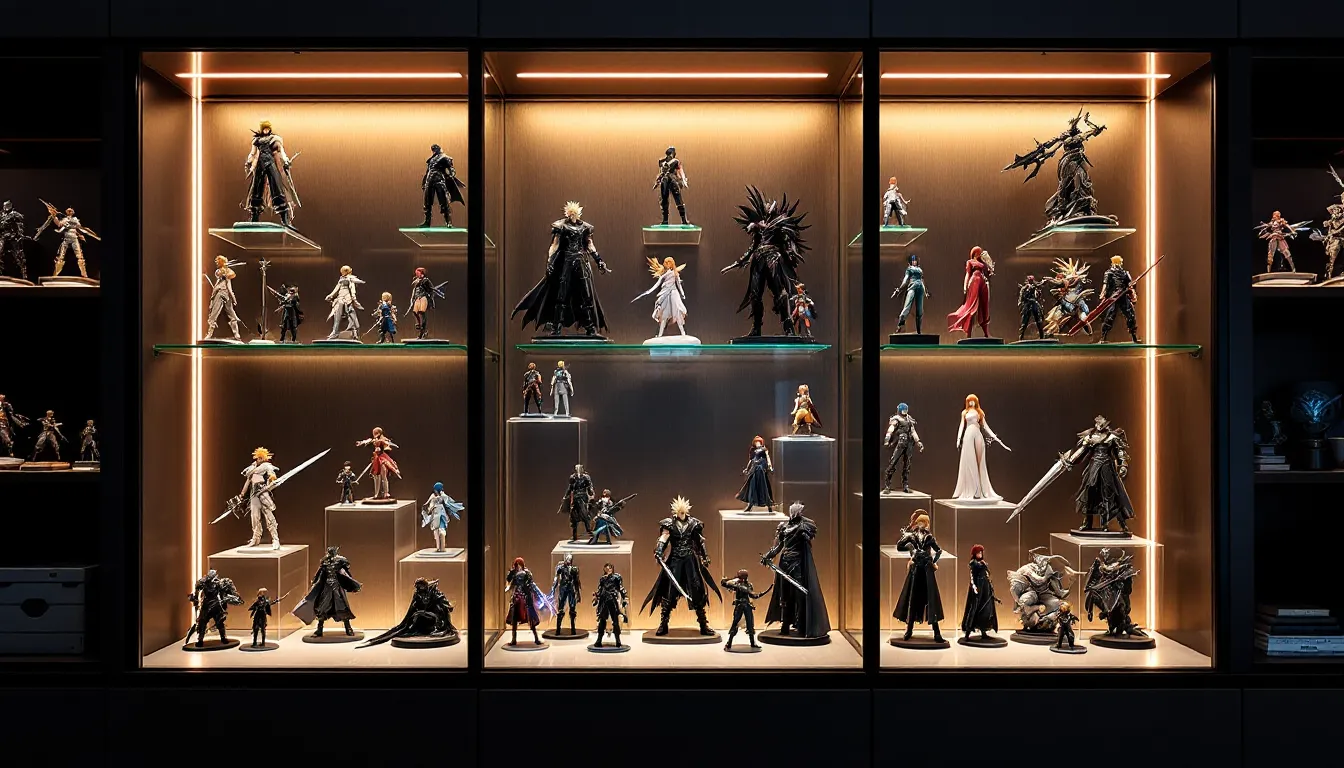
Investment-quality displays use enclosed cabinets with soft LED lighting. Glass doors protect from dust and accidents. Lighting should be cool-white (4000–5000K) and direct downward, this mimics gallery lighting and makes paint detail pop without creating harsh shadows.
Arrange figures by theme, character, or game. Visual coherence matters. A shelf mixing random characters from different franchises looks cluttered. A dedicated Final Fantasy figure shelf organized by game (VII, X, XIV) or character (protagonist, antagonist, support) tells a story and feels intentional.
Use risers and platforms to create depth. A flat line of figures at the same height is boring. Stagger heights using acrylic risers, books, or boxes. This creates visual interest and ensures everyone can see every figure clearly, important if you have deep shelves.
Rotate displays seasonally if you have limited space. Store off-season figures in acid-free boxes in a cool closet. This keeps your display fresh and forces you to appreciate each figure more intensely when it’s on display.
Protecting Your Figures from Damage
UV light is the enemy. Sunlight yellows PVC and fades paint within months. Position your display away from windows, or use UV-filtering film on windows if direct sunlight is unavoidable. Even indirect light adds up, a north-facing room with ambient daylight will damage figures over years.
Dust is relentless. Use microfiber cloths to dust figures monthly. Avoid canned air, the pressure can blast paint off or force dust into joints. A soft brush or compressed air hand-pump is safer.
Temperature and humidity matter more than casual collectors realize. Store figures in climate-controlled spaces (65–75°F, 30–50% humidity). Basements risk mold and moisture damage. Attics experience temperature swings that stress plastic joints. A bedroom closet or climate-controlled storage unit is ideal.
For articulated figures, pose them gently. Forcing a joint risks breaking plastic. After months in one position, rotate poses every few months to prevent joint stress. Polystone and statue figures are more forgiving, they don’t deteriorate from static positioning.
When moving, pack each figure individually in bubble wrap or foam. Use sturdy boxes, never plastic bags (which create condensation). Label everything clearly. A figure that survived your last move deserves careful handling.
The Investment Value of Final Fantasy Figures
Some collectors frame their hobby as investment. That framing is partially valid, select figures genuinely appreciate, but with caveats.
Which Figures Hold Value Over Time
Characters matter enormously. Cloud Strife, Sephiroth, and Tifa from Final Fantasy 7 hold value because FF7 remains culturally dominant, especially after the 2020 Remake. Figures of supporting or minor characters depreciate unless they become unexpectedly beloved through memes or community discourse.
Manufacturer reputation affects holding value. Play Arts Kai figures by Square Enix are recognized, documented, and actively traded. A five-year-old Play Arts Cloud retails for $80–$120 but sells used for $60–$100 if well-maintained, minimal loss. Bootleg or unknown-brand figures of the same character might sell for $20–$30 used, even though lower initial cost.
Exclusivity drives premium appreciation. A standard mass-market figure might hold 60–70% of its original value. An exclusive (limited to 1,000 units) from an anime expo might appreciate 150–300% if it was a beloved character and the figure quality was exceptional. Rarity + demand = appreciation.
Condition is critical. Mint-in-box figures are worth 2–3x the value of loose figures. A $100 Play Arts figure in mint condition might sell for $200 loose or $250–$300 sealed. The premium rewards collectors who resist opening boxes and maintain perfect storage, a high bar that most casual collectors don’t meet.
Market Trends and Resale Considerations
The figure market has grown substantially. JRPG figures are increasingly mainstream, sites like Siliconera cover collectible announcements alongside game reviews. This broadening audience supports prices.
Remakes and anniversaries spike demand. After Final Fantasy 7 Remake launched in 2020, Play Arts FF7 figures that were sitting for years suddenly jumped 30–50% in value. Similarly, upcoming games or remake anniversaries create buying pressure that lifts related figures.
Niche character popularity is unpredictable. Five years ago, no one anticipated that Gilgamesh would generate passionate collector interest. A Gilgamesh Final Fantasy: Discover figure released years ago is now sought after. Popularity shifts create opportunities, buy undervalued figures of rising-interest characters before the market realizes their appeal.
Secondary market prices are volatile. If you’re banking on a 10-year appreciation timeline, don’t overthink short-term fluctuations. The market for established franchises (FF7, FFX) is stable because the playerbase ages and remains invested. Niche titles’ figure values can collapse if the community fragments.
Timing matters. Buy during lulls when new releases aren’t generating buzz. Sell during spikes when franchise news (movie announcements, game releases, anniversaries) drives renewed interest. Collectors who bought Aerith figures in 2019 and sold after Final Fantasy 7 Remake hype in 2020–2021 nearly doubled their money.
Conclusion
Building a final fantasy figures collection rewards patience, research, and intentional spending. Whether you’re driven by pure fandom, investment ambitions, or the satisfaction of curating beautiful objects, the key is understanding what you’re collecting and why.
Start with characters or games you genuinely love. Quality matters, invest in established manufacturers and licensed products. Set realistic budgets and display goals. Protect your figures through proper storage and climate control. And remember: the best figure in your collection is the one that makes you smile every time you walk past your shelf.
As the franchise evolves and newer collectors discover classic characters, the market will continue rewarding smart collectors who bought quality pieces from beloved games. Your investment today could be tomorrow’s sought-after collectible. Sites like RPG Site regularly cover figure releases and collector news, stay informed about new announcements to catch emerging opportunities before the broader market does.