Table of Contents
ToggleFinal Fantasy VII: Advent Children is a cinematic bridge that left fans either absolutely captivated or scratching their heads when it hit theaters in 2005. If you’re diving into the world of Final Fantasy VII for the first time or revisiting it after the modern remakes, this film has become essential viewing to understand the full narrative arc. Whether you’re a die-hard FF7 enthusiast or jumping in fresh after playing Final Fantasy VII Remake, knowing how to watch Final Fantasy VII: Advent Children, and where to find it, can actually enhance your entire experience with Midgar and beyond. This guide breaks down everything you need to know about streaming, quality options, story context, and how to get the most out of your viewing session.
Key Takeaways
- Watch Final Fantasy VII: Advent Children in the Complete edition (101 minutes) for the fullest experience, as it includes 26 minutes of additional content and narrative clarification not found in the theatrical cut.
- The film is best watched in HD or 4K with at least 5.1 surround audio in a dark room on a large screen to properly appreciate its animation detail, color grading, and action sequences.
- Familiarity with the original Final Fantasy VII game is essential for enjoying Advent Children, as the film assumes you know the cast and plot and focuses on character-driven action rather than exposition.
- Multiple streaming and purchase options are available, including Amazon Prime Video, Apple TV, YouTube Movies, and digital storefronts, with prices typically ranging from $8–15 USD for HD or 4K versions.
- The film serves as the definitive epilogue to the original 1997 game, exploring emotional aftermath and personal redemption through Cloud’s journey rather than attempting another world-saving narrative.
What Is Final Fantasy VII: Advent Children?
Final Fantasy VII: Advent Children is a feature-length computer-animated film released by Square Enix in July 2005, directed by Tetsuya Nomura. It serves as a direct continuation of the original Final Fantasy VII (1997), set two years after the events of the game. The film runs approximately 101 minutes in its Complete edition and was the company’s first major theatrical release exploring the post-Sephiroth world.
The movie was a bold move at the time. CGI films based on video games weren’t nearly as common or refined as they are today, but Advent Children pushed technical boundaries. The animation quality still holds up remarkably well, especially during combat sequences, something the gaming community has repeatedly highlighted since its release.
What makes Advent Children unique is its tone and pacing. It’s not a story-heavy narrative like the original game: instead, it’s a character-driven action film that assumes viewers are familiar with FF7’s plot. The pacing is brisk, the action sequences are intense, and the emotional weight hinges on your attachment to Midgar’s cast. This is both a strength and a potential weakness depending on what you’re looking for.
There are actually two versions you might encounter: the original theatrical cut and the Complete edition (released in 2009). The Complete edition adds about 26 minutes of new content, extended scenes, and revised visual effects. Most gamers recommend the Complete edition for a fuller experience, though both tell the same core story.
Plot Overview And Story Timeline
Understanding The Setting
Advent Children takes place in a world forever changed by the events of Final Fantasy VII. The Calamity has been stopped, Midgar’s reactors are no longer draining the planet’s life force, and the immediate threat of Sephiroth appears to be eliminated. But the film opens with a plague called Geostigma sweeping across the planet, a corruption directly tied to the spiritual remnants of Sephiroth.
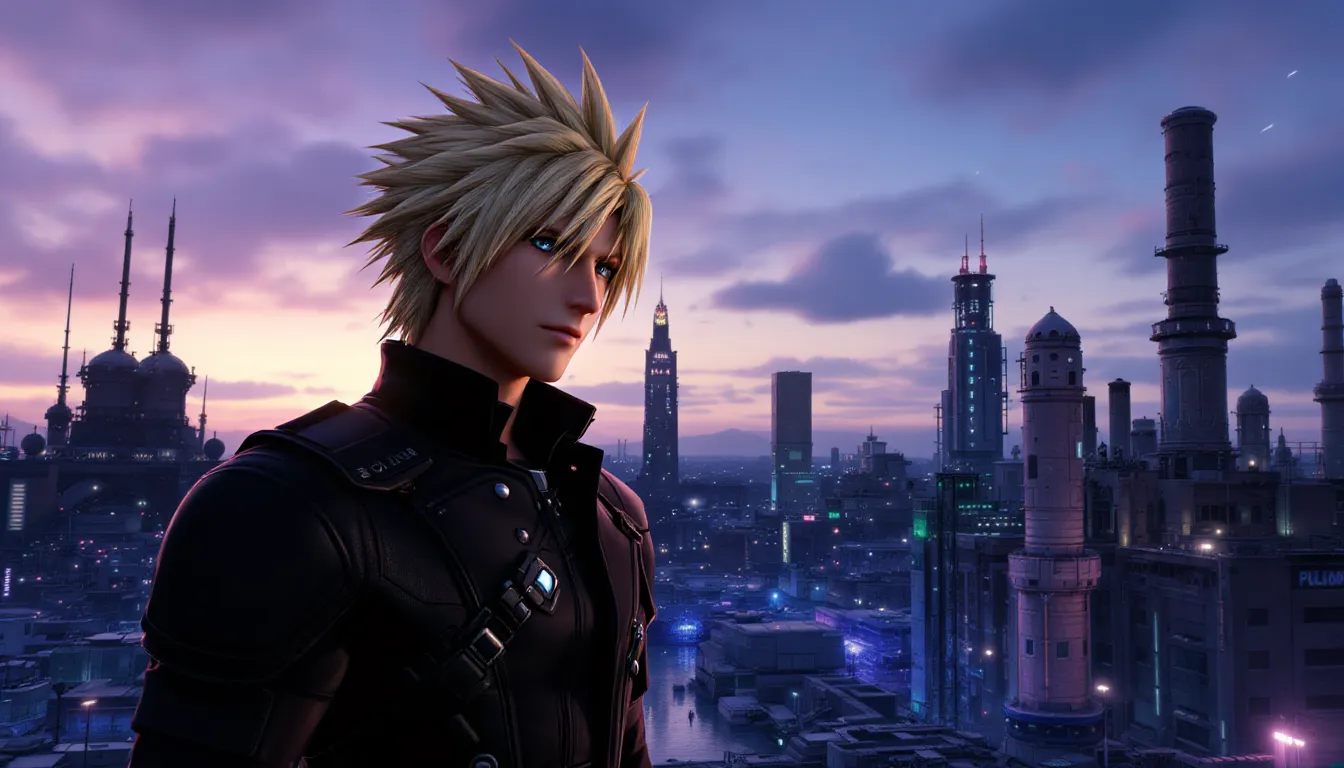
Cloud Strife, the protagonist of both the original game and this film, has retreated from active duty. He’s living in hiding on the outskirts of Midgar, tending to children afflicted by Geostigma. It’s a quieter existence than fans might expect, and it immediately signals that this story isn’t about saving the world again, it’s about personal redemption and closure.
The world itself shows scars from the original game’s conclusion. Midgar’s structure is visibly damaged, and the ecosystem is recovering. This environmental storytelling helps ground the film in consequences that actually matter. It’s not just a hero’s victory lap: it’s the messy aftermath.
Key Characters And Their Roles
Cloud Strife remains the central figure, but he’s not the Cloud who defeated Sephiroth. He’s haunted, isolated, and dealing with survivor’s guilt alongside Geostigma. His arc in Advent Children is about accepting his past and reconnecting with the people who matter to him.
Tifa Lockhart appears as a grounded presence, running a 7th Heaven bar-turned-orphanage. She’s arguably the emotional anchor of the film, providing both vulnerability and strength. Her relationship with Cloud carries unresolved tension that the film gently explores without spelling everything out.
Barret Wallace has moved into a leadership role, working to rebuild Corel and champion environmental causes. His scenes are fewer than some might hope, but they’re impactful. He’s aged visibly and carries the weight of his community’s future.
Aerith’s presence permeates the entire film even though her death in the original game. Her spirit appears to influence events, and Cloud’s relationship with her memory is a recurring emotional beat. For players who loved her in FF7, seeing how her absence shapes the story is legitimately poignant.
The antagonists are Kadaj and his brothers Loz and Yazoo, remnants of Sephiroth with their own agenda. They’re mysterious, powerful, and their motivations are rooted in the same Lifestream corruption that created Geostigma. Their battles against Cloud form the film’s main action sequences and escalate dramatically as the narrative progresses.
Where To Watch Final Fantasy VII: Advent Children
Streaming Platforms And Availability
Advent Children’s streaming availability varies by region and has shifted over the years. As of 2026, the film is available on multiple platforms, though not all offer every version.
Primary streaming options:
- Amazon Prime Video – Offers both standard and Complete editions (US, UK, and many other regions). The Complete edition is the recommended version here.
- Apple TV – Available in HD and 4K where supported. Platform quality tends to be consistent.
- YouTube Movies – Both versions available for purchase in multiple regions.
- Disney+ – Available in select regions as part of Disney’s acquisition of Square Enix content rights. Check regional availability as this is still expanding.
- Platform-specific stores – PlayStation Store, Xbox Store, and Steam offer purchase options, particularly useful if you want to watch on a console.
The key caveat: streaming availability for older titles can be spotty depending on licensing agreements. If a platform shows it as unavailable in your region, don’t assume it’s gone forever, check back in a few months, as these agreements rotate.
Purchasing Options
If you want permanent access without subscription limitations, owning the film outright is straightforward:
- Digital purchases – The Complete edition is available across all major digital storefronts (iTunes, Amazon, Google Play, Vudu). Prices typically range $8–15 USD depending on quality tier (SD vs. HD/4K).
- Physical media – Blu-ray copies remain available through retailers like Amazon, Best Buy, and specialty stores. The Complete edition Blu-ray is the gold standard for picture and audio quality.
- Special editions – Limited collector’s editions occasionally become available. These often bundle the film with artbooks, soundtracks, or memorabilia. Prices vary significantly based on scarcity.
- Rental options – If you’re testing the waters before committing, short-term rentals are available on most platforms for $3–5 USD.
For gamers who also own Final Fantasy VII Remake, owning Advent Children completes the narrative arc without relying on streaming availability.
Video Quality And Format Considerations
Standard Definition Vs. High Definition
Advent Children was originally rendered for theatrical release, and this technical decision has a major impact on how it looks today. The film was mastered in a higher resolution than typical 2005 standards, which means upscaling has treated it well compared to many movies from that era.
Standard Definition (SD) – Older DVD releases cap out at 480p. If you’re watching via free or lower-tier streaming, this might be what you get. It’s watchable but noticeably soft, especially during detailed character close-ups. The action sequences still convey their intensity, but you lose texture detail in character models and backgrounds. SD is fine if you’re just checking the film out, but it’s not the intended experience.
High Definition (720p/1080p) – The sweet spot for most viewers. HD clearly shows the animation detail, facial expressions read better, and the color grading is properly visible. Most streaming platforms now default to HD, and it’s what you’ll get with standard Blu-ray.
4K Ultra HD – The Complete edition received a 4K restoration and remaster, available on select platforms (Apple TV 4K, some Blu-ray releases). The improvement is real: sharper details, better color separation, and darker blacks in the numerous night scenes. If you have a compatible display, 4K is legitimately worth it. The restoration work cleaned up artifacts from the original master, making it the best-looking version available.
For the clearest takeaway: watch in HD minimum if possible. It’s the baseline that does the film justice without requiring specialized equipment.
Audio Formats And Language Options
Audio quality matters more than many realize, especially for a film with this many action sequences and orchestral compositions.
Language options include the original Japanese voice acting and English dub. Japanese is generally considered superior by fans for character delivery and emotional nuance, but the English cast (featuring George Newbern as Cloud) isn’t bad, it’s just a stylistic choice. Most streaming platforms let you toggle between both.
Audio formats vary by platform:
- Stereo (2.0) – Basic, found on older streams or budget options. Acceptable but loses spatial depth.
- Dolby Digital 5.1 – Standard on most streaming platforms and DVDs. Creates noticeable surround effects, particularly during battle scenes. This is the minimum recommended audio format.
- Dolby Atmos / DTS:X – Available on premium Blu-ray releases and select streaming tiers. If your home theater supports it, the difference is substantial. Explosions and magic spells have genuine overhead presence.
- LPCM (Linear PCM) – The highest quality audio format, found exclusively on Blu-ray. Uncompressed, bit-perfect sound that audiophiles genuinely prefer.
For a complete experience, pair HD or 4K video with at least 5.1 audio. This combination covers both technical and artistic bases without requiring expensive equipment.
Final Fantasy VII Lore: Preparation For Watching Advent Children
Essential Backstory From The Original Game
Advent Children assumes you know the original Final Fantasy VII. If it’s been years since you played, a quick refresher helps tremendously. The core elements you need to remember:
The Calamity – Sephiroth, a legendary SOLDIER operative turned antagonist, attempted to summon Meteor and destroy the planet. Cloud and his party stopped him, but the resulting events caused catastrophic damage. Aerith sacrificed herself to stop the Geostigma plague Sephiroth had unleashed, and her death fundamentally changed everything.
The Lifestream – Final Fantasy VII’s world operates on Lifestream energy, essentially the planet’s spiritual essence and life force. When characters die, they return to the Lifestream. This is crucial because Advent Children’s entire conflict stems from Sephiroth’s remnants trying to manifest within the Lifestream again.
The main cast – Cloud, Tifa, Barret, Aerith (deceased but spiritually present), Red XIII, Yuffie, Vincent, and Cait Sith. Advent Children focuses heavily on Cloud, Tifa, and Barret, with brief appearances from others. If you’ve played FF7, you’ll recognize everyone immediately.
Cloud’s psychological state – In the original game, Cloud struggles with his identity and sanity. He eventually comes to terms with who he actually is. Advent Children picks up after that resolution, so Cloud isn’t fractured, he’s functional but carrying trauma and isolation.
If you haven’t played the original FF7, consider playing through Final Fantasy VII or watching a detailed summary beforehand. Advance spoilers for the original game freely here: Advent Children doesn’t hide its plot points and assumes familiarity.
Connection To Recent Remake Releases
The Final Fantasy VII Remake (PS4/PS5, 2020 and beyond) changes how Advent Children fits into the broader narrative. Square Enix has hinted that the Remake is not a straightforward retelling, it’s an alternate timeline exploration with multiple layers of complexity.
Advent Children is canon to the original game’s continuity, not necessarily the Remake’s. This distinction matters because the Remake’s ending deliberately diverges from FF7’s original conclusion. Some fans speculate that Advent Children might receive a remake of its own or that future Remake sequels will address the film’s narrative.
For now, the recommendation is straightforward: Advent Children is essential for understanding the original FF7’s true ending and aftermath. After playing Remake, watching Advent Children gives context for what the original story actually was before Nomura’s recent reimagining.
If you’re interested in the broader Final Fantasy universe, exploring other titles in the franchise provides additional context. Each game stands alone, but thematic connections between titles enrich the experience.
Critical Reception And Fan Perspective
What Critics Say
Advent Children received mixed reviews upon release and has aged into a more nuanced reputation over two decades. Professional critics were divided on several fronts.
Action and animation quality received universal praise. The fight choreography and character animation set a new bar for video game films at the time. Sequences like Cloud versus the Remnants are legitimately impressive, even by modern standards. Critics consistently highlighted the technical achievement as the film’s strongest element.
Narrative cohesion was a frequent criticism. Critics noted that the film assumes deep familiarity with FF7 and doesn’t adequately explain plot points for newcomers. The pacing is brisk, sometimes to the point of feeling rushed. Story beats that could have been explored get glossed over in favor of more action sequences. This remains a valid critique, though fans counter that this actually fits the film’s tone.
Character writing split opinions. Some critics felt the characters lacked depth beyond nostalgic cameos. Others argued that the emotional beats, particularly Cloud and Tifa’s scenes, were subtle but effective. Critics across gaming media like Siliconera have revisited the film in recent years with more appreciation for its attempts at emotional storytelling.
On Metacritic’s aggregated review score, Advent Children sits at a 67 (mixed reviews), which reflects the genuine divide in critical reception. Not panned, not praised, right down the middle.
Community Reaction And Legacy
The gaming community’s relationship with Advent Children is more positive than critical consensus. Fan communities have consistently defended the film for what it set out to accomplish: a love letter to FF7 fans that prioritizes action and emotional resonance over exposition.
Specific scenes resonate deeply with the community. Cloud’s emotional breakdown, the revelation about Geostigma’s nature, and the final confrontation with the Remnants are frequently cited as highlights. Younger fans who watched it recently often come away impressed by the animation quality relative to its age.
The Complete edition significantly improved perception. When the extended cut added narrative clarification and character moments, many critics and fans felt the story gaps were addressed. The Complete version is now the default recommendation across most gaming communities.
Advent Children’s cultural impact extends beyond reception metrics. It legitimized CGI films based on video games as a storytelling medium. Later animated films like the Monster Hunter film and various anime adaptations benefited from the groundwork Advent Children laid. It also influenced how Square Enix approached the Final Fantasy VII narrative across Remake and Compilation content.
Among RPG Site’s coverage and similar gaming publications, Advent Children consistently appears in retrospectives of important video game films. It’s not universally loved, but it’s universally respected as a technical and creative achievement worth examining.
Making The Most Of Your Viewing Experience
Best Viewing Setup Recommendations
How you watch Advent Children genuinely affects how much you get from it. The film’s visual and audio design deserve proper treatment.
Display setup – A larger screen (40+ inches) is ideal. The animation detail and action clarity improve significantly with screen size. Sitting at a reasonable viewing distance (8–10 feet for a 50-inch TV) eliminates strain and lets you absorb the cinematography. If using a projector, that’s even better, the theatrical experience the film was designed for.
Lighting conditions – Many of Advent Children’s scenes take place at night or in dimly lit environments. A dark room is genuinely necessary to appreciate the color grading and contrast. Watching in bright daylight washes out the visuals and dulls the atmosphere. Close curtains, dim overhead lights, and eliminate glare from windows.
Audio equipment – A basic 2.1 speaker setup (TV speakers plus a subwoofer) is acceptable, but a proper 5.1 surround system (or better) transforms the experience. If you don’t have surround speakers, even a soundbar with simulated surround creates noticeable improvement over TV speakers alone. During action sequences, proper bass response actually matters, the score and sound effects are mixed with expectation of meaningful low-end output.
Streaming quality settings – If using a streaming service, check your account settings and ensure you’re not capped at a lower quality tier. Paid tiers of Amazon Prime, Apple TV+, and others often default to HD or 4K if available on your connection. Don’t handicap yourself with lower settings.
Tips For New And Returning Fans
First-time viewers should ideally have played or watched a summary of the original Final Fantasy VII first. The film truly shines if you have emotional attachment to these characters. Without that context, it reads as a solid action film but misses the weight it’s designed to carry.
Timing matters – Set aside 101+ minutes for the Complete edition without interruptions. This isn’t a film that benefits from pausing or context-switching. One sitting maximizes emotional impact.
The complete edition is canon – If you’re choosing between versions, always pick Complete. The theatrical cut omits too much context, and the extended scenes directly address narrative complaints about the original release.
Japanese audio enhances it – If you’re open to subtitled content, switching to Japanese voice acting gives the film a different texture. The acting delivery carries different emotional weight. This isn’t objectively “better,” but it’s genuinely worth experiencing.
The soundtrack deserves separate attention – Nobuo Uematsu’s score is exceptional. After watching, listen to the complete soundtrack or key tracks. This deepens appreciation for scenes you just watched. For Final Fantasy completionists, checking out related soundtracks and content provides additional context for the franchise’s musical legacy.
Returning viewers should watch the Complete edition again even if you’ve seen the original theatrical cut. The differences are meaningful enough that you’ll catch new nuances.
Embrace the vibe – Advent Children is best experienced as a stylish, action-heavy epilogue rather than a narrative-heavy continuation. Setting that expectation beforehand makes the actual experience more enjoyable. It’s a victory lap with emotional stakes, not a mystery to solve.
Conclusion
Final Fantasy VII: Advent Children occupies a unique space in gaming culture. It’s not a perfect film, but it’s a genuinely committed attempt to honor a beloved game and explore what comes after the hero’s victory. For anyone invested in Final Fantasy VII, whether through the original 1997 game, the recent Remake, or pure curiosity, watching it provides narrative closure and character depth that no single title alone can deliver.
The practical path forward is straightforward: grab the Complete edition in HD or 4K, set up a proper viewing environment, and give it your full attention. The technical quality holds up, the action sequences remain impressive, and the emotional beats land if you approach it with context about who these characters are.
The 2005 release date doesn’t diminish the film’s relevance. If anything, its existence makes the Final Fantasy VII narrative complete in a way the Remake hasn’t yet achieved. Whether it becomes part of the Remake’s continuity remains to be seen, but for now, it stands as the original story’s definitive end.
Watch it. You’ll either appreciate a solid action film with genuine heart, or you’ll finally understand what all the fuss is about.