Table of Contents
ToggleCloud Strife has defined what it means to be a JRPG protagonist for nearly three decades. Whether you’re a veteran who knows every detail of his story or a new player jumping into the Final Fantasy VII Remake, understanding who Cloud is and how to wield his power is essential. This guide breaks down everything you need to know about this legendary character, from his pivotal role in Midgar’s story to his dominance in modern crossovers. We’ll cover his evolution across games, combat mechanics, customization options, and why he remains gaming’s most iconic sword-wielder in 2026.
Key Takeaways
- Cloud Strife’s fractured identity and psychological complexity, stemming from implanted false memories, remain central to his appeal and have made him gaming’s most iconic protagonist for nearly three decades.
- The Final Fantasy VII Remake fundamentally restructures Cloud’s combat system from turn-based to real-time action, requiring players to master stance-switching between Operator and Punisher modes for optimal damage output.
- Cloud’s versatility across platforms—from FFXIV raids to Super Smash Bros. tournaments—demonstrates his adaptability as a character and combat archetype across different gaming genres and systems.
- Materia synergies, weapon progression, and strategic ability rotations are essential for maximizing Cloud’s effectiveness, particularly on Hard difficulty where precision timing and weakness exploitation matter significantly.
- The Remake introduces a more proactive and self-aware version of Cloud that actively questions and defies predetermined narrative outcomes, setting up compelling mysteries for Final Fantasy 7 Part 3.
Who Is Cloud Strife? The Hero Behind The Buster Sword
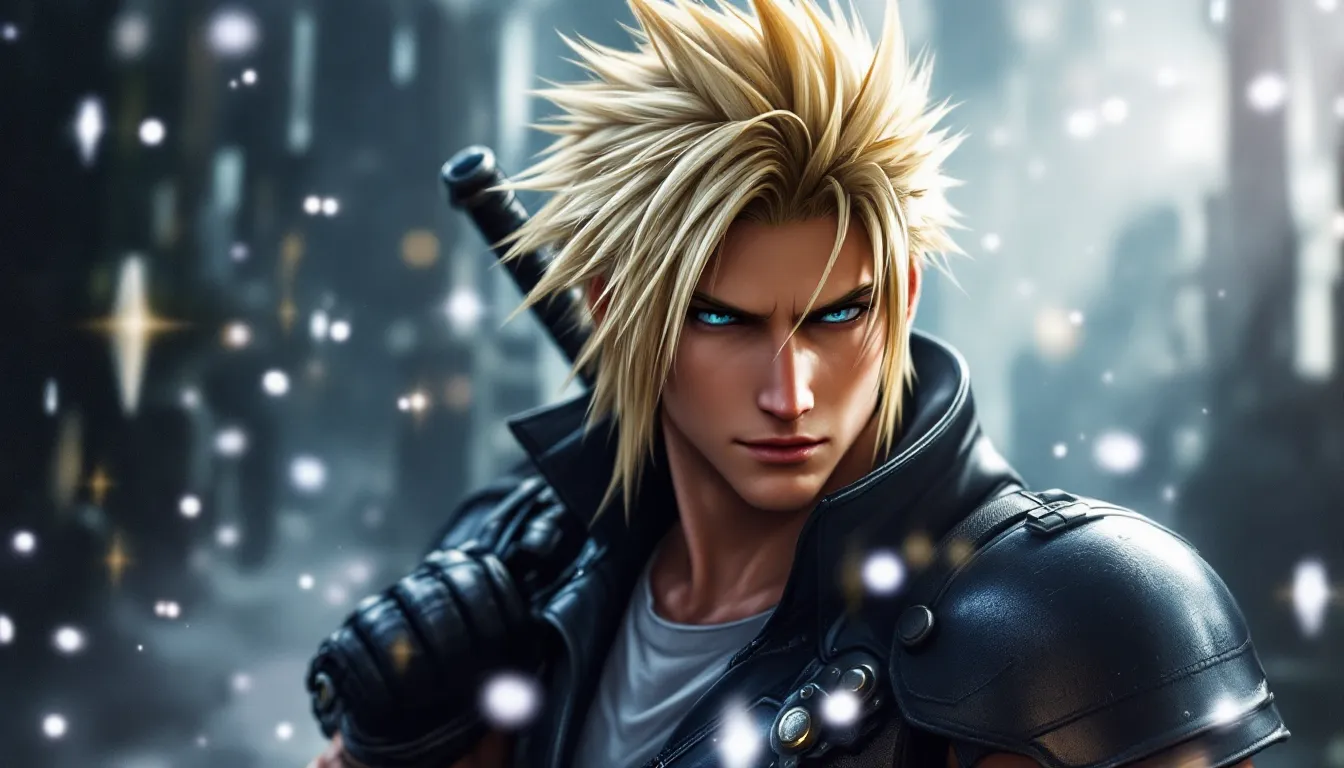
Cloud Strife isn’t your typical hero. He’s a former SOLDIER operative turned eco-terrorist resistance fighter with a personality that shifts between cocky and withdrawn. When you first meet him in Midgar, he’s a hired mercenary pretending to be tougher than he actually is. As the story unfolds, his character becomes far more complex, layered with trauma, false memories, and existential doubt about what’s real and what’s implanted in his mind.
His iconic Buster Sword isn’t just a weapon: it represents his connections to those around him and his willingness to protect what matters. The massive blade becomes instantly recognizable across gaming culture, making Cloud one of the few video game characters recognizable to non-gamers.
Cloud’s Role In Final Fantasy VII’s Story
Cloud’s journey in Final Fantasy VII begins as a disgraced SOLDIER member working for Avalanche, an eco-terrorist group fighting Shinra Electric Power Company. He’s hired as muscle, but his involvement quickly deepens when he discovers disturbing truths about his past, Sephiroth’s plans, and the fate of the planet itself.
The core conflict revolves around Cloud’s fractured identity. Throughout the original game, players are led to believe Cloud’s memories and backstory are exactly what he remembers, until shocking plot twists reveal he’s been living a false narrative implanted by Sephiroth. This narrative structure was groundbreaking in 1997 and remains one of gaming’s most discussed plot devices. Cloud must reconcile who he thought he was with who he actually is while fighting to save the world from total annihilation.
His relationships with characters like Aerith, Tifa, and Barret drive the emotional core of the narrative. Cloud’s romantic subplot, the famous “date” mechanic, and his various personality clashes make him feel like a real person struggling with genuine issues rather than a stoic action hero.
Character Evolution Across Games And Media
Cloud has evolved significantly beyond his debut. In Final Fantasy VII: Advent Children, he’s a more isolated figure wracked with survivor’s guilt and illness. In the Kingdom Hearts series, he appears as a warrior caught between worlds, losing and regaining his memories repeatedly. Each appearance adds layers to his character without contradicting his core identity.
The Final Fantasy VII Remake has given Cloud perhaps his most dramatic reinvention. Rather than passively following the original game’s script, this Cloud is self-aware about his role in the story. He questions his circumstances, shows more emotional range, and actively defies predetermined outcomes. This makes him feel less like a character following a narrative and more like a human making choices, even if those choices themselves might be part of a larger design.
Designer Tetsuya Nomura Final Fantasy: Unveiling the character has repeatedly refined Cloud’s visual design and personality to match modern storytelling sensibilities. Cloud’s spiky blonde hair has remained consistent, but everything from his outfit to his voice acting has deepened over time. The Final Fantasy Lore: Dive deep into how Cloud’s character serves as a lens through which players understand the entire Final Fantasy VII universe, his confusion mirrors the player’s gradual discovery of the truth.
Cloud In Final Fantasy VII Remake: What Changed
The Final Fantasy VII Remake fundamentally restructures Cloud’s story while keeping his essence intact. Released for PlayStation 5 (and later PC), the Remake doesn’t just update graphics and mechanics, it reimagines narrative pacing, character development, and combat philosophy. Cloud’s role in this new version is more proactive and questioning, setting up the upcoming Final Fantasy 7 Part 3 release with mystery and intrigue.
The Remake is exclusive to PlayStation 5 and PC (via Steam and Epic Games Store). Square Enix has not announced plans for Xbox or Nintendo Switch ports, though that could change in 2026. The game is approximately 40-50 hours of gameplay focused on the Midgar section of the original story, which took just 5-10 hours in the 1997 version.
Combat Mechanics And Abilities
Cloud’s combat in the Remake feels completely different from the original turn-based system. Instead of waiting for commands in menus, Cloud moves fluidly in real-time, shifting between his Operator mode (fast, agile attacks) and Punisher mode (slower, harder-hitting attacks with guard breaks). Learning when to switch modes is critical for veterans and newcomers alike.
His signature Limit Break Cloud’s signature Limit Break mechanics work differently than the original. Rather than charging limit breaks passively, you build the gauge through offense and defense. Once activated, his Limit Breaks deal massive damage with stylish animations. The Finishing Touch ability, for example, can hit multiple enemies with incredible range.
Key Cloud abilities include:
- Braver: A charging attack that deals heavy single-target damage
- Punisher Guard: Uses Punisher mode to block and counter incoming attacks
- Blade Burst: An AoE ability that hits everything nearby
- Cross-slash: A combination attack hitting multiple times
- Focused Attack: Increases damage output and builds towards Limit Break faster
Unlike the original game’s static ability pools, Cloud’s moveset changes based on materia slotted and ability choices made during progression. This gives you genuine agency in how you build his combat style. Most players focus on either raw single-target DPS or AoE crowd control depending on the enemy.
Character Development And Progression
The Remake’s character progression for Cloud isn’t just about leveling up. His emotional development is tightly woven into gameplay mechanics. As Cloud learns more about Sephiroth, his motivations, and his true past, he gains access to new abilities reflecting his mental state. This narrative-mechanics integration is particularly strong in the Remake compared to the original game.
Cloud’s psychological journey is explored through his interactions with Aerith. The Remake dedicates significant time to their developing bond, showing genuine chemistry rather than the more ambiguous original. His relationship with Tifa is also deepened, creating real tension between the two. The story trusts players to notice these dynamics rather than explicitly spelling them out.
Equipment progression impacts Cloud’s character in meaningful ways. Certain weapons unlock different special abilities. The Nail Bat teaches him different moves than the Buster Sword, creating multiple valid build paths. This contrasts the original game where weapon choice was almost entirely about stats.
Cloud’s Combat Guide For Beginners And Veterans
Cloud is versatile, rewarding both aggressive and defensive playstyles. His ability to switch stance mid-combo makes him excellent for adaptable players. Knowing how to leverage both his Operator and Punisher modes separates competent Cloud players from great ones.
Most new players default to Operator mode because it feels faster and safer. Smart players mix it up. Operator builds ATB (Active Time Battle) gauge faster, letting you use abilities and items more frequently. Punisher mode builds Limit Break faster and deals more damage, but leaves you more vulnerable. Learning when to shift modes is the key skill Cloud requires.
The Remake includes difficulty modes ranging from Easy to Hard, and Cloud’s effectiveness changes at each tier. On Easy, you can basically hack-and-slash your way through. On Hard, you need precision timing, proper ability usage, and smart materia selection. Final Fantasy Rebirth sales success indicates more players are returning to the series to experience these modern difficulty options.
Essential Materia And Equipment Setups
Materia is the lifeblood of Cloud’s effectiveness. Unlike the original game’s materia system, the Remake’s materia grants both passive effects and active spells. Choosing your materia loadout is one of the most important build decisions.
Offensive Setup:
- Fire/Lightning/Ice Materia: Covering elemental weaknesses
- Healing Materia: At least one linked to a support materia for automatic healing
- Magnify Materia: Doubles spell range, turning single-target heals into party-wide coverage
- Refocus Materia: Builds ATB gauge faster than normal attacks
Defensive Setup:
- Barrier Materia: Grants Barrier status to Cloud and allies
- Healing Materia: Your lifeline on Hard difficulty
- Prayer Materia: Single-target healing with reduced MP cost
- Poisoner Materia: Status effects help control encounters
Equipment recommendations shift based on difficulty and enemy type, but Cloud’s weapon progression follows a clear path:
- Buster Sword (Starting weapon): Balanced stats, iconic, teaches Braver
- Iron Sword: Better physical attack, teaches Cross-slash
- Mythril Sword: Solid mid-game upgrade
- Hardedge: Superior damage and ability pool
- Buster Sword v2: Remakes the original with better stats, the meta choice for damage output
Armor-wise, prioritize equipment with Magic Defense bonuses. Cloud’s role requires surviving enemy spells as well as physical attacks. Accessories like the Barrier Pin or Healing Carcanet provide passive benefits that stack up quickly.
Tips For Maximizing Cloud’s Damage Output
Getting optimal damage requires understanding animation canceling and ability optimization. Here’s the breakdown:
Combo Extension: Cloud’s standard attack combos have a window for input canceling. Chaining abilities smoothly keeps enemies staggered. Against bosses, stun-locking through proper combo sequencing is essential.
Build Limit Break Consistently: Punisher mode builds Limit Break twice as fast as other attacks. If you’re facing a burst-damage phase, switch to Punisher mode before unleashing your Limit Break. This timing creates devastating damage windows.
Stack Critical Hits: Certain materia combinations increase Cloud’s critical hit rate. Pairing weapon upgrades granting critical bonuses with materia accomplishes this. On hard difficulty, consistent critical hits can multiply damage output by 50%+ compared to standard attacks.
Ability Rotation: Don’t just mash buttons. Plan your ability sequence. Use Blade Burst for groups, reserve Limit Break for boss critical phases, and use Focused Attack to build gauge when you need it. This rotation-based thinking carries over directly from traditional MMO rotations.
Leverage Weakness: The Remake shows enemy weaknesses clearly. Cloud should always exploit these first. A Lightning weakness on an enemy means using Lightning materia before anything else. This philosophy rewards strategic thinking over pure mechanical skill.
Cloud’s Appearances Beyond Final Fantasy VII
Cloud’s popularity extends far beyond Final Fantasy VII. Square Enix has strategically deployed him across crossovers, collaborations, and spin-off titles. Each appearance adds something unique to his legacy while maintaining his core identity.
Cloud In Final Fantasy XIV And Crossovers
Final Fantasy XIV (FFXIV) had a spectacular Cloud Strife crossover event in 2019 that lasted until 2021. Players could obtain the Buster Sword weapon glamour and complete a raid challenging them as Cloud-inspired boss fights. This wasn’t just cosmetic, it represented the first major crossover acknowledging the wider Final Fantasy VII universe within FFXIV’s ongoing narrative.
The event featured the The World Has Fallen trial boss, a complex encounter requiring coordination and knowledge of Cloud’s attack patterns. Japanese gaming journalists on platforms like Siliconera covered this extensively as proof that Final Fantasy VII’s influence reaches even into FFXIV’s thriving community.
More recently, FFXIV includes Cloud-themed housing items and equipment. The collaboration proved so successful that Square Enix has hinted at additional crossovers beyond VII-specific content, though official confirmation hasn’t been announced for 2026.
Cloud In Super Smash Bros And Other Games
Cloud’s inclusion in Super Smash Bros. for Nintendo Switch (2018) was genuinely controversial. A PlayStation-exclusive character appearing on Nintendo hardware was unprecedented. His moveset perfectly captures his essence, Buster Sword slashes, Limit Break mechanics, and Blade Burst specials. When Cloud’s Limit Break gauge fills, his next special attack becomes a devastating Finishing Touch.
Since the Switch release, Cloud has remained one of the most competitive characters in Smash Bros. competitive play. His range, combo potential, and Limit Break mechanic give skilled players significant advantages. Esports organizations featuring Smash Bros. often highlight Cloud players because matches against top-tier Cloud players are incredibly technical and exciting.
Beyond Smash Bros., Cloud appears in:
- Final Fantasy VII G-Bike: A mobile motorcycle racing game where Cloud participates in Midgar races
- Final Fantasy Mobius: A free-to-play mobile RPG with Cloud-exclusive story chapters
- Dissidia Final Fantasy: A fighting game where Cloud battles other FF heroes and villains
- Kingdom Hearts series: Cloud appears throughout the series, with his character arc spanning multiple games
Each appearance keeps Cloud relevant across platforms. Gematsu regularly covers these crossovers as they’re announced, and gaming communities discuss Cloud’s viability in each new game. His omnipresence speaks to his status as Final Fantasy’s flagship character.
Building Your Cloud: Customization And Loadouts
Cloud’s customization in the Final Fantasy VII Remake goes deeper than simple stat optimization. Your choices reflect playstyle preference, difficulty selection, and strategic thinking. Building an effective Cloud means understanding materia synergies, weapon selections, and accessory combinations.
Best Limit Breaks And Special Abilities
Cloud’s Limit Break system in the Remake differs from the original. You build gauge through combat, and Cloud has multiple Limit Break levels. Understanding each tier helps you maximize damage during critical moments.
Limit Break Levels:
- Level 1: Finishing Touch, Single target beam attack, moderate damage, hits once
- Level 2: Meteorain, Multi-hit AoE attack, builds around Cloud and covers wide area
- Level 3: Omnislash, The ultimate ability, devastating single-target damage hitting continuously
Omnislash is the most desired Limit Break because it deals the highest damage per second during its animation. Against bosses, delaying your Limit Break usage until an Omnislash-ready gauge becomes available can mean the difference between victory and wipe.
Special Abilities unlock through weapon progression:
- Cross-slash: Lunges forward hitting 3-4 times, excellent for building ATB
- Blade Burst: Spins weapon hitting everything nearby, your primary AoE tool
- Braver: Charging overhead slash, massive single-target damage
- Focused Attack: Temporarily increases damage output while building Limit Break
- Rise and Fall: Parry ability that triggers counterattacks
Veteran players often create specific ability configurations based on the boss fight. Fighting a single tough enemy? Prioritize Braver and Focused Attack. Fighting multiple weak enemies? Stack Blade Burst and AoE materia. This flexibility is what makes Cloud feel rewarding to master.
Armor, Weapons, And Accessory Recommendations
Your gear loadout should serve your chosen role. Cloud works as primary damage dealer, off-healer, or support, depending on materia and equipment choices.
Weapon Progression Tier List (by DPS potential):
- Buster Sword v2: Highest ATK stat, teaches Omnislash capability
- Hardedge: Second-highest ATK, excellent ability pool
- Iron Sword: Solid early-game option, teaches important abilities
- Mythril Sword: Mid-game stepping stone, reasonable stats
- Nail Bat: Lowest DPS but teaches interesting status-effect abilities
Weapon ability inheritance is important. Each weapon grants different abilities as you upgrade it. Some players prefer the Nail Bat’s lower attack but superior crowd-control abilities.
Armor Configuration:
- Head: Prioritize Intelligence or Magic Defense
- Body: Highest physical defense available for your level
- Legs: Balance physical and magic defense equally
- Hands: Specialized based on build, offensive players choose attack-boosting gloves
Accessory Slots (each Cloud can equip 2):
- Healing Carcanet: Restores HP when taking damage (passive healing)
- Barrier Pin: Grants Barrier at start of combat
- Fury Ring: Increases damage output but increases incoming damage
- Champion Belt: Increases maximum health significantly
- Mako Reactor: Grants occasional free ATB gauge increment
Most hardcore players pair Fury Ring with Healing Carcanet for aggressive builds, higher damage output balanced by passive survivability. Defensive players prefer Champion Belt and Barrier Pin for guaranteed durability.
Materia Slotting Strategy:
Cloud’s weapon and armor have limited materia slots. Prioritize:
- Healing Materia (essential on all builds)
- Damage Materia matching enemy weaknesses
- Support Materia like Magnify or Prayer
- Status Effect Materia for crowd control
The Ultima Final Fantasy: Dive deep shows how veteran players approach materia loadouts with precision. Every materia slot matters on Hard difficulty, and wasting a slot on situational abilities becomes costly fast.
Your specific loadout should adapt to the encounter. Fighting a magic-heavy boss means swapping materia to prioritize Magic Defense and healing. Facing a physical damage-focused enemy means switching to offensive materia and attack-boosting gear. Flexibility is Cloud’s strength, he has tools for virtually every situation if you customize properly.
Cloud’s Legacy: Why He Remains Gaming’s Most Iconic Character
Cloud Strife has transcended gaming. He’s instantly recognizable to mainstream audiences, rivaling iconic characters from other media in cultural impact. This status didn’t happen by accident, it’s the result of brilliant character design, memorable story beats, and consistent appearances across decades.
When Final Fantasy VII released in 1997, Cloud represented something new in gaming. He wasn’t a noble hero or straightforward protagonist. He was flawed, psychologically complex, and eventually unreliable as a narrator. This psychological depth separated Final Fantasy VII from contemporary RPGs and created a character worth thinking about beyond the 50-hour campaign.
His iconic status comes from several factors. The Buster Sword is immediately recognizable, easily as iconic as Mario’s hat or Link’s sword. His spiky blonde hair became a visual trademark. His personality quirk of being both cocky and insecure made him relatable even though his superhero-adjacent abilities.
The narrative twist that Cloud’s memories are false created discourse that continues 30 years later. Players still debate whether specific memories are real, what Sephiroth actually did, and whether Cloud’s version of events was intentionally misleading. This ambiguity keeps Cloud fresh and discussable.
Beyond storytelling, Cloud’s combat versatility across different games proves his adaptability. Whether fighting in turn-based systems, real-time action, or fighting games, he translates well because his core identity is flexible. He’s equally at home in FFXIV raids, Smash Bros. tournaments, or the Remake’s hybrid combat system.
The Final Fantasy VII Remake has introduced Cloud to millions of new players, cementing his legacy for another generation. The character continues evolving while maintaining core elements that made him legendary. RPG Site regularly features Cloud discussions, proving his staying power in JRPG communities.
Looking forward, the Final Fantasy Omega: Unravel the secrets of how Omega directly connects to Cloud’s story suggests future narrative connections between major FF7 events and broader Final Fantasy mythology. Cloud’s journey extends beyond his original game, positioning him as central to Final Fantasy’s future narrative direction.
Cloud remains gaming’s most iconic character because he evolved with gaming itself. He started as a 1997 PlayStation character with polygonal limitations and became a modern protagonist in cutting-edge Remake technology, without losing the essence that made him legendary. Few characters achieve that kind of longevity.
Conclusion
Cloud Strife’s journey from mercenary to planetary savior to modern gaming icon tells the story of how a single character can define an entire franchise. Understanding Cloud means understanding what makes Final Fantasy special, complex narratives, strategic combat, and characters who grow and change throughout their experiences.
Whether you’re optimizing materia loadouts on Hard difficulty, exploring his appearances across crossovers, or simply appreciating why his story still resonates 30 years later, Cloud represents gaming at its best. He’s simultaneously an action hero and a psychologically fractured protagonist, an iconic swordsman and a humble individual doubting his own reality.
As the Final Fantasy Completionist: Unlock epic rewards guide demonstrates, fully exploring Cloud’s story and mechanics rewards dedication. The Final Fantasy VII Remake and upcoming sequels ensure Cloud’s relevance for years to come. Master his mechanics, understand his character, and you’re not just becoming a better Cloud player, you’re engaging with one of gaming’s most important characters on a deeper level.
The legend continues.