Table of Contents
ToggleFinal Fantasy bundles have become one of the smartest ways to jump into Square Enix’s legendary franchise without very costly. Whether you’re a series newcomer looking to experience the classics or a veteran gamer hunting for the next deal, bundled Final Fantasy games offer genuine value, if you know what you’re looking for. The challenge? Not all bundles are created equal. Some stack titles that complement each other perfectly, while others package games you might already own or skip entirely. This guide breaks down what’s actually in the most popular Final Fantasy bundles across PC, console, and mobile platforms, compares their real value proposition, and shows you exactly where to grab the best deals in 2026.
Key Takeaways
- Final Fantasy bundles offer genuine value when matched to your playstyle and gaming platform—newcomers should start with the Modern Final Fantasy Collection on Steam, while longtime fans can target remaster bundles to fill completionist gaps.
- Compare bundle pricing strategically: Xbox Game Pass delivers the lowest per-game cost at $5.66 per title monthly, but Steam bundles often require patience until seasonal sales (Black Friday, Lunar New Year) yield 25-50% discounts.
- Avoid common bundle mistakes by auditing your library for duplicate purchases, checking platform compatibility, and calculating whether you’ll actually play 2+ games before committing to multi-game bundles.
- Console bundles like PlayStation’s Final Fantasy XVI offer premium savings on newer AAA titles, while mobile bundles are primarily cosmetics and progression accelerators—focus your spending on full-game collections instead.
- Maximize bundle value by playing games in release order to appreciate franchise evolution, scheduling gaming sessions with pacing rhythm, and leveraging post-game content and difficulty modes to extend playtime across each title.
What Is Included in Popular Final Fantasy Bundles?
Final Fantasy bundles vary dramatically depending on where you shop and which platform you’re on. There’s no single “standard” bundle, Square Enix and retailers curate different collections for different markets and sales seasons. Understanding what’s actually in each bundle before you buy is crucial, especially if you’ve already played some of the included titles.
Steam Platform Bundles
Steam hosts several rotating Final Fantasy collections, and they change seasonally. The “Classic Final Fantasy Bundle” typically includes Final Fantasy I through VI in their original or remastered forms. This is your entry point if you want to experience the series’ roots. You’re getting turn-based combat, pixel art aesthetics, and storytelling from gaming’s golden age.
The “Modern Final Fantasy Collection” skews toward more recent mainline entries. Depending on the season, this might feature Final Fantasy VII, X, or XV, the heavy hitters that defined the franchise for millions of players. These bundles are premium pricing because they’re newer and still actively played.
FFXIV Online occasionally bundles with the base game plus a month of subscription time. If you’re into MMOs, this is relevant: if you’re not, it’s not worth the bundle premium.
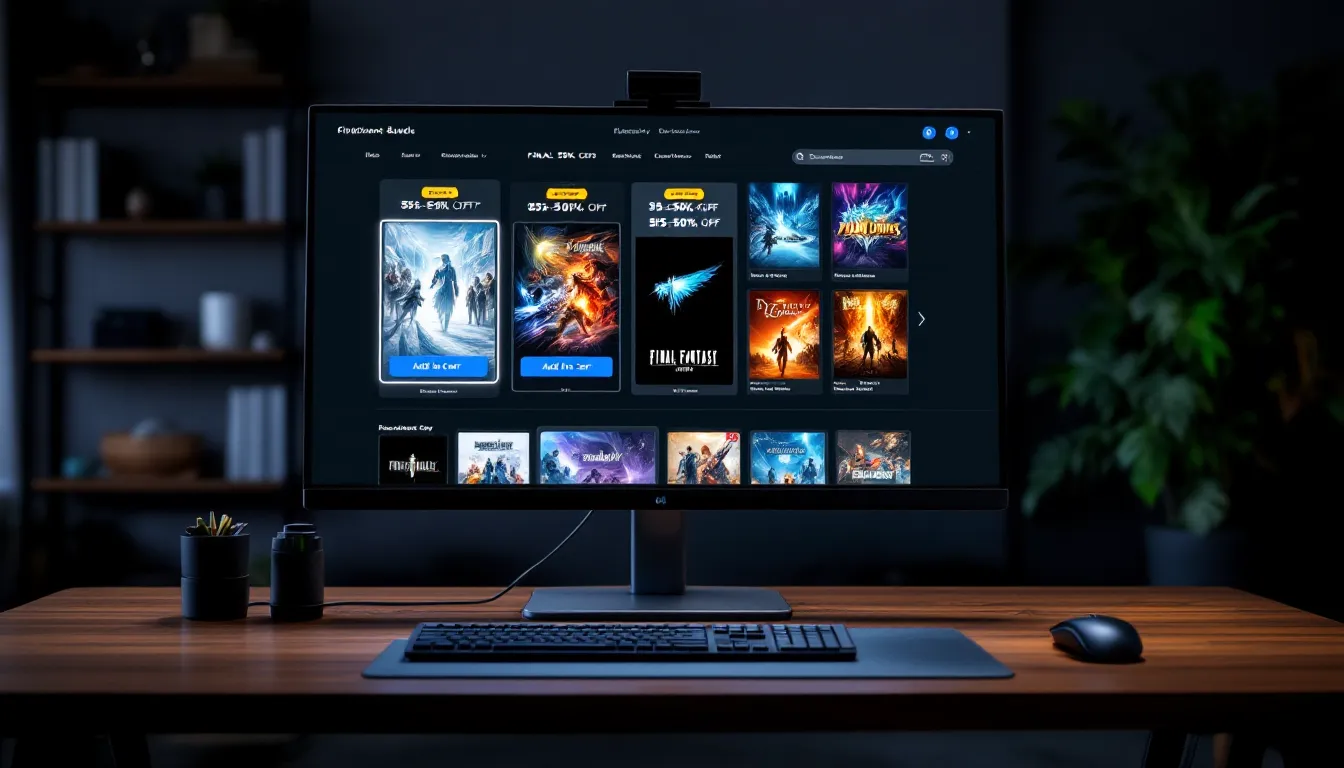
Steam sales events (Lunar New Year, Summer Sale, Autumn) often see Final Fantasy bundles at 25-40% discounts. The catch: they’re not always bundled at lower prices than buying games individually on sale. Do the math before clicking buy.
Console Bundles (PlayStation, Xbox, Nintendo)
Console bundles are where you’ll find the most aggressive stacking and platform-exclusive deals. PlayStation typically leads with Final Fantasy XV and Final Fantasy VII Remake bundles. PlayStation 4 Black Friday promotions regularly feature Final Fantasy content, and PS5 has been pushing Final Fantasy XVI since its exclusive launch in 2023.
Xbox Game Pass is technically a “bundle” that includes multiple Final Fantasy titles, depending on what’s currently in rotation. Gamepass subscribers get access to Final Fantasy X, X-2, XII, and XV on PC and Xbox. It’s not a traditional buy-once bundle, but it’s the most economical way to sample multiple games if you’re already subscribed.
Nintendo Switch has niche bundles for Final Fantasy VII: Ever Crisis (mobile port) and Final Fantasy Tactics Advance. Switch performance for some titles is compromised compared to other platforms, so factor that into your decision. The portability angle matters if you’re gaming on the go.
Mobile Final Fantasy Bundles
Mobile bundles are almost entirely in-game, we’re talking cosmetic bundles, battle pass bundles, and gacha starter packs in Final Fantasy XV: A New Empire, Dissidia Final Fantasy Opera Omnia, and Final Fantasy Brave Exvius. These aren’t game bundles: they’re monetization strategies. Skip them unless you’re already invested in a specific mobile title and want to accelerate progression.
Final Fantasy VII: Ever Crisis on mobile does occasionally bundle with exclusive cosmetics and energy refills, but these are minor purchases, not full-game collections.
Comparing Value Across Different Bundle Options
Value in a Final Fantasy bundle isn’t just about price per game, it’s about whether you’ll actually play what you’re getting. A $39.99 bundle is worthless if it includes three games you’ll never touch.
Price-to-Game Ratio Analysis
Let’s do the math on a typical Steam Classic Final Fantasy Bundle (FF I-VI, 6 games, usually $29.99 on sale). That’s roughly $5 per game. Individually, these games range from $2.99 to $9.99 depending on remaster status. The bundle saves you maybe $10-15 total, meaningful, but not earth-shattering.
Contrast that with console bundles. A PS5 bundle featuring Final Fantasy XVI ($69.99 solo) plus DLC ($39.99) bundled for $99.99 is a 15% savings, better, but you’re paying a premium upfront. The real value emerges if the bundle includes games you were planning to buy anyway.
Xbox Game Pass changes the calculation entirely. For $16.99/month, you get access to dozens of games. Playing three Final Fantasy titles on Gamepass for one month costs $16.99 total. That’s $5.66 per game and no commitment to own anything. But you lose access when you unsubscribe, there’s no permanent library.
Mobile “bundles” in gacha games are almost never good value unless you’re treating them as battle pass purchases for ongoing content. Avoid framing them as bundles: they’re cosmetics and progression accelerators.
Limited-Time Bundle Deals vs. Permanent Offerings
Final Fantasy Rebirth Sales surge during holiday windows and franchise anniversaries. Limited-time bundles almost always carry better discounts (35-50% off) than permanent collections (15-25% off). But here’s the trap: retailers push limited-time bundles to shift inventory and clear space for new releases. That doesn’t mean the bundle is worse, it means you should act quickly if the price-to-game ratio makes sense for you.
Permanent bundles on Steam and console storefronts are always available, no FOMO required. They rarely drop below 20% off. The advantage: you can compare and purchase strategically, rather than chasing a sale that expires in 48 hours.
Seasonal timing matters. Black Friday, Cyber Monday, and Lunar New Year typically feature the deepest discounts. Summer sales are lighter. Plan your purchases if you’re patient, or grab a limited-time bundle if the math checks out right now.
Best Final Fantasy Bundles for Different Gamer Types
Not every bundle is right for every player. Your experience, platform preferences, and time availability change which bundle delivers the most value to you specifically.
For New Players and Series Newcomers
If you’ve never played a Final Fantasy game, start with Final Fantasy VII or Final Fantasy X. These are the franchise touchstones, cultural tentpoles that defined what Final Fantasy means to millions of players. Don’t start with the 8-bit originals unless you love retro gaming.
The Modern Final Fantasy Collection on Steam (includes VII, X, XIII, and XV) is your best entry point. You get four era-spanning games, each wildly different in tone and mechanics. FF VII is turn-based with 1990s steampunk aesthetics. FF X is a turn-based JRPG with a tropical resort setting and voice acting. FF XIII is real-time combat through narrow corridors. FF XV is an action RPG with open-world exploration. Playing them in sequence teaches you how the franchise evolved.
Alternatively, PlayStation’s Final Fantasy XVI bundle is excellent for console players. It’s a single game, not a bundle in the traditional sense, but it’s Square Enix’s current flagship and designed for modern consoles. Pair it with Game Pass to sample other titles without overcommitting.
Newcomers: avoid bundles with 6+ games. You’ll feel overwhelmed. Start with 2-3 solid titles and expand once you understand what the series offers.
For Long-Time Franchise Fans
If you’ve played through most mainline entries, your bundle strategy flips. You’re not hunting essentials: you’re cleaning up completionist gaps or replaying favorites with remastered features.
The Deep Catalog Bundle (if your platform of choice offers it) bundles Final Fantasy VII, VIII, IX, and X together. Fans know these are the classics, experimental storytelling, soundtrack masterpieces, and nostalgia anchors. If you played these in childhood, a remaster bundle at 25-40% off is worth grabbing just to revisit.
Final Fantasy Completionist guides suggest tackling side entries like Final Fantasy XIII-2, Final Fantasy Type-0, and Dissidia to round out your series knowledge. Bundles that include these odd-duck titles are valuable for completionists because they’re not impulse purchases, they’re strategic gaps in your library.
Fans should also watch Final Fantasy Lore discussions to identify which bundles fill narrative gaps. FF XV, for instance, has supplementary story in anime and DLC. If a bundle includes the base game plus DLC, that’s significant.
For Casual and Mobile Gamers
Casual players benefit from Gamepass subscriptions more than one-time bundles. You pay a monthly fee, try a few Final Fantasy games guilt-free, and cancel if they don’t stick. There’s no sunk-cost fallacy pushing you to finish a $40 bundle purchase.
For mobile gamers, focus on Final Fantasy Brave Exvius or Dissidia Opera Omnia free-to-play bases, then optionally grab a starter bundle if the game clicks. These games are designed around optional monetization, you’re not locked out of content without paying.
Final Fantasy VII: Ever Crisis on mobile is the most accessible modern Final Fantasy experience. It’s free-to-play, turn-based combat, familiar story retelling, and zero pressure to spend. Any mobile bundle here is optional cosmetics.
Casual console players should consider PlayStation’s Final Fantasy XVI base game without bundling. The game is designed as a single-player campaign, not a live-service grind. One complete game beats three incomplete ones.
How to Find and Purchase Final Fantasy Bundles
Knowing where to buy is as important as knowing what to buy. Different retailers rotate bundles on different schedules.
Official Retailers and Digital Storefronts
Steam is the primary PC destination. Filter by “bundles” in the Final Fantasy category to see all current collections. Steam’s algorithm occasionally recommends bundles based on your wishlist, pay attention to those recommendations, especially during sales events.
PlayStation Store and Xbox Store list console bundles in the game’s product page under “Buy” or “Bundle” tabs. They update these weekly, sometimes daily. Platform-exclusive Final Fantasy titles (like XVI on PlayStation) often bundle with cosmetics or season passes.
Nintendo eShop bundles Switch-exclusive or Switch-optimized Final Fantasy titles. Performance is a factor here, handheld Final Fantasy games play differently than console versions.
Epic Games Store occasionally discounts Final Fantasy bundles and pairs them with store coupons (sometimes up to $15 off). If you have Epic coupons sitting around, wait for a Final Fantasy sale and stack discounts.
GOG (Good Old Games) carries retro Final Fantasy titles bundle-style. If you prefer DRM-free, this is your platform.
Official Square Enix merchandise bundles (physical copies with artbooks and soundtracks) exist but are premium-priced. Skip them unless you’re a hardcore collector.
Seasonal Sales and Discount Timing
Final Fantasy bundles follow predictable seasonal discounts:
- Black Friday/Cyber Monday (November): 35-50% off typical. These are the year’s deepest discounts. Plan your purchases around this window if possible.
- Lunar New Year (February): 25-40% off, primarily on Steam. Secondary tier discounts, but solid value.
- Summer Sale (June-July): 20-35% off. Lighter discounts, bundles less aggressively marketed.
- Anniversary Sales: Square Enix marks Final Fantasy anniversaries (typically September) with 25% off mainline entries.
Siliconera and VGC track game sales and bundle releases in real-time. If you’re hunting for specific bundles, set alerts on these sites. They’ll notify you before deals drop.
Don’t impulse buy bundles outside seasonal windows. Patience saves 20-30% on average. The only exception: brand-new releases like Final Fantasy XVI’s first month. Those bundles don’t go on sale immediately: plan to pay full price if you want it day-one.
Wish list games on Steam and console stores. Many platforms notify you when bundled games drop in price. This passive monitoring saves you from missing deals.
Common Bundle Mistakes to Avoid
Bundle purchases fail for predictable reasons. Avoid these traps and you’ll feel better about your spending.
Duplicate Game Purchases
The most common mistake: buying a bundle that includes a game you already own. You don’t get a refund, and you can’t gift it (on most platforms). Steam’s library check helps, before purchasing, compare the bundle contents against your owned games. If you own 2 of 4 games in the bundle, calculate whether the $10-15 savings justify buying two redundant copies. Usually, it doesn’t.
Console players face this with backwards-compatible games. PS4 remasters of PS3 games look tempting in bundles, but if you’ve already played them, the value drops significantly. Check your library first.
Approach: Screenshot the bundle contents, cross-reference against your account library, and do the remaining-value math. If you’ll only play 2 new games in a 4-game bundle, ask yourself if those 2 games at bundle price beat their individual sale prices. Often they don’t.
Checking Compatibility and Platform Requirements
PC bundles sometimes include games with deprecated system requirements. A bundle might include a title that doesn’t run smoothly on modern GPU drivers or Windows 11 builds. Check ProtonDB (for Linux Steam players) or community reviews before buying.
Console bundles occasionally include cross-generation titles. A Final Fantasy bundle on PS5 might include PS4 versions of games. They play fine on PS5, but they don’t get PS5 enhancements (faster load times, ray tracing, higher resolution). If the bundle includes both PS4 and PS5 versions, clarify which one you’re getting.
Mobile bundles assume you have sufficient storage. Final Fantasy Brave Exvius needs 2-3 GB. If your phone is storage-constrained, check requirements before purchasing in-game bundles.
Geographic restrictions apply to some bundles. A bundle available in North America might not work in other regions. If you’re in a different territory, verify the bundle’s compatibility zone in the store’s small print. Gematsu tracks regional release differences, check there if you’re unsure.
Maximizing Your Final Fantasy Bundle Purchase
Buying a bundle is step one. Actually getting the most value from it is step two, and it requires strategy.
Creating the Ultimate Multi-Game Experience
Play bundle games in release order (chronologically or by numbered sequence). This teaches you how the franchise evolved mechanically and narratively. Final Fantasy VII’s turn-based combat feels dated unless you understand it was revolutionary in 1997. Playing sequentially builds appreciation for each entry’s innovations.
Alternatively, play by story connection. Final Fantasy X and X-2 form a complete story arc, play them back-to-back. Final Fantasy VII and its Remake trilogy are linked narratively. If your bundle includes linked titles, grouping them amplifies narrative satisfaction.
Schedule gaming sessions strategically. Don’t try to play four 60-hour RPGs simultaneously. You’ll burn out. Alternate between mainline entries (heavy story, slow pacing) and spin-offs (lighter, faster progression). This rhythmic pacing keeps interest alive across a multi-game bundle.
Leveraging Bundle Content for Extended Gameplay
Final Fantasy Crafting guides and completionist content extend playtime significantly. Many bundle games include post-game content, side quests, and hidden unlockables. Spending time on these systems before moving to the next bundle game deepens engagement.
Final Fantasy Tactics Advance is a tactical spin-off often included in extended bundles. It’s shorter than mainline entries (30-40 hours) but offers a completely different gameplay style. If your bundle includes it, use it as a palate cleanser between larger titles.
Replay bundle games with different difficulty settings or challenge runs. Final Fantasy X’s New Game+ unlocks hidden weapons and bosses. Final Fantasy VII Remake includes hard mode. Replaying games from your bundle after completing the main story extends value exponentially.
Join community speedruns or challenge communities for bundle games. This transforms passive consumption (beating the game) into active engagement (optimization, competition, learning alternative strategies). Many Final Fantasy titles have thriving speedrun communities on Twitch and YouTube.
Conclusion
Final Fantasy bundles offer legitimate value if you approach them strategically. The key is matching the bundle to your actual needs, not your aspirational library. A five-game bundle at a discount means nothing if you’ll realistically finish two of them.
Start by auditing what you already own, mapping out your real available playtime, and identifying which franchises genuinely interest you. Then compare the bundle contents against individual game prices during sales. More often than not, you’ll find that patience beats impulse.
When the math works out, when you’re bundling games you’ll actually play, at seasonal discounts, on a platform you use regularly, bundles become your best path into Final Fantasy’s massive catalog. But they’re tools, not destinies. Your time is the real currency here, not the dollar amount saved at checkout.