Table of Contents
ToggleFinal Fantasy XVI isn’t your typical JRPG evolution, it’s a deliberate departure from the series’ turn-based roots, and Square Enix wasn’t shy about that intention. Released in June 2023 as a PlayStation 5 exclusive (with a PC port arriving in 2024), this is a game designed to prove that the franchise can thrive in real-time action while maintaining the narrative depth fans expect. The gamble paid off. Whether you’re coming from decades of Final Fantasy tradition or you’re new to the franchise entirely, XVI delivers something that feels both fresh and unmistakably Final Fantasy. This Final Fantasy XVI review breaks down the core experience: what works, what doesn’t, and whether it justifies a 60-hour campaign plus the price tag.
Key Takeaways
- Final Fantasy XVI successfully transitions the franchise from turn-based combat to real-time action while preserving the narrative depth and character development fans expect.
- The story spans decades following Clive’s transformation from sheltered prince to hardened warrior, delivering mature storytelling with meaningful character deaths and consequences that avoid melodrama.
- Combat depth comes from the Eikon ability system, which lets you swap between six summoned entities with unique movesets to create varied builds for different encounters and difficulty levels.
- On PlayStation 5, the game delivers exceptional 60 FPS performance with seamless cutscene transitions and meticulous environmental storytelling, making it the definitive version over the PC port.
- A 50–70 hour campaign with worthwhile side content and challenging superbosses justifies the investment for story-driven players, though the game avoids open-world sandbox design in favor of semi-linear pacing.
- While Final Fantasy XVI excels in presentation and boss encounters, limited combat evolution and the lack of player agency in a predetermined narrative may disappoint those seeking gameplay variation or branching dialogue.
What Makes Final Fantasy XVI Stand Out
Story and Narrative Direction
Clive’s world is dark, grounded, and unapologetically mature. The narrative sidesteps the whimsical sci-fi trappings of recent Final Fantasy titles in favor of a medieval-inspired setting twisted by magic and geopolitical warfare. The story spans decades, tracking Clive from a sheltered prince to a weathered warrior, making personal loss feel earned rather than melodramatic.
What makes the storytelling land is the willingness to let consequence stick. Characters die meaningfully. Quests don’t resolve in your favor just because you’re the protagonist. The game respects your time by not padding narrative beats with bloat, scenes move with purpose. Watching the Cid Final Fantasy 16: unfold adds another layer to the emotional weight.
That said, the story does lean heavily into tropes: the “chosen one” hero, the mentor figure, the childhood love interest. These aren’t failures, they’re genre conventions executed well. The pacing supports them, and the voice acting (which is genuinely strong across the board) sells every beat.
Visual Presentation and Technical Performance
On PlayStation 5, XVI pushes what the hardware can do. Character models are detailed, and the attention to environmental storytelling is meticulous, you’ll notice burn scars in the landscape after major battles, settlements rebuilt or abandoned based on the narrative flow. Cutscenes blend seamlessly into gameplay with minimal loading, which was a design priority and it shows.
The Performance Mode runs at 60 FPS with dynamic 4K resolution, while Graphics Mode targets 30 FPS at native 4K. For a game this action-heavy, the 60 FPS option is the clear winner, it directly improves combat feel and responsiveness. The PC version (released February 2024) gives players more granular control, though the PS5 version is still the reference experience.
Technically, the game is stable. Frame pacing is consistent, and during 60+ hour runs, crashes are rare. The only gripe: some interior areas feel sparse compared to exterior zones, likely a technical compromise to maintain performance. It’s noticeable but never immersion-breaking.
World Design and Exploration
Final Fantasy XVI’s world is structured around distinct regions, each with its own visual identity and narrative weight. You’re not getting an open-world experience here, think more like God of War’s semi-linear approach. Areas are large enough to explore and discover secrets, but the game gently funnels you toward objectives.
This design choice has merit. It keeps pacing tight and prevents the “quest bloat” that plagues some open-world games. You’ll find hidden treasures, optional dungeons, and lore tidbits by exploring thoroughly, but nothing feels obligatory. The world serves the story rather than vice versa, which aligns with what Final Fantasy fans expect from narrative-driven experiences.
Combat System Breakdown
Real-Time Action Mechanics
Final Fantasy XVI trades the ATB (Active Time Battle) system for full real-time combat, and it’s closer to Devil May Cry than traditional RPG fare. Clive handles like an action protagonist: light attacks, heavy attacks, dodge, block, and a Limit Break system that replaces the classic “summon your strongest attack” fantasy.
The fundamentals feel solid. Dodge windows are generous but require timing: blocking is viable but not overpowered: and light attack chains into heavy attacks with decent rhythm. The TTK (time-to-kill) on standard enemies is short, most trash mobs die in seconds, which keeps encounters flowing. This isn’t turn-based strategy: it’s about consistent input and positioning.
Clive’s basic moveset, unfortunately, doesn’t evolve much throughout the game. Your primary tools remain the same from early-game through endgame. Where the combat system gains depth is through secondary mechanics and ability selection.
Eikon Abilities and Strategic Depth
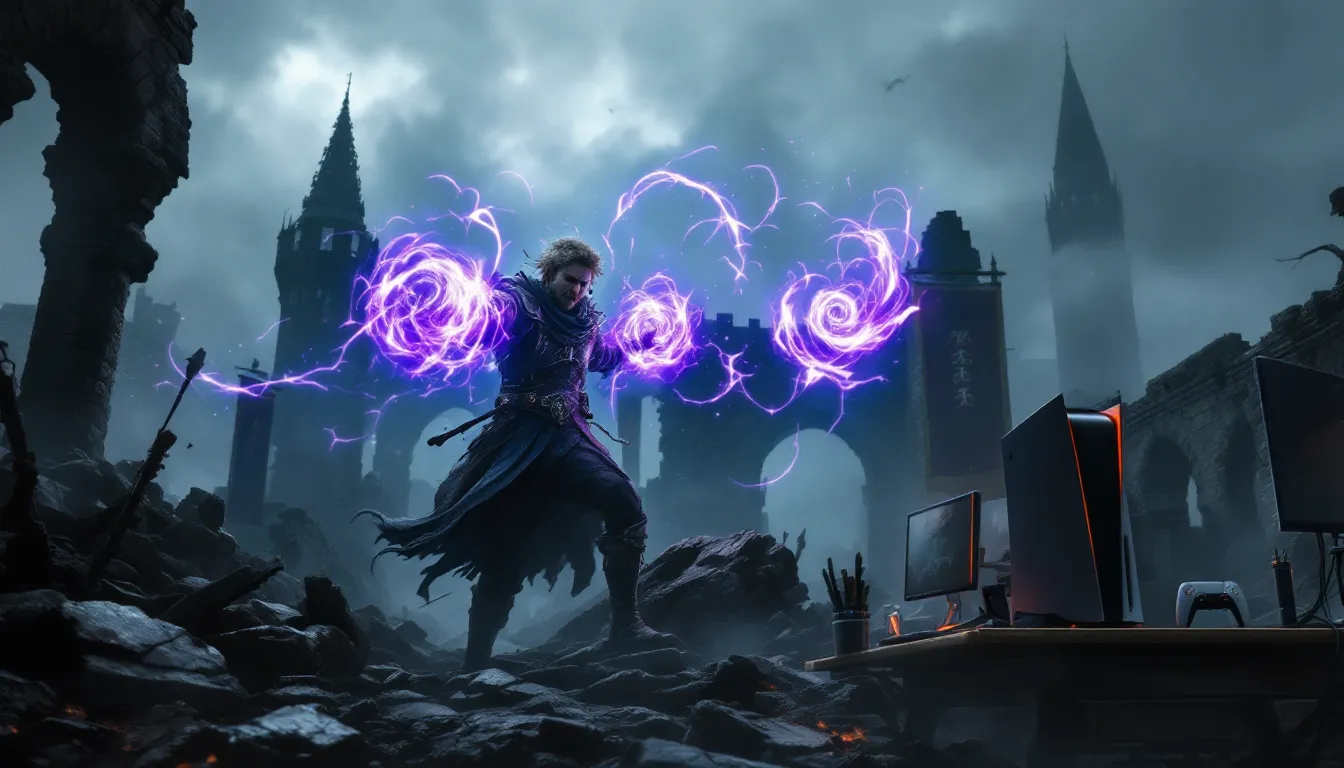
Eikons (the franchise’s name for summoned entities) are XVI’s equivalent to job systems or ability loadouts. Each Eikon grants Clive unique abilities: Phoenix offers fire-based rushdown damage, Ifrit provides raw melee power with self-damage tradeoffs, Ramuh brings lightning AoE control, and so on. You’ll unlock six Eikons throughout the campaign and can freely swap between them outside of boss fights.
The strategic layer comes from mixing and matching abilities. Do you stack offensive abilities for pure damage, or do you build defensively with healing and shield options? Different builds genuinely affect how you approach encounters. A DPS-focused loadout melts bosses quickly but requires precise positioning. A defensive build extends fights but gives you breathing room for mistakes.
Boss encounters escalate in complexity. Early bosses are pattern-recognition checks, learn their tells, dodge, attack. Late-game bosses combine multiple attack phases, environmental hazards, and abilities that punish button-mashing. On Eikonic difficulty (the second-highest), fights demand respect and build optimization. On Hard and Normal, there’s more room for experimentation.
Difficulty Scaling and Accessibility
Difficulty modes are named creatively (Casual, Normal, Hard, Eikonic) and affect not just damage multipliers but enemy AI aggression and combo potential. Casual essentially lets you turn off punishment, you can brute-force through encounters without much mechanical skill. Eikonic is a serious test, especially for optional super-bosses.
Accessibility options are generous. You can toggle automatic dodging, reduce input complexity, and slow down combat speed. A few players reported wishing for more granular difficulty options (like “Hard but with Normal damage scaling”), but what’s there covers most preferences. The game respects players at all skill levels, which aligns with modern JRPG design philosophy.
Character Development and Cast
Protagonist Clive and His Journey
Clive starts as a sheltered prince who’d never seen combat, then transforms into something harder and colder by necessity. This arc works because the game doesn’t shy away from showing the toll. He loses people. He makes compromises. By the endgame, he’s a different person, not in a redemption-arc way, but in a “this person has been through hell” way.
Voice acting from Ralph Finnes (playing an older Clive in narrative frames) and the main cast carries the weight. Finnes’ presence, in particular, anchors the story with gravitas. Watching Clive’s evolution across decades is the emotional spine of the entire game.
One caveat: Clive’s limited dialogue options mean you’re experiencing his story, not creating your own. This isn’t a game where role-playing choices matter, you’re living through a predetermined narrative. Some players love this directedness: others find it restrictive. It’s worth knowing going in.
Supporting Characters and Relationships
The supporting cast includes memorable allies: Jill (childhood friend and fellow magic user), Cidolfus (grizzled mentor), Torgal (a literal dog who follows you and can fight), and others who develop across the campaign. These relationships feel grounded because they persist through failure and hardship.
Characters aren’t uniformly likable, which strengthens them. Some allies make decisions you’ll disagree with. Others reveal depths you didn’t expect. The recent Final Fantasy Rebirth Sales proved that complex character arcs drive franchise appeal, and XVI follows that blueprint.
Even though strong writing, dialogue scenes can drag slightly during exposition-heavy sections. Some conversations repeat information you’ve already absorbed. It’s a minor pacing issue in an otherwise well-paced story.
Gameplay Length and Replayability
Campaign Duration and Content Volume
A standard playthrough of Final Fantasy XVI runs 50–70 hours depending on how much you explore and engage with side content. The main story beats clock in around 50 hours for focused players: adding optional dungeons, hunts, and chocobo racing pushes that to 70+. This is meaty content.
Side quests are optional but worthwhile. Unlike some open-world filler, XVI’s side content connects to world-building and character development. A hunt might explain why a settlement is struggling: a side dungeon expands lore you’ve encountered in the main story. The motivation to explore feels earned rather than artificial.
For completionists, there’s genuine depth here. Hidden treasures and superbosses reward thorough exploration, and the Final Fantasy Completionist: Unlock guide shows how much hidden content Square Enix designed into XVI.
New Game Plus and Post-Game Options
After beating the campaign, you unlock New Game Plus, which carries over your Eikon abilities and some equipment. This changes the balance significantly, you’re overpowered early on, which some enjoy and others find it trivializes early encounters.
Also, post-game Challenge dungeons unlock, offering high-difficulty combat encounters without narrative context. These lean into the action-game appeal and reward optimized builds. If you enjoy the combat loop, these extensions add 5–10 hours of engaging gameplay.
One note: there’s no class-switching or radically different playstyles in NG+. You’re experiencing the same story and world structure, just with different power levels. For those seeking wildly different narratives or branching paths, XVI doesn’t deliver that kind of replayability.
Sound Design and Musical Score
Masayoshi Soken’s score for Final Fantasy XVI balances orchestral grandeur with intimate character moments. Boss themes hit different, there’s a visceral quality to them that matches the intensity of combat encounters. The Limit Break activation sound, in particular, is iconic and satisfying after the first 30 hours, you’ll still get that dopamine hit when it triggers.
Environmental audio design is subtle but effective. Castles echo with footsteps and distant voices. Battlefields rumble with magical explosions and creature sounds. The sound design never overshadows narrative moments but supports them powerfully.
Voice acting, as mentioned, is strong across languages. The English cast delivers with emotional nuance, and the Japanese voice track is equally solid if that’s your preference. Both versions are available on PlayStation 5: the PC version launched with English audio and later added Japanese voice support via patch.
One minor critique: some repetitive combat audio cues wear thin after extended play sessions. The sound loop for basic combos cycles relatively quickly, which can feel monotonous during longer grinding sessions. It’s not a deal-breaker, but headphone players might notice more than TV speakers.
Pros and Cons
Key Strengths
• Narrative Maturity: The story respects player intelligence and doesn’t resort to constant melodrama. Character arcs span decades and feel earned.
• Combat Feel: Real-time action is responsive and satisfying. Dodge windows are fair, and the Eikon system adds meaningful build variety.
• Audiovisual Presentation: On PS5, the game looks and sounds exceptional. Seamless cutscene transitions and consistent performance at 60 FPS elevate the experience.
• Balanced Difficulty Options: From Casual to Eikonic, difficulty scaling respects all player skill levels. Accessibility features are comprehensive.
• Boss Encounters: Late-game bosses are genuinely challenging and memorable. They test your build optimization and reflexes in equal measure.
• Thematic Coherence: The world, story, and mechanics align toward a cohesive vision. Unlike some JRPGs that pivot mid-campaign, XVI knows what it is throughout.
For Final Fantasy Lore: Dive, XVI adds substantial layers that long-time fans will appreciate.
Notable Drawbacks
• Limited Combat Evolution: Clive’s basic moveset doesn’t develop significantly. You’re refining tools rather than unlocking new ones throughout the game.
• Dialogue Repetition: Some exposition repeats across conversations, which pads scenes and slows pacing slightly.
• Restrictive Character Agency: This is a linear narrative with fixed dialogue. You’re living Clive’s story, not writing it. Some players find this limiting.
• Side Content Unevenness: While most side quests are worthwhile, a few feel like filler. Not every optional encounter justifies the detour.
• PC Port Initial Issues: The PC version launched with performance scaling problems and Japanese audio missing. Patches have addressed most issues, but the PS5 version remains the definitive experience.
• New Game Plus Feels Samey: Replaying with overpowered abilities trivializes early encounters without offering new narrative perspectives or boss variants.
Compared to content on GameSpot, professional reviews generally echo these same strengths and limitations.
Final Verdict and Recommendation
Final Fantasy XVI accomplishes what it set out to do: prove that the franchise can thrive with real-time action mechanics while maintaining the narrative and character depth that define Final Fantasy. It’s not a perfect game, combat eventually feels repetitive, and the PC port stumbled at launch, but it’s a confident, ambitious title that respects its audience.
If you’re looking for a story-driven action-RPG with excellent production values, XVI delivers. The 50–70 hour campaign justifies the investment for players who value narrative over open-world sandbox exploration. Boss encounters are challenging and engaging. The world feels cohesive and purposeful.
But, if you’re expecting turn-based combat, branching dialogue trees, or radical gameplay evolution throughout the campaign, manage expectations. XVI is a deliberate choice away from those elements, and Square Enix owns that decision.
Recommendation by Player Type:
- Story-First Players: Buy. This is exactly the game you want.
- Action Combat Enthusiasts: Buy. The combat loop is satisfying enough for 50+ hours.
- Completionists: Buy. Side content is worthwhile, and superbosses offer endgame challenges.
- Turn-Based Purists: Wait for a sale. XVI fundamentally isn’t your game.
- Casual Gamers: Consider it. Casual difficulty and accessibility options make it accessible, but the runtime is substantial.
Platform Note: PS5 is the definitive version as of March 2026. The PC port is now stable after patches, making it a solid alternative for those without a PlayStation 5.
Final Fantasy XVI isn’t the “best” game ever made, “best” is subjective and context-dependent. But it is a best-in-class example of how to evolve a legacy franchise without losing its identity. It earns its place in the Final Fantasy canon and proves that the series still has stories worth telling.