Table of Contents
ToggleWhen you see that crystalline, elegant logo, you don’t need to think, you know exactly what it is. The Final Fantasy logo isn’t just a label slapped on a box: it’s a visual identity that’s defined one of gaming’s most storied franchises for over four decades. From its humble NES origins to its presence on the latest PlayStation 5 releases, the logo has undergone a remarkable evolution while maintaining the core symbolism that makes it instantly recognizable to millions of gamers worldwide. Understanding how the Final Fantasy logo came to be, how it’s changed, and why it works tells a fascinating story about branding, artistic vision, and the franchise’s journey through gaming history.
Key Takeaways
- The Final Fantasy logo evolved from simple, legible 8-bit design to a sophisticated vector-based mark while maintaining core recognition across four decades of gaming history.
- The logo’s crystalline geometric quality and consistent blue-and-white color palette subtly reinforce the franchise’s thematic identity and premium market positioning.
- Careful typography, precise kerning, and mathematical proportions enable the Final Fantasy logo to scale seamlessly from thumbnail icons to billboard-sized applications without losing legibility.
- Strategic hierarchy in logo design allows numbered entries (FFVII, FFXVI) and spin-offs to feel visually distinct while remaining unmistakably part of the Final Fantasy brand family.
- The logo’s memorability and cultural penetration have transformed it into a gaming icon that functions as both brand identifier and personal identity expression through merchandise and fan communities.
The Origins of the Final Fantasy Logo Design
First Generation and the Classic Design Philosophy
When Square released the original Final Fantasy on the NES in 1987, the logo had to work within severe technical limitations. The 8-bit era demanded clarity and simplicity, your logo needed to be readable at the size of a postage stamp on a cartridge label. The earliest Final Fantasy logo featured bold, solid lettering with a clean sans-serif approach. It was functional first, artistic second, but that foundation proved timeless. The design philosophy was straightforward: make it pop on shelves, make it memorable, and make it feel distinctly Japanese gaming.
The original logo’s color palette, typically rendered in golds and whites against darker backgrounds, gave it a sense of premium quality. This wasn’t some cheap knock-off RPG: the branding telegraphed that Final Fantasy was something special. Gamers in arcades and electronics stores could pick it out instantly, which mattered tremendously before the internet made every game equally visible on a storefront. That early design established conventions the franchise would refine for decades.
Yoshitaka Amano’s Influence on Early Branding
Yoshitaka Amano’s fingerprints are all over early Final Fantasy’s visual identity, though his influence on the logo itself was less direct than his work on character design and promotional art. Amano’s distinctive art style, romantic, ethereal, with flowing lines and imaginative color, defined how people visualized Final Fantasy aesthetically. When fans thought of Final Fantasy, they thought of Amano’s Cloud, Amano’s Aerith, Amano’s concept art. The logo needed to exist alongside that visual language without competing with it.
This is where Square’s design team showed restraint. Rather than making the logo overly ornate or artistic in Amano’s watercolor style, they kept it relatively geometric and readable. The logo served as the stable anchor while Amano’s more elaborate art did the heavy emotional lifting. This division of labor proved brilliant, the logo remained consistent and professional while Amano’s dreamlike imagery became synonymous with the franchise’s soul. The two worked in tandem, with the logo grounding the brand while artistic elements elevated it.
Logo Evolution Through the Generations
The 16-Bit Era Transformation
The leap from 8-bit to 16-bit graphics on the SNES marked a turning point for the Final Fantasy logo. Final Fantasy IV (released as Final Fantasy II in North America) introduced refinements that would carry through the Super Nintendo generation. The logo gained more sophistication, smoother curves, better anti-aliasing on the letterforms, and increased flexibility for different color applications. The Roman numeral system that Square adopted (IV, V, VI) required the logo to accommodate numbers prominently, so designers had to ensure the logo’s proportions worked whether it was just text or text paired with numerals.
Final Fantasy VI, released in 1994, pushed the 16-bit aesthetic further. The logo began incorporating subtle three-dimensional elements and softer edges while maintaining legibility. This era saw the franchise explode in popularity, particularly in North America, which meant the logo needed to scale effectively across different marketing materials, magazine ads, box art, official guides. The design became more polished, more premium-feeling, reflecting the fact that Final Fantasy had moved from cult classic to mainstream success.
The SNES era also established a critical principle: the logo would evolve with the hardware capabilities while keeping the core letterforms recognizable. This balance between innovation and consistency would define all future iterations.
PlayStation Revolution and the Modern Aesthetic
Final Fantasy VII’s arrival on PlayStation in 1997 fundamentally altered the franchise’s visual brand. With CD-ROM technology and 32-bit power came color depth, 3D rendering, and cinematic possibilities that demanded a logo upgrade. Square introduced a sleeker, more angular version of the logo for FFVII and its subsequent numbered entries. The proportions tightened, the serifs disappeared entirely, and the overall look became more contemporary and less retro-feeling.
This PlayStation era logo, particularly as it appeared in FFVII, FFVIII, and FFIX, became iconic for an entire generation of gamers. The logo was refined enough to work on glossy PlayStation box art, versatile enough for promotional materials, and distinctive enough that silhouettes alone became recognizable. The metallic texture variations that appeared in promotional artwork made the logo feel more integrated with the franchise’s increasingly cinematic presentation.
During this period, especially with Final Fantasy Rebirth sales skyrocketing across modern platforms, the logo had to adapt to digital storefronts, streaming overlays, and social media, challenges the 1997 version never anticipated. The core design remained intact, but applications became more diverse.
Current Design Standards and Brand Consistency
Today’s Final Fantasy logo represents refinement accumulated over three decades. The current standard, refined further with FFXIV and FFXVI, maintains the essential letterforms while incorporating subtle modern touches. The logo works seamlessly across PS5, Xbox Series X
|
S, PC, and mobile platforms, which is no small feat given the diversity of display sizes and resolutions. The design team at Square Enix has established clear guidelines for spacing, minimum sizes, color usage, and application contexts.
The modern logo prioritizes scalability and versatility. Whether you’re viewing it on a 4K monitor or a phone screen, the proportions and negative space work flawlessly. The design team has shifted from pixel-perfect (which made no sense post-HD) to mathematically precise vector-based design, allowing the logo to scale infinitely without quality loss. This is crucial for a franchise spanning multiple gaming platforms and regions.
Brand consistency guidelines published by Square Enix ensure that every game, spin-off, and merchandise item represents the logo with fidelity. This rigor extends to how the logo interacts with game-specific subtitle text, the spacing, hierarchy, and proportions are deliberately maintained to preserve the logo’s integrity while accommodating new information.
Symbolism and Meaning Behind the Logo
The Crystal Motif and Its Significance
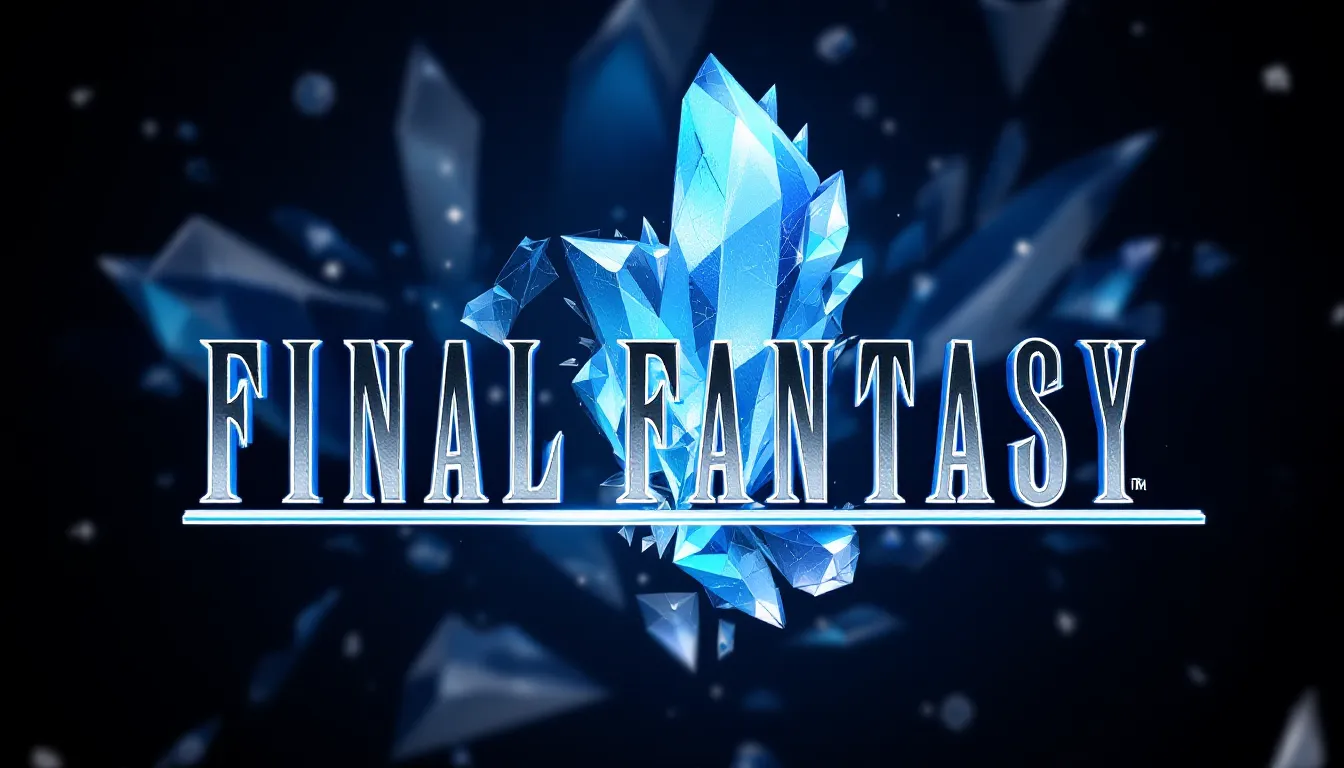
The most enduring symbolic element of the Final Fantasy logo isn’t always immediately obvious to newer players, but longtime fans recognize it instantly: the crystal. While the logo’s primary element is the text itself, the design language incorporates crystalline or geometric shapes that echo the franchise’s thematic obsession with crystals. Crystals appear in nearly every mainline Final Fantasy game, sometimes as power sources, sometimes as story drivers, sometimes as fundamental world-building elements. In the original Final Fantasy (NES), crystals were literal objectives you needed to restore. In FFVII, crystals aren’t as prominent, but materia (which functions similarly) takes center stage. FFXIV? Crystals are absolutely foundational.
The logo’s elegant, faceted quality, the way sharp angles and smooth curves interact, subtly evokes that crystalline aesthetic without being literal. The design references the franchise’s core identity without spelling it out. This is sophisticated branding: a player who’s never heard of the series might not consciously register the crystal reference, but subconsciously they feel that sense of precision, geometry, and power that crystals represent in the Final Fantasy universe.
This symbolic depth is part of why the logo has aged so gracefully. It’s not just a wordmark: it carries conceptual weight that connects to the franchise’s DNA.
Color Symbolism in the Final Fantasy Branding
The logo’s color choices vary by application, but the most consistent and iconic combination is the blue and white rendering that defines modern Final Fantasy branding. Blue carries specific meanings in Japanese design culture, it represents depth, trust, and stability. For Final Fantasy, blue suggests the magical, the otherworldly, and the sophisticated. It’s neither the red of action-focused gaming nor the dark tones of horror-adjacent franchises. Blue positions Final Fantasy as epic fantasy with an intellectual edge.
White space and metallic applications further reinforce premium positioning. When the logo appears with gold accents or silver gradients, it evokes luxury and prestige. This matters when you’re competing on shelf space or in digital storefronts. The color psychology tells players: this isn’t a casual mobile game: this is a substantial, quality production. That visual language has proven crucial during Final Fantasy Rebirth’s launch, where the premium blue-and-white branding worked alongside gameplay and marketing to communicate value.
Different regional markets sometimes see slight color variations in promotional materials, but the core blue palette remains consistent globally. This color constancy is intentional, it’s part of what makes the Final Fantasy logo instantly recognizable whether you’re shopping in Japan, North America, or Europe.
How Each Game’s Logo Maintains Brand Identity
Numbered Entries and Visual Recognition
Final Fantasy’s approach to numbered entries required a brilliant logo strategy: how do you update the primary logo while maintaining brand continuity? The solution was elegant hierarchy. The base logo, “FINAL FANTASY” in the established letterforms, remains constant. The Roman numeral (IV, VII, X, XVI, etc.) or subtitle attaches below or beside the main logo, creating visual distinction without fragmenting brand identity.
This system allows each numbered entry to feel fresh while remaining unmistakably Final Fantasy. FFVII’s logo is distinct from FFXVI, but they share DNA. The numerals themselves became collectible in fan culture, FFX’s use of X (coinciding with PlayStation’s branding) created interesting visual parallels, while FFXVI’s angular XVI positioned the latest entry as contemporary. Each number carries marketing weight: sequels feel significant because the logo acknowledges generational progression.
Internally, Square Enix maintains strict guidelines for how numerals integrate with the primary logo. Spacing, proportion, and color relationships are defined precisely. This prevents the logo from feeling cluttered or unprofessional, even when accompanied by long subtitles or additional branding information.
Spin-Offs and Expanded Universe Logos
Here’s where it gets complex: Final Fantasy’s extended universe includes dozens of spin-offs, mobile titles, tactical spin-offs (FFTA, Dissidia), action games (Crisis Core, FFVII Remake), and MMO entries. Each needed logo treatment that acknowledged the main franchise while indicating differentiation. Final Fantasy XIV solved this with a modified logo that integrated “XIV” and the “Online” identifier seamlessly. FFVII Remake used a darker, more angular treatment that distinguished it from the original while maintaining brand continuity.
Mobile entries like Final Fantasy Record Keeper or Final Fantasy Dimensions needed logos that worked on small screens while remaining instantly recognizable. The design teams adapted the core letterforms to function at thumbnail size, sacrificing some refinement for clarity, a practical compromise necessary for the platform.
The Dissidia series created an entirely new sub-brand within Final Fantasy, complete with its own logo treatment. This was crucial: Dissidia needed visual separation to communicate that it’s a fighting game rather than an RPG, yet fans needed to instantly recognize its Final Fantasy identity. The solution involved using the core logo with significant visual modifications, creating a distinctive variant that feels related but independent.
These spin-off decisions reveal how carefully Square Enix protects the primary logo’s integrity. The main “FINAL FANTASY” logo appears only on core entries and premium spin-offs. Lesser titles receive modified or subsidiary logos, preventing logo dilution. This hierarchy protects the logo’s value and clarity in the marketplace.
The Logo’s Impact on Gaming Culture and Fandom
Memorability and Brand Loyalty
The Final Fantasy logo’s memorability is almost immeasurable. Ask any gamer from the last 35 years to describe it, and they’ll recognize it instantly. That’s exceptional brand work. The logo’s simplicity, clean letterforms without excessive ornamentation, makes it cognitive easy to store and retrieve. There’s nothing arbitrary or quirky about the design that would confuse recall: it’s purposefully built for recognition.
Brand loyalty built around the logo is substantial within gaming culture. Players who grew up with the SNES-era logo feel nostalgic attachment to it. PlayStation-generation fans view the refined 32-bit iteration as their version. Newer players recognize the current logo as shorthand for “premium JRPG experience.” This layered recognition across generations is rare: most gaming franchises experience logo redesigns that alienate previous generations or fail to excite new ones. Final Fantasy’s incremental evolution avoided both pitfalls.
The logo’s presence on merchandise, t-shirts, hoodies, hats, tattoos, reflects its cultural penetration. Unlike many game logos that feel corporate or generic on apparel, the Final Fantasy logo works as genuine fashion. It’s visually interesting enough to wear confidently without feeling like walking advertisement. This utility as merchandise has probably contributed more to brand loyalty than anything else: wearing the logo becomes identity expression.
Fan Art, Merchandise, and Cultural Presence
The Final Fantasy logo appears constantly in fan art, fan sites, and community spaces. Fan communities have spent decades creating variations, reinterpretations, and mashups of the logo. Some overlay it onto other franchises, some redesign it in different artistic styles, some integrate it into larger Final Fantasy artwork. This isn’t unauthorized infringement necessarily, it’s fans engaging with the brand through creative expression.
Official merchandise featuring the logo generates billions in revenue. T-shirts, hoodies, posters, keychains, collectible replicas, retailers know that players will buy the logo because it represents something significant to them. Unlike generic logos, the Final Fantasy version carries emotional weight and cultural standing within gaming communities.
The logo’s presence on social media creates organic brand visibility. Streamers, content creators, and communities use the logo in thumbnails, overlays, and channel art. The gaming news outlets covering Final Fantasy consistently feature the logo, reinforcing its visual identity across media. This constant exposure doesn’t feel forced because the logo is intrinsically tied to content people genuinely engage with.
In esports and competitive gaming communities, the logo appears less prominently (Final Fantasy isn’t traditionally competitive like League or CS2), but when Final Fantasy content goes viral, a trailer, a plot twist reveal, a character moment, the logo travels with it. The logo has become shorthand in gaming discourse: using the logo in a tweet requires no explanation, which is the ultimate measure of brand success.
Technical Aspects: Design Elements That Make It Work
Typography and Typeface Choices
The Final Fantasy logo uses a sans-serif typeface, though Square has never officially disclosed the exact font family (likely a proprietary or heavily modified version). The choice of sans-serif was significant in 1987, serif fonts felt traditional and established, while sans-serif conveyed modernity and forward-thinking vision. For an RPG series, that modern aesthetic helped position Final Fantasy as innovative rather than nostalgic.
The typeface achieves several technical feats simultaneously. The letterforms maintain consistent stroke weight across all characters, which is crucial for legibility at small sizes. The spacing (kerning) between letters follows precise mathematical relationships, allowing the logo to scale from thumbnail to billboard without distortion. The ascenders and descenders (the parts of letters that extend above or below the baseline) are carefully proportioned to create visual balance even when the logo appears in different orientations.
Letter widths demonstrate careful consideration of both readability and aesthetics. The letters are slightly condensed rather than expanded, creating a sense of efficiency and elegance. This condensing also solved a practical problem in the 1990s when the logo needed to fit on CD cases and game boxes alongside other information. The typeface geometry allows the logo to integrate seamlessly with accompanying text and numbers.
The current logo’s letterspacing deserves specific mention, the space between characters is slightly generous, preventing the wordmark from feeling cramped or dense. This breathing room is essential for maintaining legibility when the logo appears small (such as in app icons or favicon usage) and for creating visual appeal when displayed large (such as in promotional artwork or during discussions of Nomura Final Fantasy’s visual evolution).
Scalability and Versatility Across Mediums
The Final Fantasy logo’s technical architecture makes it remarkably versatile. It works on a 16×16 pixel favicon for a browser tab, on a 4K screenshot, on a 500-pixel-wide website, on a billboard. Achieving this kind of scale-agnostic clarity requires deliberate design decisions. The logo avoids thin lines that would disappear at small sizes: every stroke thickness has been calibrated to remain visible regardless of scaling.
Color adaptability extends beyond blue and white. The logo functions effectively in monochrome (pure black or white), in full color, in inverted schemes, and with various background colors. Square Enix’s brand guidelines specify approved color combinations and explicitly forbid certain applications (like putting the logo on clashing backgrounds that reduce contrast). This governance ensures consistent perception across all contexts.
The logo integrates different mediums seamlessly. In video games, it appears as part of UI elements, HUD displays, and menu designs without feeling out of place. On merchandise, it translates to embroidery, screen printing, and dye sublimation without quality loss. On digital screens, it renders crisply at any resolution due to vector-based design. In motion (like opening cinematics), the logo can be animated without becoming gimmicky.
Responsive design considerations, how the logo appears on phones, tablets, and desktop screens, have become increasingly important. Modern implementations ensure the logo remains the focal point on mobile screens even though limited real estate, often by removing secondary information while keeping the primary wordmark. This flexibility demonstrates that the original logo design had sufficient structural strength to adapt to technologies invented decades after its creation.
The logo also scales relative to other design elements intelligently. When paired with game titles, character names, or other branding, the Final Fantasy logo maintains visual hierarchy, it’s prominent enough to anchor the design, but not so dominant that it overwhelms complementary information. This balance is harder to achieve than it appears, and it’s one reason the logo remains a case study in game design courses.
Conclusion
The Final Fantasy logo represents something rarely achieved in gaming: a brand mark that remained relevant across four decades of technological and cultural change. It didn’t need a complete reinvention because the original design was strong enough to evolve naturally, yet distinctive enough to remain instantly recognizable. From the 8-bit NES days through the PlayStation revolution to modern PC and console gaming, the logo’s core identity persisted while its execution refined.
What makes the logo truly effective isn’t any single element but the combination of factors working in concert. The typography conveys both sophistication and accessibility. The symbolic weight, the crystalline geometry, the color choices, the cultural associations, operates on conscious and subconscious levels. The technical execution allows scaling and adaptation that modern mediums demand. The franchise behind it delivers consistent quality, reinforcing that the logo represents something genuinely valuable.
For gamers, the logo signifies more than just a brand, it’s a promise of elaborate worlds, compelling narratives, memorable characters, and production values that justify the investment of 50, 100, or 200+ hours in a single game. That’s the kind of cultural positioning that transforms a logo from mere identification into an artifact of gaming history. Whether you’re exploring deep Final Fantasy lore, researching character design, or simply enjoying the franchise, the logo remains a constant visual touchstone. It’s a reminder that thoughtful design doesn’t become dated, it becomes timeless.